 Back
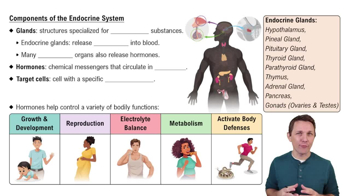
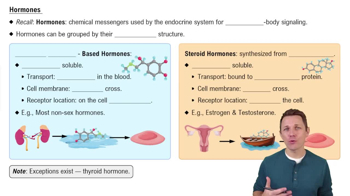
BackEndocrine Hormones and Their Functions
 7:06
7:06
Terms in this set (23)
TRH (Thyrotropin-Releasing Hormone) stimulates the anterior pituitary to secrete TSH and prolactin.
CRH (Corticotropin-Releasing Hormone) stimulates the anterior pituitary to secrete ACTH.
GnRH (Gonadotropin-Releasing Hormone) stimulates the anterior pituitary to secrete FSH and LH.
GHRH (Growth Hormone-Releasing Hormone) stimulates the anterior pituitary to secrete growth hormone.
Somatostatin (GHIH) inhibits growth hormone secretion.
Dopamine (PIF) inhibits prolactin secretion from the anterior pituitary.
ADH (Antidiuretic Hormone / Vasopressin) increases water reabsorption in kidney collecting ducts, concentrating urine.
Oxytocin stimulates uterine contractions and milk let-down in mammary glands.
TSH (Thyroid-Stimulating Hormone) stimulates synthesis and release of thyroid hormones T3 and T4.
ACTH (Adrenocorticotropic Hormone) stimulates the adrenal cortex (zona fasciculata) to secrete cortisol.
FSH targets ovaries/testes to stimulate follicle maturation and estrogen production or spermatogenesis.
LH triggers ovulation and progesterone production in ovaries, and testosterone production in testes.
GH stimulates tissue growth and protein synthesis in liver, bone, and muscle via IGF-1.
Prolactin promotes milk production (lactogenesis) in mammary glands.
Thyroxine (T4) and Triiodothyronine (T3) increase basal metabolic rate and are essential for development.
Calcitonin lowers blood calcium by inhibiting osteoclasts and promoting calcium excretion in kidneys.
PTH raises blood calcium by stimulating osteoclasts and increasing calcium reabsorption in kidneys and intestines.
Aldosterone increases sodium reabsorption and potassium excretion in kidney distal tubules and collecting ducts, raising blood pressure.
Cortisol increases blood glucose via gluconeogenesis and suppresses the immune response.
Epinephrine and Norepinephrine from the adrenal medulla act on heart, blood vessels, and bronchioles to mediate this response.
Insulin lowers blood glucose by promoting glucose uptake and glycogen storage in liver, muscle, and adipose tissue.
Glucagon raises blood glucose by promoting glycogenolysis and gluconeogenesis in the liver.
Melatonin regulates circadian rhythms and sleep-wake cycles via action on the brain (hypothalamus).