Back

Endocrine System - Anatomy & Physiology

Control buttons has been changed to "navigation" mode.
1/23
  • Difference between endocrine and exocrine cells

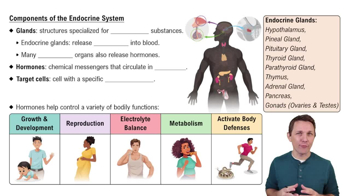
    Endocrine cells secrete hormones directly into the bloodstream, while exocrine cells release substances through ducts to external or internal surfaces.
  • Main function of endocrine and nervous systems

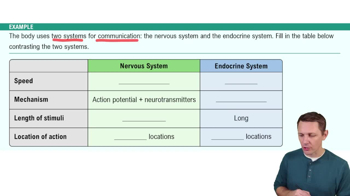
    Both systems preserve homeostasis by coordinating and regulating body activities through chemical and electrical signals.
  • Types of chemical signals used in cell communication

    Cells communicate using hormones, neurotransmitters, paracrine signals, and autocrine signals.
  • How do hydrophobic and hydrophilic hormones differ in target cell response?

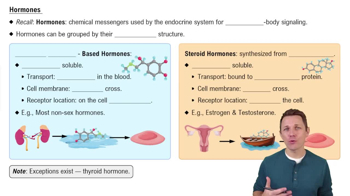
    Hydrophobic hormones bind to intracellular receptors affecting gene expression; hydrophilic hormones bind to membrane receptors triggering second messenger pathways.
  • What regulates hormone secretion primarily?

    Hormone secretion is mainly regulated by negative feedback mechanisms.
  • Three stimuli that trigger hormone secretion

    Hormone secretion can be triggered by humoral, hormonal, and neural stimuli.
  • Meaning of hierarchical pathways in endocrine control

    Endocrine control involves hierarchical pathways where higher centers regulate hormone release through cascades, e.g., hypothalamus controls pituitary gland.
  • Role of the hypothalamus in neuroendocrine regulation

    The hypothalamus regulates the pituitary gland by releasing hormones that control anterior pituitary and by producing ADH and oxytocin for the posterior pituitary.
  • Hormones released by the posterior pituitary

    The posterior pituitary releases ADH (antidiuretic hormone) and oxytocin (OXT) produced by the hypothalamus.
  • Types of hormones secreted by the anterior pituitary

    Anterior pituitary secretes FSH, LH, TSH, ACTH, PRL, MSH, and GH.
  • Physiological importance of Growth Hormone (GH)

    GH stimulates growth, cell reproduction, and regeneration.
  • Function of Gonadotropins (FSH and LH)

    FSH and LH regulate reproductive processes including gamete production and sex hormone secretion.
  • Role of Thyroid-stimulating hormone (TSH)

    TSH stimulates the thyroid gland to produce thyroid hormones.
  • Adrenocorticotropic hormone (ACTH) function

    ACTH stimulates the adrenal cortex to release corticosteroids.
  • Hormones produced by the thyroid gland

    The thyroid produces thyroxine (T4), triiodothyronine (T3), and calcitonin.
  • Physiological role of parathyroid hormone (PTH)

    PTH increases blood calcium levels by stimulating bone resorption and calcium absorption.
  • Adrenal gland structure and hormone production

    The adrenal gland has cortex and medulla; cortex produces corticosteroids, medulla produces catecholamines like epinephrine.
  • Regulation of adrenal medulla

    The adrenal medulla is regulated by sympathetic neurons from the hypothalamus to release epinephrine and norepinephrine.
  • Hormones produced by the pineal gland

    The pineal gland produces melatonin, which regulates circadian rhythms.
  • Endocrine and exocrine functions of the pancreas

    The pancreas has exocrine cells producing digestive enzymes and endocrine cells producing hormones like insulin and glucagon.
  • Difference between hypoglycemia and hyperglycemia

    Hypoglycemia is low blood glucose; hyperglycemia is high blood glucose.
  • Types of Diabetes Mellitus

    Type 1 diabetes is autoimmune destruction of insulin-producing cells; Type 2 diabetes involves insulin resistance.
  • Organs with secondary endocrine functions

    Organs like the heart, kidneys, and adipose tissue secrete hormones affecting overall physiology.