 Back
Endocrine System - Anatomy & Physiology
 7:06

Terms in this set (22)
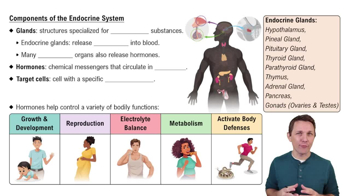
A hormone is a chemical messenger secreted by endocrine glands that regulates physiological processes by acting on target cells or organs.
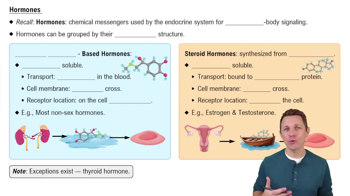
Amino acid-based hormones are water-soluble and use second messenger systems. Steroid-based hormones are lipid-soluble and use direct gene activation by entering the cell nucleus to trigger protein synthesis.
Water-soluble hormones bind to receptors on the cell surface, activating a second messenger inside the cell to trigger a response without entering the cell.
Steroid hormones enter the cell nucleus, bind to DNA, and activate genes to produce specific proteins, altering cell function.
Humoral: changes in blood levels of ions/nutrients.
Hormonal: hormones stimulate other hormones.
Neural: nerve impulses trigger hormone release.
Low blood calcium levels stimulate the parathyroid gland to release parathyroid hormone (PTH).
The hypothalamus releases hormones that stimulate the anterior pituitary to secrete tropic hormones.
The sympathetic nervous system stimulates the adrenal medulla to release epinephrine and norepinephrine.
The hypothalamus produces releasing and inhibiting tropic hormones and neuropeptides that regulate the pituitary gland's hormone secretion.
The posterior pituitary stores and secretes antidiuretic hormone (ADH) and oxytocin, which are produced by the hypothalamus.
The anterior pituitary produces and secretes: Growth Hormone (GH), Luteinizing Hormone (LH), Follicle Stimulating Hormone (FSH), Thyroid Stimulating Hormone (TSH), Adrenocorticotropic Hormone (ACTH), Prolactin (PRL), and Melanocyte Stimulating Hormone (MSH).
The thyroid gland produces thyroxine (T3 and T4) which regulate metabolism, and calcitonin which lowers blood calcium levels.
PTH increases blood calcium levels by stimulating bone resorption, increasing calcium absorption in the intestines, and reducing calcium excretion by the kidneys.
The adrenal cortex produces mineralocorticoids (e.g., aldosterone), glucocorticoids (e.g., cortisol), and gonadocorticoids (sex hormones like androgens and estrogens).
Insulin is produced by beta cells and lowers blood glucose. Glucagon is produced by alpha cells and raises blood glucose.
Melatonin regulates circadian rhythms and sleep-wake cycles.
The thymus produces thymosin and thymopoietin, which are involved in T lymphocyte maturation.
Ovaries produce estrogen, progesterone, and inhibin. Testes produce testosterone and inhibin.
The heart produces atrial natriuretic peptide (ANP). The kidney produces erythropoietin (EPO), calcitriol, and renin. The placenta produces human chorionic gonadotropin (βhCG), human placental lactogen (hPL), progesterone, estrogens, and relaxin.
TSH stimulates the thyroid gland to produce thyroid hormones, which increase metabolism in body cells.
Disorders include diabetes insipidus (ADH deficiency), pituitary dwarfism, gigantism, acromegaly, diabetes mellitus (insulin issues), Graves’ disease (hyperthyroidism), myxedema (hypothyroidism), Cushing’s syndrome, and Addison’s disease.
The three signs are polyuria (excessive urination), polydipsia (excessive thirst), and polyphagia (excessive hunger).