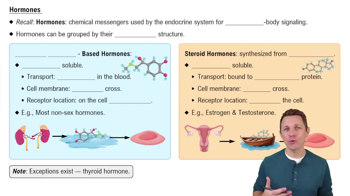
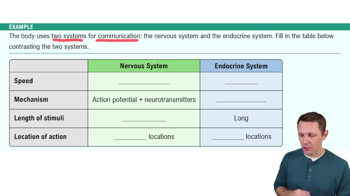
The endocrine system consists of chemical messengers called hormones secreted into the bloodstream to stimulate responses in target tissues or organs.
Difference between endocrine and exocrine glands?
Endocrine glands secrete hormones directly into the bloodstream (no ducts), while exocrine glands secrete substances through ducts.
What are target cells in the endocrine system?
Target cells have specific receptors for hormones, allowing them to respond to hormonal signals.
What are paracrines?
Paracrines are local hormones secreted into tissue fluid that act on nearby cells, such as histamine in the pancreas and GI tract.
Role of the hypothalamus in endocrine regulation?
The hypothalamus produces releasing and inhibitory hormones that regulate the anterior pituitary gland via the hypophyseal portal system.
What are the two parts of the pituitary gland and their origins?
The adenohypophysis (anterior pituitary) arises from the pharynx, and the neurohypophysis (posterior pituitary) arises from the brain.
What are tropic hormones?
Tropic hormones are secreted by the anterior pituitary and regulate the function of other endocrine glands.
Function of Follicle Stimulating Hormone (FSH)?
FSH stimulates ovarian follicle development and estrogen production in females, and sperm production in males; it is key for sexual maturation.
Effects of hypersecretion and hyposecretion of FSH?
Hypersecretion causes precocious puberty or early menopause; hyposecretion leads to failure of sexual maturity or infertility.
Major actions of Luteinizing Hormone (LH)?
LH triggers ovulation and hormone production in ovaries; stimulates testosterone production in testes.
Consequences of abnormal LH secretion?
Hypersecretion causes premature sexual maturity; hyposecretion results in inhibited sexual maturation and infertility.
Role of Thyroid Stimulating Hormone (TSH)?
TSH stimulates thyroid follicular cells to release thyroid hormones T3 and T4, which regulate metabolism and growth.
Symptoms of hypothyroidism in adults (Myxedema)?
Low metabolic rate, lethargy, weight gain, cold sensitivity, constipation, slow heart rate, and facial puffiness.
What causes endemic goiter?
Dietary iodine deficiency leads to low thyroid hormone production, causing increased TSH secretion and thyroid gland enlargement.
Functions of adrenal cortex hormones?
Mineralcorticoids regulate electrolytes; glucocorticoids like cortisol manage metabolism and inflammation; sex hormones influence secondary sex traits.
Effects of cortisol (stress hormone)?
Increases blood sugar and pressure, stimulates fat and protein catabolism, and suppresses the immune system.
What is Cushing Syndrome?
A condition caused by excess cortisol leading to muscle and bone loss, edema, moon face, buffalo hump, hyperglycemia, and hypertension.
Symptoms of Addison's Disease?
Bronzed skin, muscle weakness, low blood pressure, dehydration, and inability to sustain stress due to cortisol deficiency.
Role of Prolactin (PRL)?
PRL stimulates milk production in estrogen-primed mammary glands and influences nesting behavior.
What causes diabetes insipidus?
Hyposecretion of Antidiuretic Hormone (ADH) leading to excessive urine output, dehydration, and inability to retain water.
Functions of Antidiuretic Hormone (ADH)?
ADH promotes water reabsorption in kidneys, reduces urine volume, constricts arterioles to raise blood pressure, and inhibits sweat glands.
What is the feedback mechanism controlling pituitary hormone release?
Negative feedback: increased target organ hormone levels inhibit tropic hormone release; positive feedback occurs during uterine contractions increasing oxytocin.
Major hormones produced by the anterior pituitary?
 Back
 7:06