 Back
BackEndocrine System and Hormonal Regulation - Anatomy & Physiology
 7:06
7:06
Terms in this set (29)
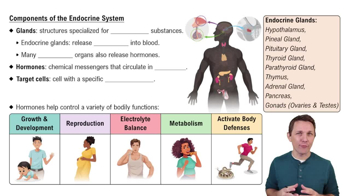
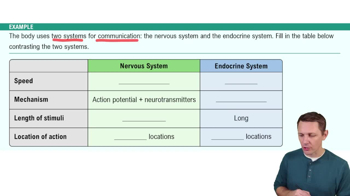
The endocrine system controls the body via hormones released into the bloodstream, regulating metabolic functions with prolonged effects.
Pituitary: base of brain in sella turcica
Thyroid: neck below larynx
Parathyroid: posterior thyroid
Adrenal: atop kidneys
Pineal: epithalamus of brain
Autocrine: act on same cell that secretes them
Paracrine: act on nearby cells
Neither are hormones as they do not travel via bloodstream.
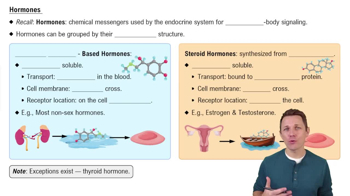
Amino acid-based hormones: amines, peptides, proteins
Steroid hormones: derived from cholesterol, including gonadal and adrenocortical hormones.
They bind to plasma membrane receptors and use second messenger systems like cAMP to activate intracellular enzymes.
Steroid hormones enter cells and bind to intracellular receptors, directly activating gene transcription and protein synthesis.
Alter membrane permeability, stimulate protein synthesis, activate/deactivate enzymes, induce secretion, and stimulate mitosis.
1. Hormone binds receptor
2. G protein activated
3. Adenylate cyclase activated
4. cAMP produced
5. Protein kinases activated
6. Cellular response occurs.
Presence of specific receptors on/in target cells, hormone blood levels, receptor number, and receptor affinity.
Up-regulation: target cells increase receptor numbers
Down-regulation: target cells decrease receptors, often due to high hormone levels.
They bind to plasma proteins (e.g., thyroxine-binding globulins) because they are hydrophobic and need carriers.
Permissiveness: one hormone needs another to act
Synergism: hormones have additive effects
Antagonism: hormones oppose each other.
Humoral: blood ion/nutrient levels
Neural: nerve fibers stimulate release
Hormonal: hormones stimulate other hormones.
Hypothalamus releases TRH → anterior pituitary releases TSH → thyroid gland releases T3 and T4 hormones.
Anterior (adenohypophysis): synthesizes and secretes hormones
Posterior (neurohypophysis): stores and releases hypothalamic hormones ADH and oxytocin.
GH, TSH, ACTH, FSH, LH, and Prolactin (PRL).
Stimulates growth and repair, promotes protein synthesis, and encourages fat use for energy; effects mediated by IGFs.
Stimulated by Growth Hormone-Releasing Hormone (GHRH); inhibited by Growth Hormone-Inhibiting Hormone (GHIH or somatostatin).
Increase metabolic rate, heat production, regulate tissue growth, and support nervous system development.
Iodide is trapped and oxidized, attached to tyrosine on thyroglobulin forming MIT and DIT, which combine to form T3 and T4.
Increases blood calcium by stimulating osteoclasts, enhancing kidney reabsorption of Ca2+, and increasing intestinal absorption.
Zona glomerulosa: mineralocorticoids (aldosterone)
Zona fasciculata: glucocorticoids (cortisol)
Zona reticularis: gonadocorticoids (androgens)
Maintains sodium balance by reducing sodium excretion and promoting potassium excretion, regulating blood volume and pressure.
Epinephrine and norepinephrine increase blood glucose, constrict blood vessels, increase heart rate, and redirect blood flow to vital organs.
Alpha cells secrete glucagon to raise blood glucose; beta cells secrete insulin to lower blood glucose.
Polyuria (excessive urination), polydipsia (excessive thirst), and polyphagia (excessive hunger).
Ovaries produce estrogens and progesterone for reproductive organ maturation and secondary sex characteristics; testes produce testosterone for male reproductive development and sperm production.
Secretes melatonin, which regulates circadian rhythms and physiological processes with daily cycles.
Antidiuretic hormone (ADH) regulates water balance; oxytocin stimulates uterine contractions and milk ejection.