 Back
BackEndocrine System and Hormones - Anatomy & Physiology
 7:06
7:06
Terms in this set (19)
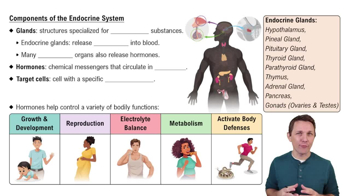
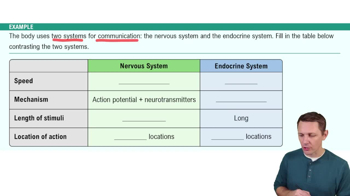
A hormone is a chemical messenger secreted by endocrine glands that regulates physiological processes in target cells or organs.
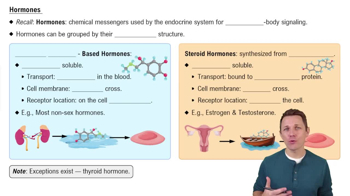
Steroid hormones are lipid-soluble and derived from cholesterol; amino acid-based hormones include peptides and proteins and are water-soluble.
Humoral stimulation occurs when changing blood levels of ions or nutrients directly stimulate hormone release.
Neural stimulation involves nerve fibers stimulating hormone release, such as sympathetic nervous system activation of the adrenal medulla.
Hormonal stimulation occurs when one hormone triggers the release of another hormone from a different gland.
The hypothalamus secretes releasing and inhibiting hormones that regulate the anterior pituitary, and also produces oxytocin and antidiuretic hormone (ADH) stored in the posterior pituitary.
The anterior pituitary secretes growth hormone (GH), thyroid-stimulating hormone (TSH), adrenocorticotropic hormone (ACTH), follicle-stimulating hormone (FSH), luteinizing hormone (LH), and prolactin.
The posterior pituitary releases oxytocin and antidiuretic hormone (ADH), which are produced by the hypothalamus.
The pancreas secretes insulin from beta cells and glucagon from alpha cells to regulate blood glucose levels.
The thyroid gland secretes thyroxine (T4), triiodothyronine (T3), and calcitonin, which regulate metabolism and calcium levels.
Gigantism is excessive growth due to overproduction of growth hormone (GH) before puberty.
Acromegaly is excessive growth hormone secretion after puberty, causing enlargement of bones in hands, feet, and face.
Pituitary dwarfism is growth retardation caused by insufficient growth hormone secretion during childhood.
Diabetes mellitus is a disorder characterized by insufficient insulin production or insulin resistance, leading to high blood glucose.
Graves disease is an autoimmune disorder causing hyperthyroidism and symptoms like goiter and bulging eyes.
Addison’s disease is adrenal insufficiency causing low cortisol and aldosterone, leading to fatigue and low blood pressure.
Cretinism is congenital hypothyroidism causing stunted physical and mental growth in infants.
Myxedema is severe hypothyroidism in adults causing swelling, fatigue, and weight gain.
Cushing’s disease results from excess cortisol due to overproduction of ACTH, causing weight gain and high blood pressure.