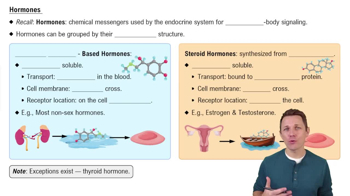
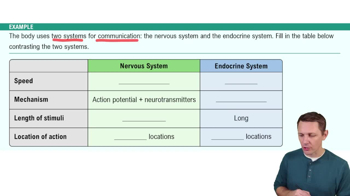
The endocrine system consists of chemical messengers called hormones secreted into the bloodstream to stimulate responses in other tissues or organs.
Difference between endocrine and exocrine glands
Endocrine glands secrete hormones directly into the bloodstream (no ducts), while exocrine glands secrete substances through ducts.
What are target cells in the endocrine system?
Target cells have specific receptors for hormones, allowing them to respond to hormonal signals.
Role of the hypothalamus in the endocrine system
The hypothalamus forms the floor and walls of the third ventricle and controls many functions via the pituitary gland.
Difference between adenohypophysis and neurohypophysis
Adenohypophysis (anterior pituitary) arises from the pharynx and produces hormones; neurohypophysis (posterior pituitary) arises from the brain and stores/releases hypothalamic hormones.
What are tropic hormones?
Tropic hormones are secreted by the anterior pituitary and influence other endocrine tissues.
Functions of Follicle Stimulating Hormone (FSH)
In females, FSH stimulates ovarian follicle development and estrogen production; in males, it stimulates sperm production.
Effects of hypersecretion and hyposecretion of FSH
Hypersecretion causes precocious puberty or early menopause; hyposecretion causes failure of sexual maturity or infertility.
Functions of Luteinizing Hormone (LH)
In females, LH triggers ovulation and stimulates estrogen and progesterone production; in males, it stimulates testosterone production.
Thyroid gland structure and hormone production
The thyroid gland has follicles lined with follicular cells that produce T3 and T4 thyroid hormones requiring iodine; it also secretes calcitonin to lower blood calcium.
Low metabolic rate, lethargy, weight gain, cold sensitivity, constipation, slow heart rate, and facial puffiness.
Causes and symptoms of Grave's disease
Autoantibodies mimic TSH causing hyperthyroidism with weight loss, heat intolerance, anxiety, bulging eyes, and goiter.
Adrenal cortex hormone types and functions
Produces mineralocorticoids (aldosterone for electrolyte balance), glucocorticoids (cortisol for metabolism and anti-inflammation), and sex hormones (androgens and estrogens).
Role of Adrenocorticotropic Hormone (ACTH)
ACTH stimulates the adrenal cortex to produce cortisol, which increases blood sugar, blood pressure, and suppresses the immune system.
Symptoms of Cushing syndrome (ACTH hypersecretion)
Muscle and bone loss, edema, moon face, buffalo hump, hyperglycemia, and hypertension.
Symptoms of Addison's disease (ACTH hyposecretion)
Bronzed skin, muscle weakness, low blood pressure, dehydration, and inability to sustain stress.
Major action of Prolactin (PRL)
Stimulates milk production in estrogen-primed mammary glands and promotes nesting behavior.
Functions of Growth Hormone (GH)
Promotes growth of bone, cartilage, muscle, and fat; stimulates protein synthesis and lipolysis.
Effects of GH hypersecretion in childhood and adulthood
Childhood: gigantism with excessive height; adulthood: acromegaly with thickened bones in jaw, hands, and feet.
Role of oxytocin
Stimulates uterine contractions during labor and milk ejection during lactation; may aid sperm transport and emotional bonding.
Functions of Antidiuretic Hormone (ADH)
Promotes water reabsorption in kidneys, reduces urine output, constricts arterioles to raise blood pressure, and inhibits sweat glands.
Symptoms of diabetes insipidus
Caused by ADH hyposecretion; characterized by excessive urine output, thirst, dehydration, and inability to retain water.
Role of the pineal gland
Produces serotonin by day and melatonin at night to regulate circadian rhythms and possibly puberty timing.
Function of parathyroid hormone (PTH)
Released in response to low blood calcium; increases blood calcium by stimulating bone resorption.
Pancreatic hormones and their roles
Insulin lowers blood glucose by promoting uptake; glucagon raises blood glucose by stimulating glycogen breakdown.
Differences between Type I and Type II diabetes mellitus
Type I is autoimmune destruction of insulin-producing cells; Type II is insulin resistance often linked to obesity and age.
General Adaptation Syndrome stages
The body's response to stress occurs in alarm, resistance, and exhaustion stages.
What are paracrines?
Local chemical messengers secreted into tissue fluid that act on nearby cells, e.g., histamine and nitric oxide.
 Back
Back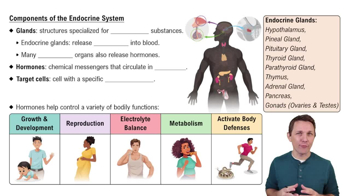
 7:06
7:06