 Back
BackEndocrine System and Thyroid Function in Graves' Disease
 7:06
7:06
Terms in this set (20)
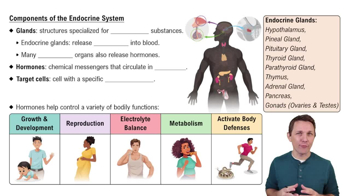
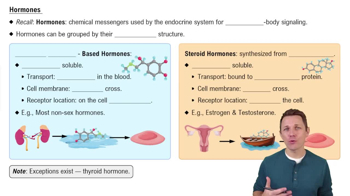
The two hormones are thyroxine (T4) and triiodothyronine (T3). They regulate metabolism, energy use, growth, and development.
Excess thyroid hormones increase metabolic rate, leading to more energy use, heat production (sweating), and stimulation of the heart (elevated heart rate).
TSH is not a thyroid hormone. It is secreted by the anterior pituitary gland and stimulates the thyroid gland to produce and release thyroid hormones.
TSH secretion is regulated by a negative feedback loop: high thyroid hormone levels inhibit TSH release, while low levels stimulate it.
They cause the thyroid to become overactive, producing excessive thyroid hormones independent of TSH control.
High thyroid hormones suppress TSH secretion via negative feedback, so TSH levels drop even though the thyroid is overactive.
Thyroid hormone levels are low, causing TSH levels to be high as the pituitary tries to stimulate the thyroid.
The thyroid uniquely absorbs iodine to make hormones, so radioactive iodine selectively destroys thyroid cells without harming other tissues.
Exophthalmos is the protrusion of the eyes caused by inflammation and tissue swelling due to abnormal thyroid hormone levels, common in Graves' disease.
Symptoms include weight loss, elevated heart rate, sweating, difficulty sleeping, diarrhea, and neck swelling.
The anterior pituitary gland secretes TSH.
The thyroid gland produces hormones (T3 and T4) that regulate metabolism, growth, and development.
It produces antibodies that mimic TSH, stimulating the thyroid to overproduce hormones.
It indicates that the pituitary is responding to high hormone levels by reducing TSH, but the thyroid remains overactive due to antibody stimulation.
Excess thyroid hormones increase metabolism and nervous system activity, causing insomnia.
They reflect the stimulatory effect of excess thyroid hormones on the cardiovascular system.
To reduce thyroid hormone levels and control symptoms, often by destroying or suppressing thyroid function.
The thyroid gland absorbs iodine from the blood to synthesize thyroid hormones T3 and T4.
Enlargement of the thyroid gland, called a goiter, due to overactivity or inflammation.
They maintain a negative feedback loop: high thyroid hormones lower TSH, and low hormones increase TSH.