 Back
Endocrine System Hormones and Functions - Anatomy & Physiology
 7:06

Terms in this set (20)
Produced by hypothalamus, stored in posterior pituitary; increases water reabsorption in kidneys and raises blood volume.
Released from posterior pituitary; stimulates uterine contractions and milk ejection during breastfeeding.
Secretes hormones that regulate growth, metabolism, and reproduction; controlled by hypothalamic releasing and inhibiting hormones.
Stimulates growth and development of thyroid gland and secretion of thyroid hormones.
Stimulates growth and secretion of adrenal cortex hormones.
Stimulates milk production in mammary glands, especially after childbirth.
In males, stimulates testosterone production; in females, triggers ovulation and production of estrogen and progesterone.
Promotes production of sperm in males and development of ovarian follicles in females.
Stimulates growth of bone and muscle; promotes protein synthesis and fat breakdown; regulated by somatostatin and GHRH.
Thymosin and thymopoietin promote T lymphocyte maturation and function as paracrine signals.
Secreted by pancreatic beta cells; lowers blood glucose by promoting uptake and storage of glucose, amino acids, and fats.
Secreted by pancreatic alpha cells; raises blood glucose by stimulating glycogen breakdown and gluconeogenesis.
Hormone secretion is adjusted based on levels of target hormones or physiological effects to maintain homeostasis.
Specialized blood vessels connecting hypothalamus and anterior pituitary, allowing direct hormone transport.
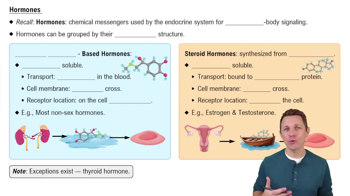
Located on plasma membrane because hydrophilic hormones cannot cross the cell membrane.
Located inside cytosol or nucleus as hydrophobic hormones can cross the plasma membrane.
Target cells increase receptor numbers when hormone levels are low to increase sensitivity.
Target cells decrease receptor numbers after prolonged high hormone exposure to reduce sensitivity.
Hormone binds membrane receptor, activates G-protein, triggers second messenger (e.g., cAMP), leading to cellular changes.
Hormone crosses membrane, binds intracellular receptor, influences gene transcription to alter protein synthesis.