 Back
BackEndocrine System Physiology - Anatomy & Physiology
 7:06
7:06
Terms in this set (20)
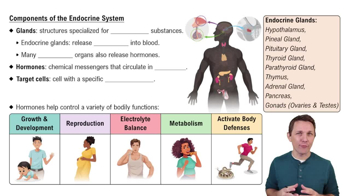
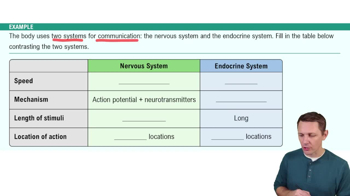
Intercellular chemical communication, information transfer, integration, and control of body functions.
Hormones are secreted into the blood and bind to specific receptors on target cells, triggering changes in cell function.
Regulates growth, development, homeostasis, reproduction, body defenses, electrolyte and water balance, nutrient metabolism, and behavior.
Endocrine glands are ductless and secrete hormones directly into the blood, while exocrine glands secrete into ducts leading to body surfaces or cavities.
Anterior pituitary, thyroid, parathyroid, adrenal cortices, endocrine pancreas, thymus, and gonads (ovaries/testes).
Organs producing hormones but primarily part of other systems, e.g., heart, kidneys, small intestine, adipose tissue.
Nervous tissue organs that secrete hormones called neurohormones, such as the hypothalamus, pineal gland, and adrenal medulla.
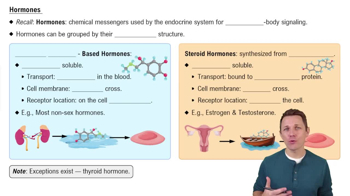
Amino acid-based, peptide/protein, and steroid hormones.
Small molecules derived from amino acids like tyrosine and tryptophan; include thyroid hormones and catecholamines.
Chains of amino acids ranging from short peptides to complex proteins; generally hydrophilic.
Cholesterol-derived, lipid-soluble hormones produced by adrenal cortex and gonads; hydrophobic.
Secreted into interstitial fluid, diffuse into blood capillaries, transported via bloodstream, then diffuse out to bind receptors on target cells.
Endocrine signals travel through blood to distant targets; paracrine affect nearby cells; autocrine affect the same cell that secreted them.
Increase in receptor number and sensitivity in response to low hormone levels.
Decrease in receptor number and sensitivity after prolonged high hormone exposure.
Stimulate secretion, activate/inhibit enzymes, regulate mitosis/meiosis, open/close ion channels, and alter gene expression.
Complementary: different cells, common goal; synergistic: same cell, same effect; antagonistic: same cell, opposite effects.
Time for plasma concentration to reduce by half; hydrophobic hormones have longer half-lives than hydrophilic ones.
Humoral (blood ion/nutrient levels), neural (nerve stimulation), and hormonal (hormones stimulating other hormones).
Deviation from normal triggers hormone release; hormone effects restore balance; receptors detect return to normal and reduce hormone secretion.