 Back
Epithelial Cell Types and Tissue Types in the Human Body
 07:25

Terms in this set (20)
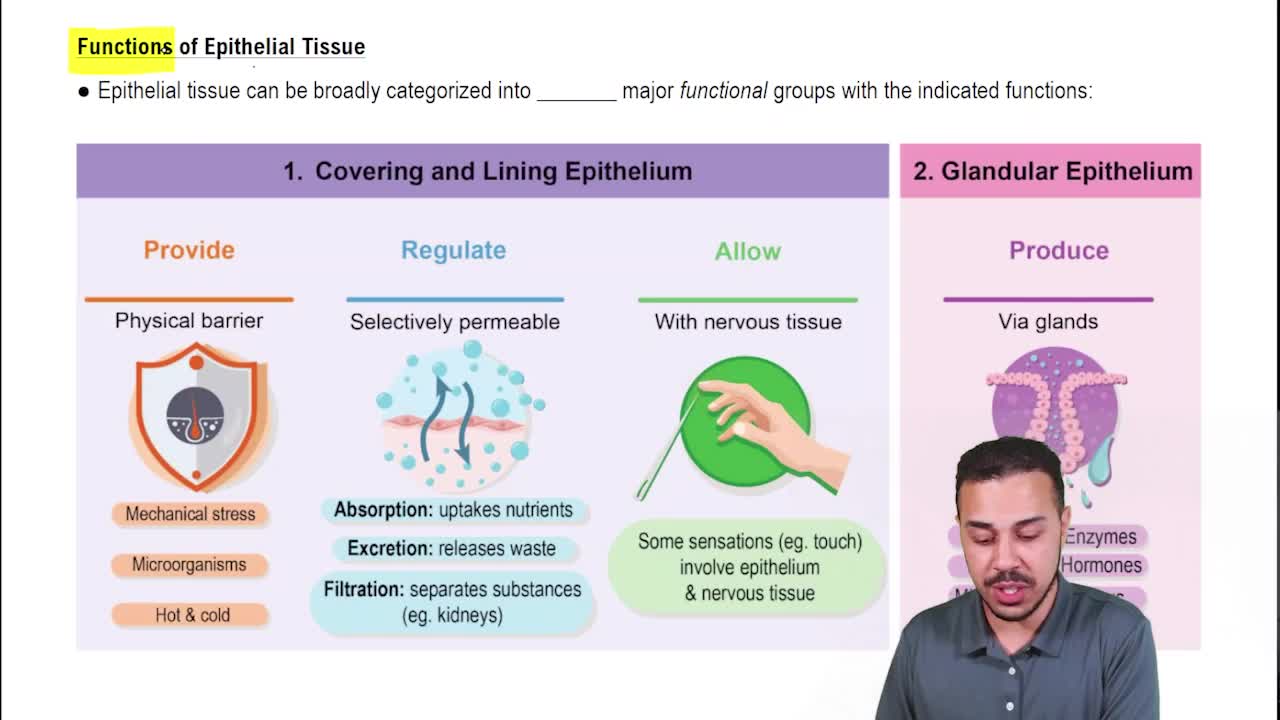
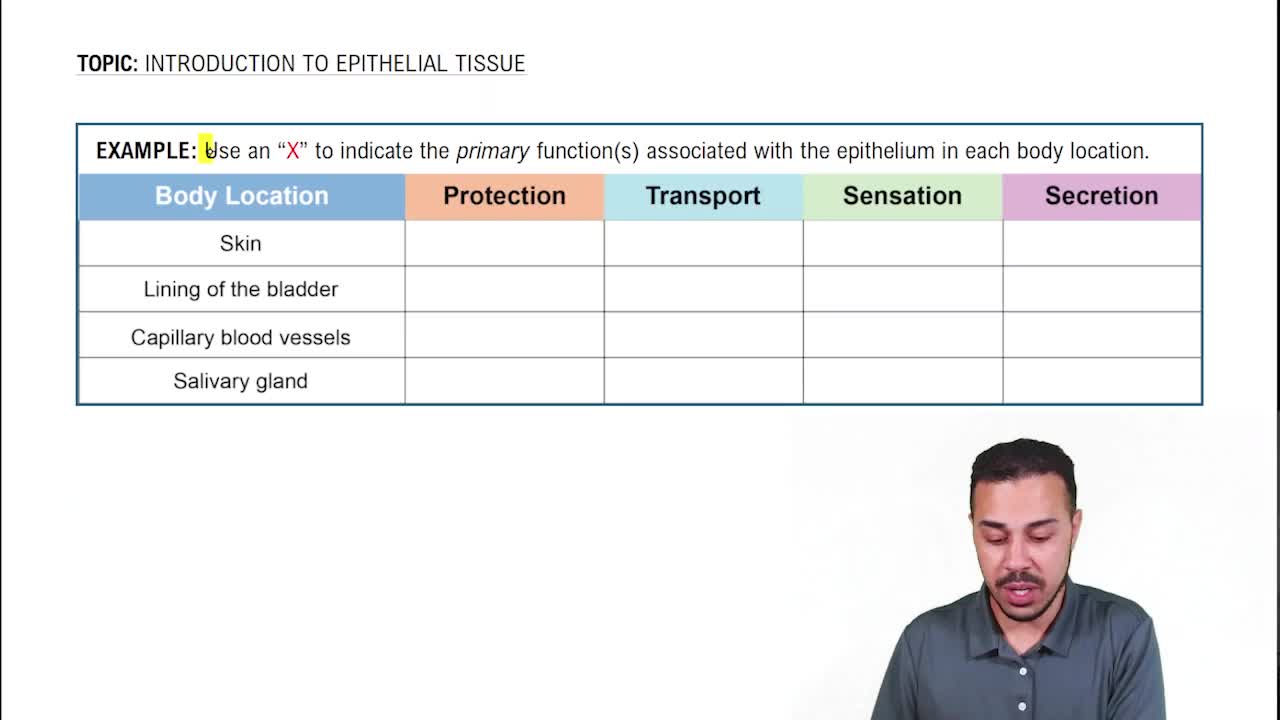
Protection, absorption, secretion, excretion, and sensory reception.
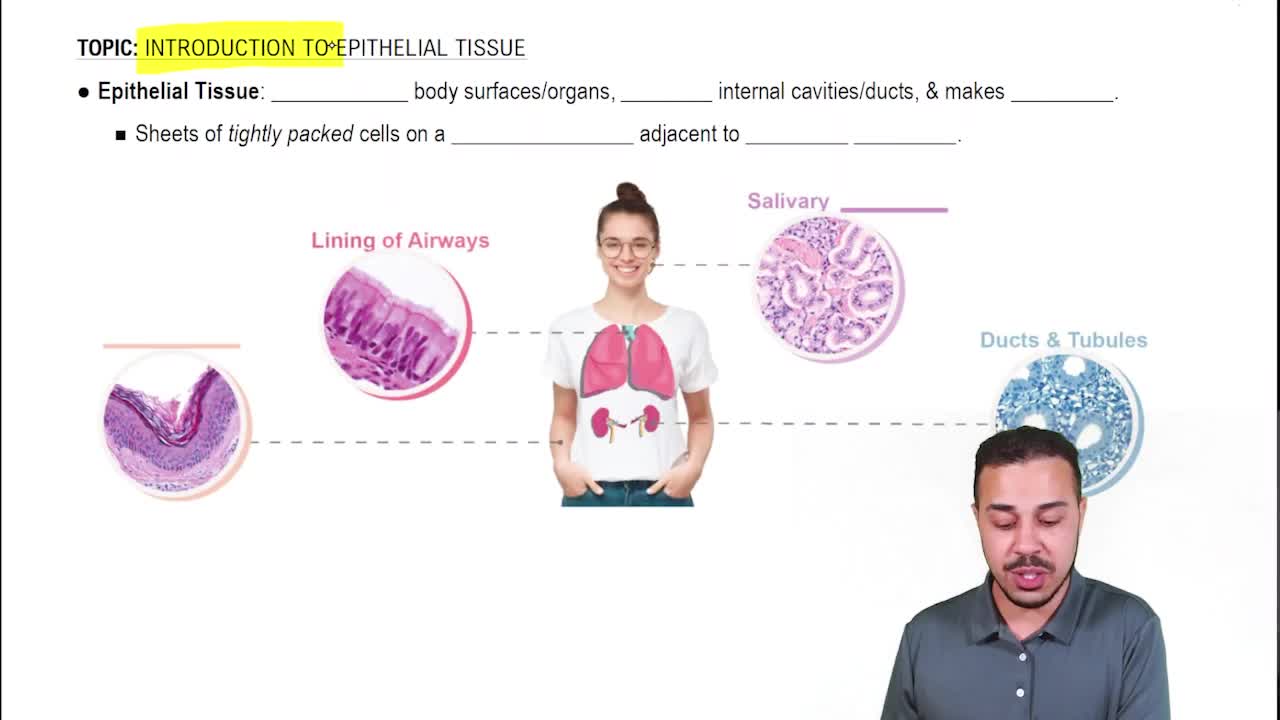
Cells are closely packed with minimal extracellular matrix and have a free surface exposed to the body exterior or cavity.
Squamous (flat), cuboidal (cube-shaped), and columnar (tall and column-shaped).
Simple (single layer), stratified (multiple layers), and pseudostratified (single layer appearing multiple).
Single layer of flat cells; allows rapid diffusion and filtration, found in lungs and blood vessels.
Found in kidney tubules and glands; functions in secretion and absorption.
Absorption and secretion; lines digestive tract and may have microvilli or cilia.
Single layer of cells with varying heights, nuclei at different levels; often ciliated and involved in secretion and movement of mucus.
Protects underlying tissues in areas subject to abrasion, such as skin and mouth.
Found in ducts of sweat glands and mammary glands; provides protection.
Rare tissue type; found in parts of the male urethra and some glandular ducts; functions in protection and secretion.
Stratified epithelium that can stretch; lines urinary bladder and ureters to accommodate volume changes.
Microvilli for absorption, cilia for movement of substances, and keratin for protection.
By diffusion from underlying connective tissue through the basement membrane.
A thin extracellular layer that anchors epithelium to underlying connective tissue and regulates exchange.
Specialized for secretion; forms glands such as sweat, salivary, and endocrine glands.
Endocrine glands secrete hormones directly into the blood; exocrine glands secrete onto surfaces via ducts.
Simple squamous epithelium called endothelium.
Keratinized has a surface layer of dead cells with keratin for waterproofing; non-keratinized remains moist.
To move mucus and trapped particles across the epithelial surface, especially in respiratory tract.