Skip to main content
Anatomy & Physiology
My Course
Learn
Exam Prep
AI Tutor
Study Guides
Textbook Solutions
Flashcards
Explore
Try the app
My Course
Learn
Exam Prep
AI Tutor
Study Guides
Textbook Solutions
Flashcards
Explore
Try the app
Back
Epithelial Tissue Types and Locations
You can tap to flip the card.
Where is stratified squamous epithelium (non-keratinized) commonly found?
You can tap to flip the card.
👆
Where is stratified squamous epithelium (non-keratinized) commonly found?
It lines moist surfaces subject to abrasion, such as the oral cavity, esophagus, and vagina.
Track progress
Control buttons has been changed to "navigation" mode.
1/20
Recommended videos
Guided course
07:25
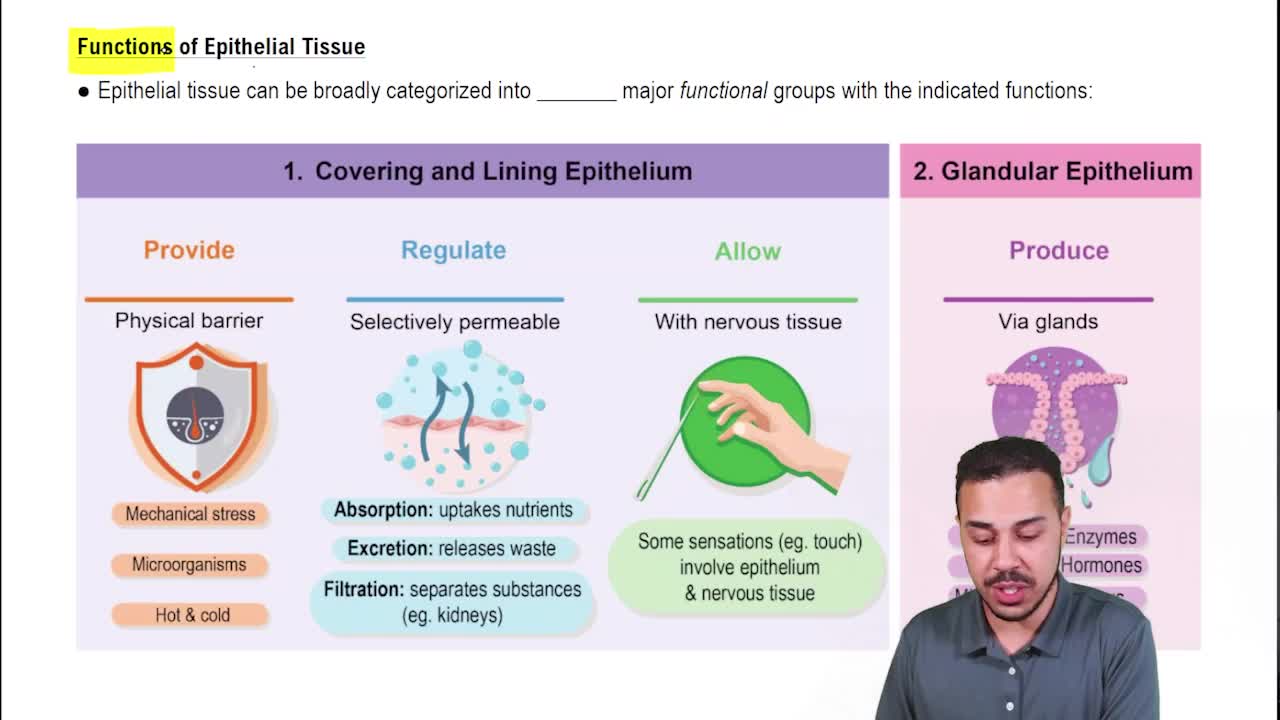
Functions of Epithelial Tissue
16857
views
358
rank
Guided course
03:40
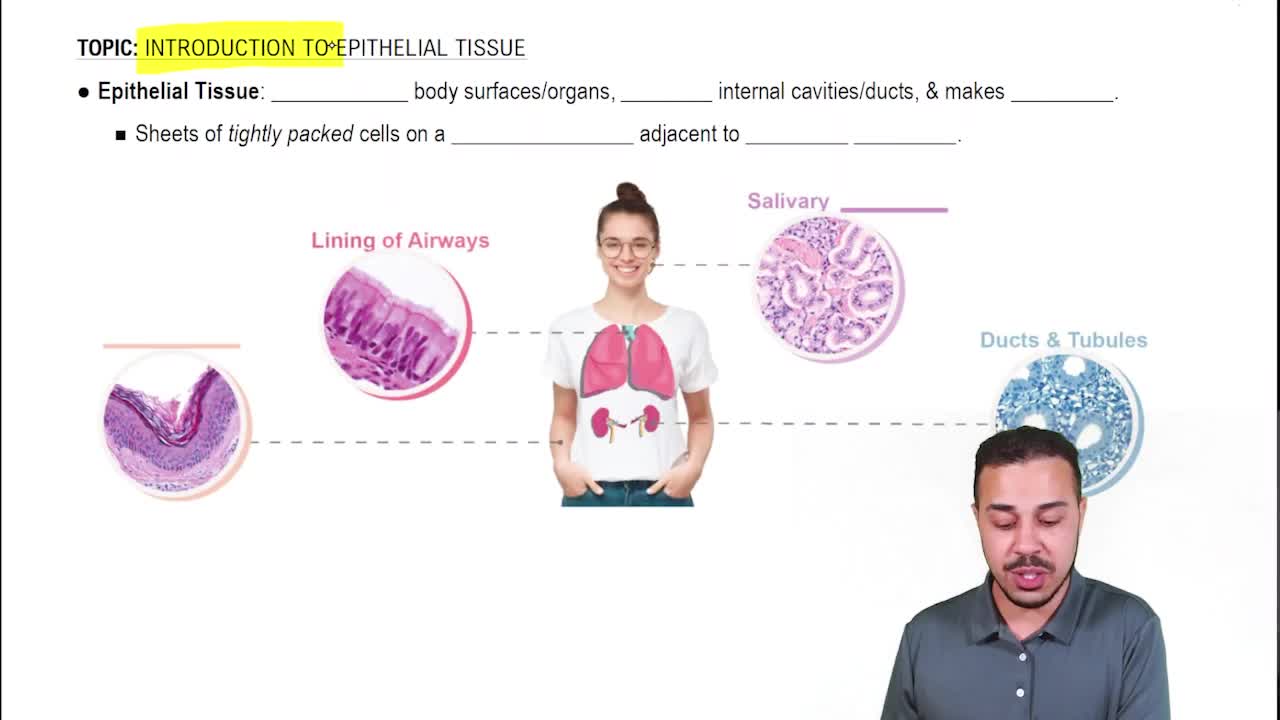
Intro to Epithelia
19959
views
477
rank
Guided course
05:24
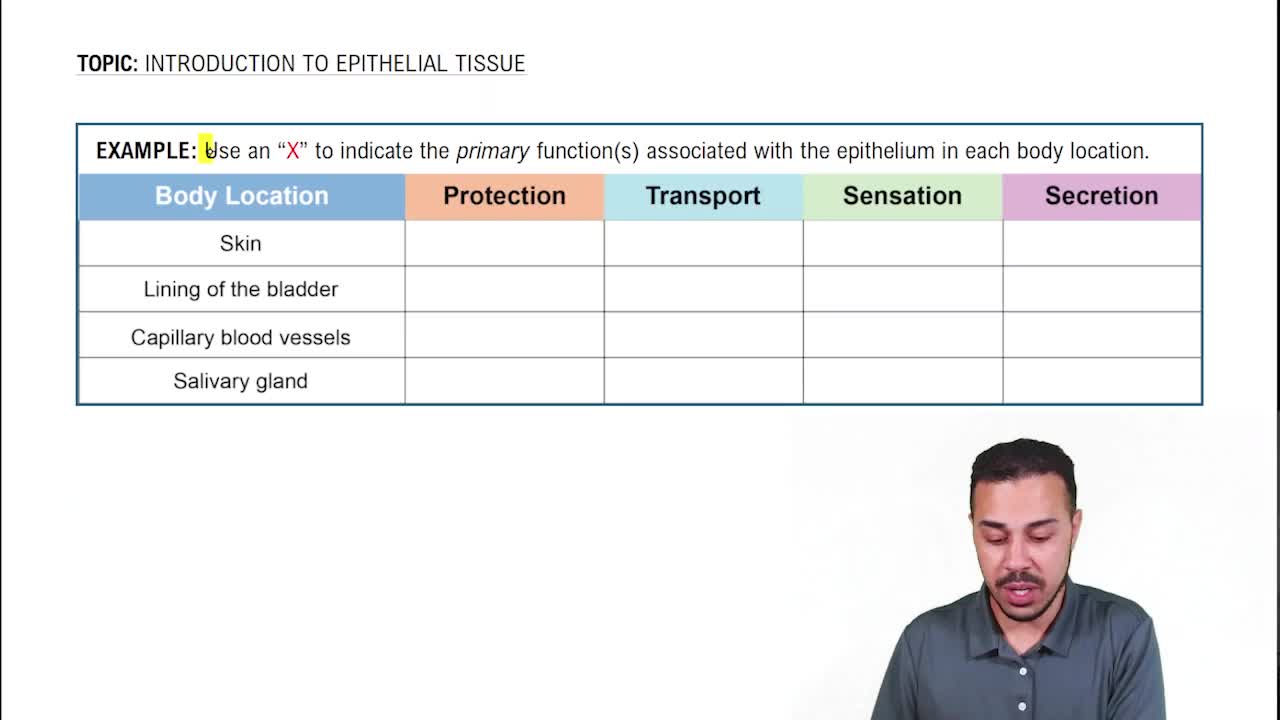
Introduction to Epithelial Tissue Example 1
13100
views
265
rank
1
comments
Terms in this set (20)
Hide definitions
Where is stratified squamous epithelium (non-keratinized) commonly found?
It lines moist surfaces subject to abrasion, such as the oral cavity, esophagus, and vagina.
function of simple columnar epithelium?
Absorption and secretion, commonly found lining the digestive tract.
Where is transitional epithelium located?
It lines the urinary bladder, ureters, and part of the pelvis, allowing stretch.
What type of epithelium lines arteries and veins?
Simple squamous epithelium, also called endothelium.
What characterizes pseudostratified columnar epithelium with cilia and goblet cells?
It appears layered but all cells contact the basement membrane; cilia move mucus, goblet cells secrete mucus.
Where is simple squamous epithelium typically found?
It lines blood vessels, alveoli of lungs, and body cavities for diffusion and filtration.
What is the function of goblet cells in pseudostratified columnar epithelium?
They secrete mucus to trap particles and protect underlying tissues.
How does transitional epithelium adapt to stretching?
Its cells can change shape from cuboidal to squamous when stretched.
What distinguishes stratified squamous epithelium from simple squamous epithelium?
Stratified has multiple layers for protection; simple has a single layer for diffusion.
What is the role of cilia in pseudostratified columnar epithelium?
Cilia move mucus and trapped particles out of the respiratory tract.
Where is simple cuboidal epithelium found?
In kidney tubules and gland ducts, involved in secretion and absorption.
What type of epithelium lines the proximal portion of the pelvis?
Transitional epithelium.
Why is non-keratinized stratified squamous epithelium important in certain locations?
It provides protection while remaining moist, unlike keratinized epithelium.
What is the main function of simple squamous epithelium in blood vessels?
To provide a smooth, frictionless lining for blood flow.
How can you identify pseudostratified columnar epithelium microscopically?
Nuclei appear at different levels, but all cells contact the basement membrane.
What is the significance of the epithelium lining the pelvis being transitional?
It allows the urinary tract to expand and contract without damage.
What epithelial type is found lining the pelvis and proximal urinary tract?
Transitional epithelium.
What is the difference between keratinized and non-keratinized stratified squamous epithelium?
Keratinized has a layer of dead cells for waterproofing; non-keratinized remains moist and alive.
Which epithelium type is specialized for diffusion and filtration?
Simple squamous epithelium.
What epithelial type lines the respiratory tract with cilia and goblet cells?
Pseudostratified columnar epithelium.
 Back
 07:25

 Back