 Back
Epithelial Tissue Types and Locations
 07:25

Terms in this set (20)
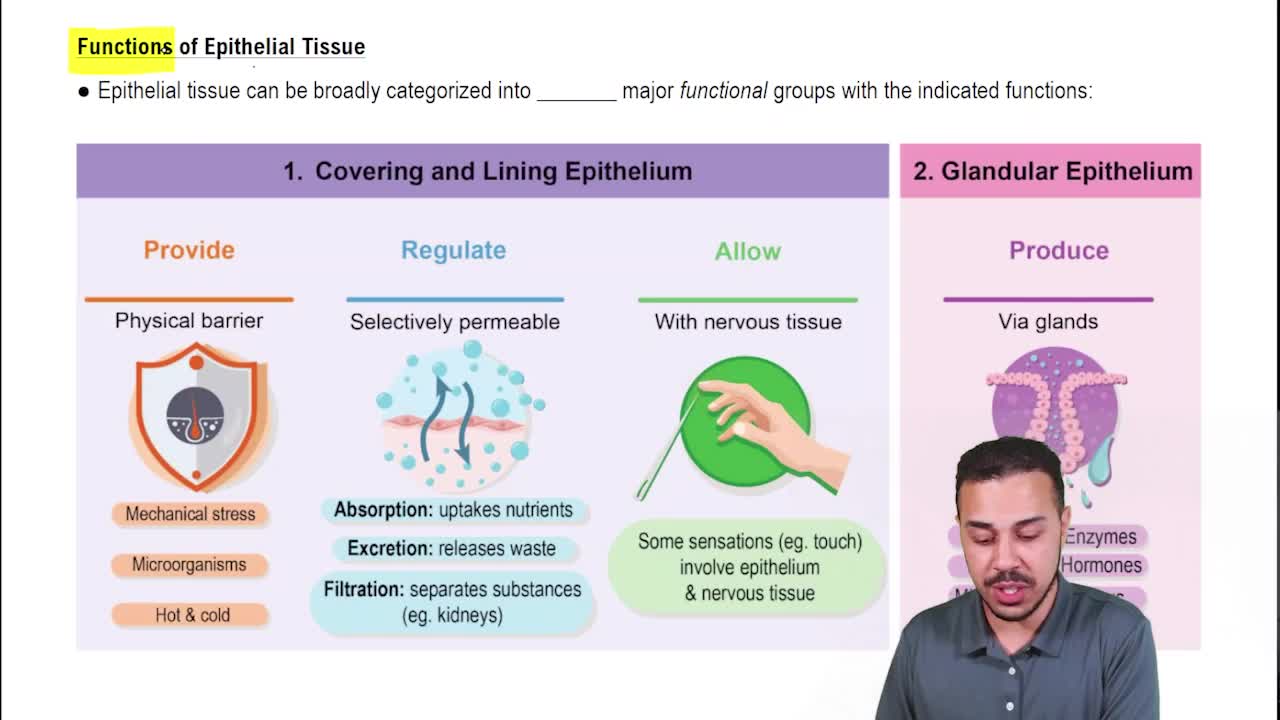
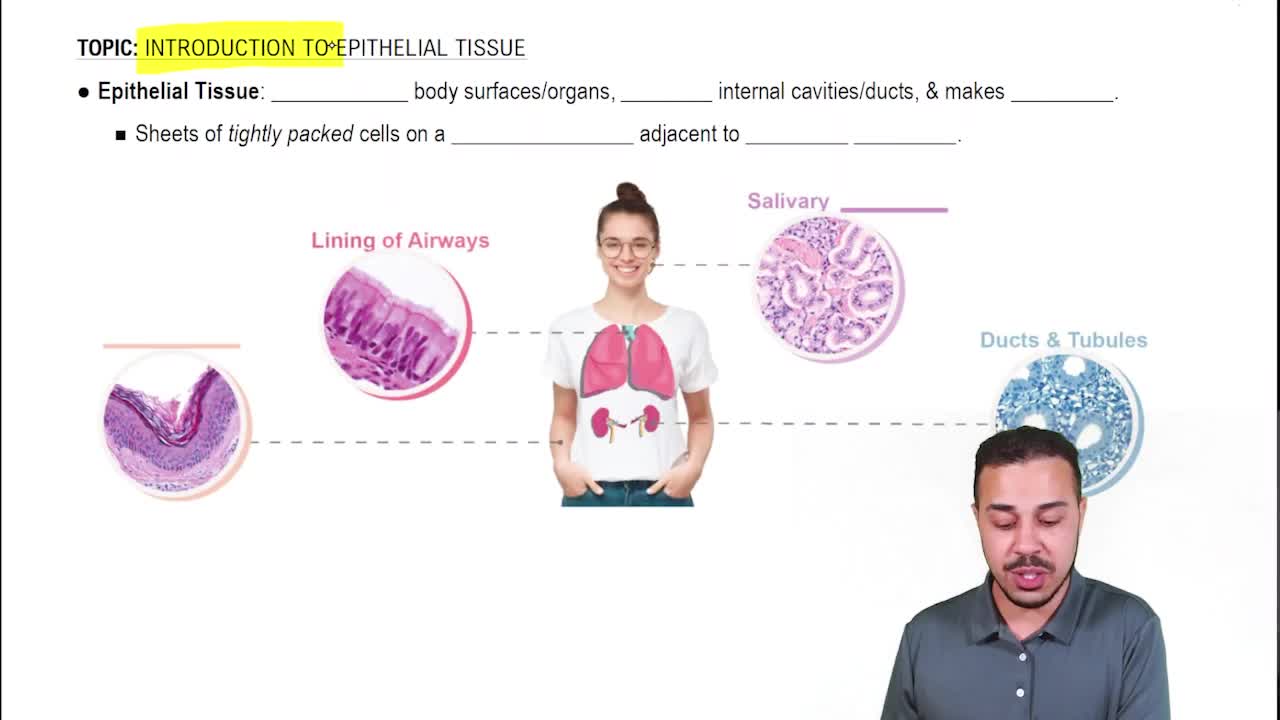
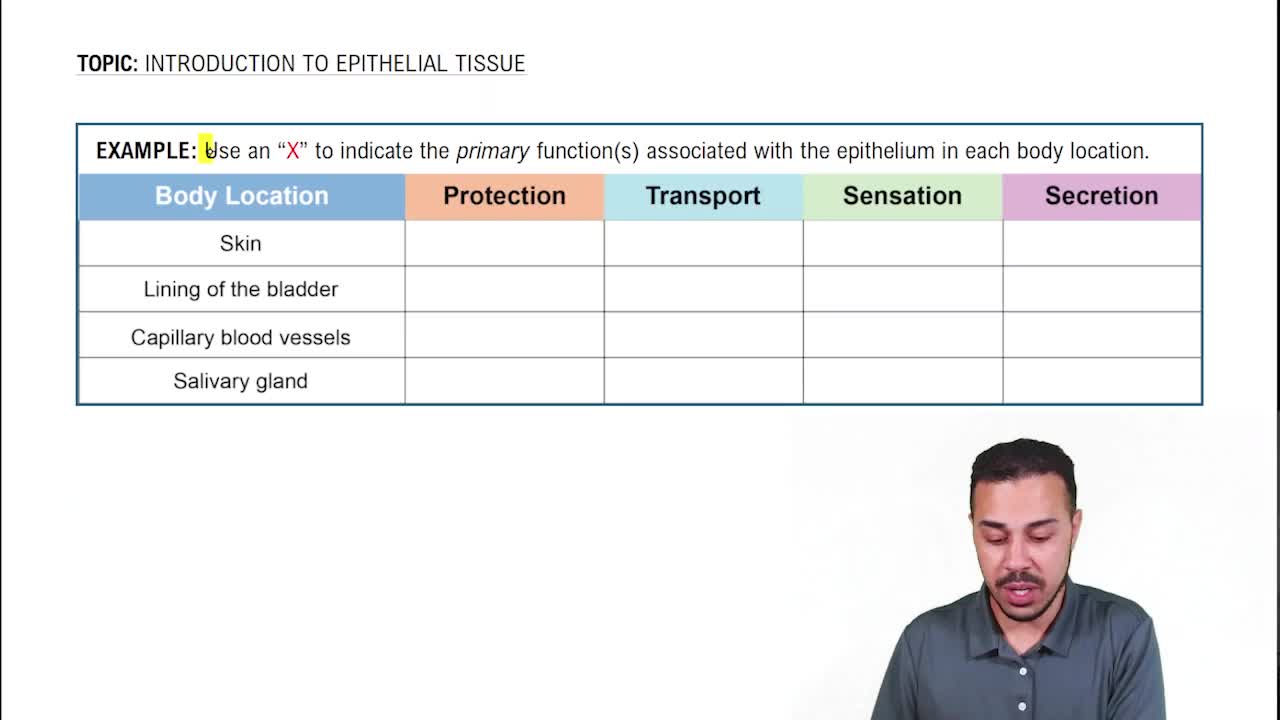
Epithelial tissue covers body surfaces, lines cavities, and forms glands. It acts as a protective barrier and is involved in absorption, secretion, and sensation.
Squamous (flat), cuboidal (cube-shaped), and columnar (tall and column-like) cells.
Simple squamous epithelium is a single layer of flat cells found in areas of rapid diffusion like alveoli of lungs and blood vessel linings.
Stratified squamous epithelium has multiple layers of flat cells providing protection against abrasion; found in skin, mouth, and esophagus.
Found in kidney tubules and gland ducts, it functions in secretion and absorption.
Single layer of tall cells often with microvilli or cilia; found in the digestive tract lining and uterine tubes.
Appears layered due to nuclei at different levels but is a single layer; commonly ciliated and found in respiratory tract.
Specialized stratified epithelium that stretches; found in the urinary bladder.
Cilia move mucus and trapped particles out of respiratory passages.
Keratinized has a surface layer of dead cells with keratin for waterproofing (skin); non-keratinized is moist and found in mouth and esophagus.
A thin, fibrous layer that anchors epithelium to underlying connective tissue and regulates exchange.
The lining of the small intestine, where microvilli increase surface area for absorption.
In the trachea and upper respiratory tract, where it traps and moves debris out of airways.
Simple squamous epithelium, also called endothelium, lines blood vessels for smooth blood flow.
Cells appear flattened and squamous-like when stretched, but cuboidal or columnar when relaxed.
To produce and secrete substances such as enzymes, hormones, and sweat.
Stratified cuboidal has multiple layers for protection; found in sweat gland ducts.
Tight junctions prevent leakage of substances between cells, maintaining selective barriers.
In moist areas subject to abrasion like the oral cavity, esophagus, and vagina.
Simple squamous epithelium facilitates filtration in kidney glomeruli.