Skip to main content
Anatomy & Physiology
My Course
Learn
Exam Prep
AI Tutor
Study Guides
Textbook Solutions
Flashcards
Explore
Try the app
My Course
Learn
Exam Prep
AI Tutor
Study Guides
Textbook Solutions
Flashcards
Explore
Try the app
Back
Extracellular Matrix Components in Anatomy & Physiology
You can tap to flip the card.
What are the main protein fibers found in the extracellular matrix (ECM)?
You can tap to flip the card.
👆
What are the main protein fibers found in the extracellular matrix (ECM)?
Collagen fibers
,
reticular fibers
, and
elastic fibers
.
Track progress
Control buttons has been changed to "navigation" mode.
1/11
Recommended videos
06:37
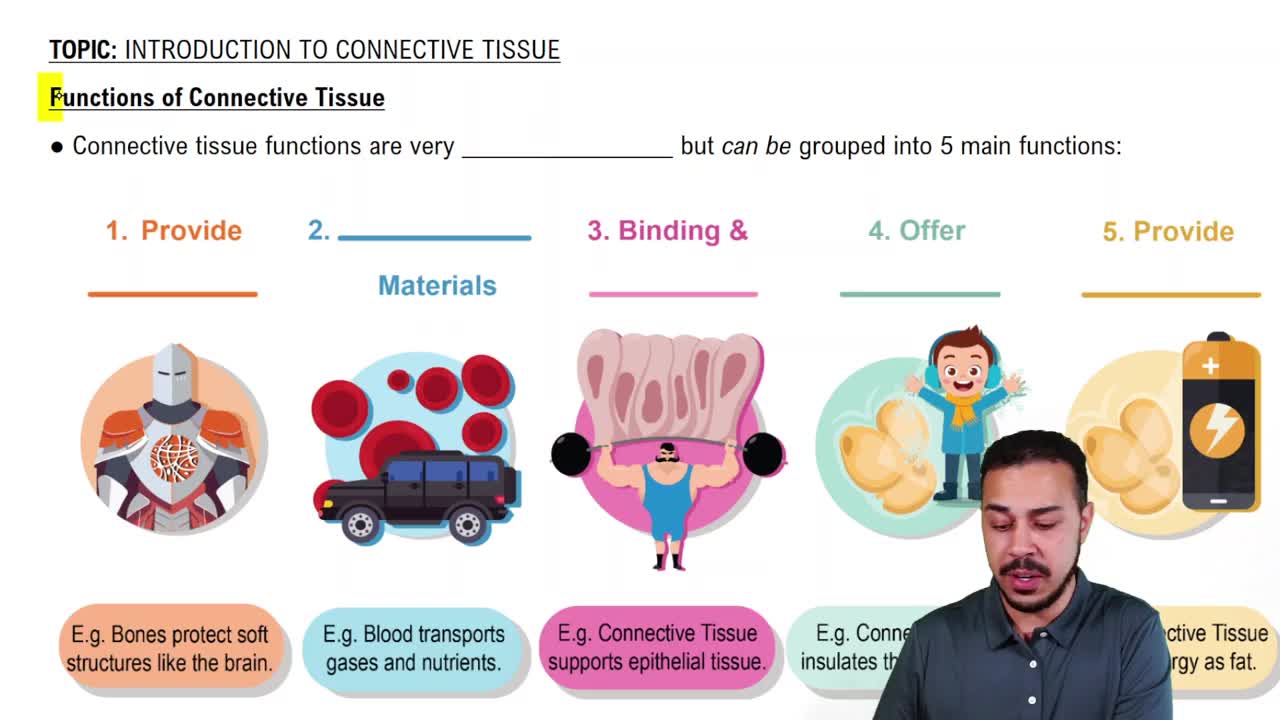
Functions of Connective Tissue
8094
views
137
rank
08:54
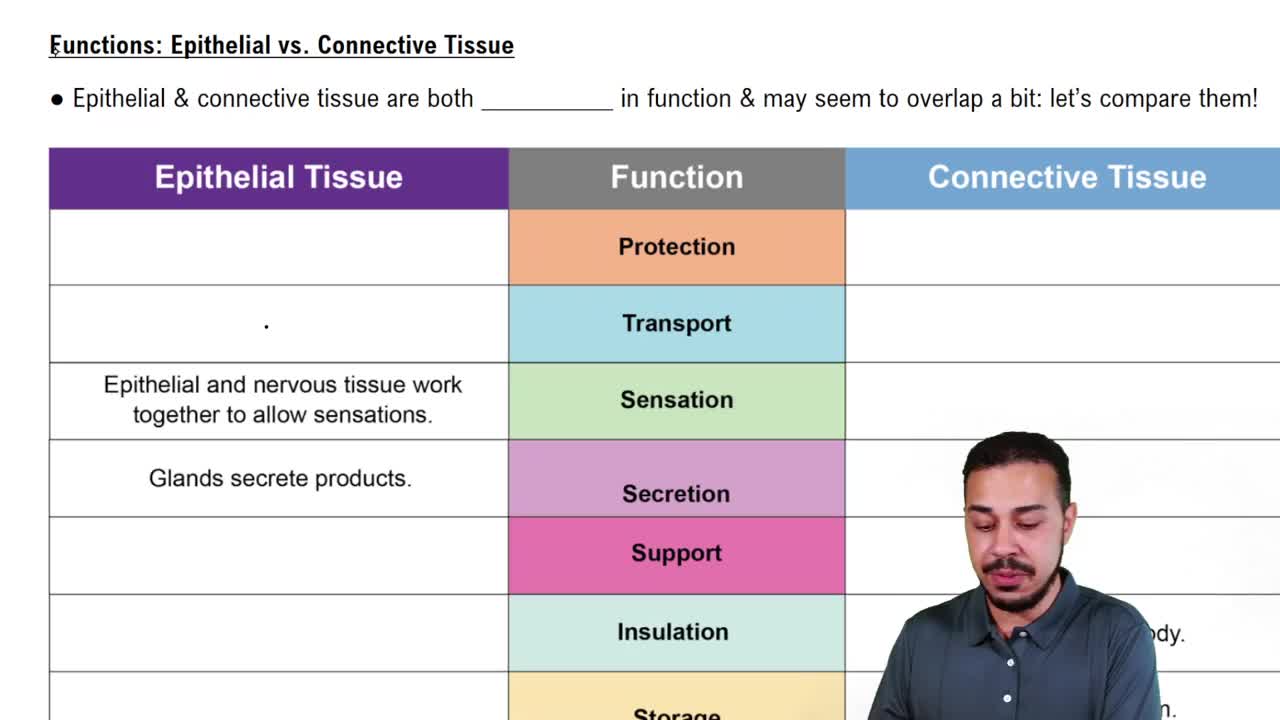
Functions: Epithelial vs. Connective Tissue
7637
views
120
rank
3
comments
01:32
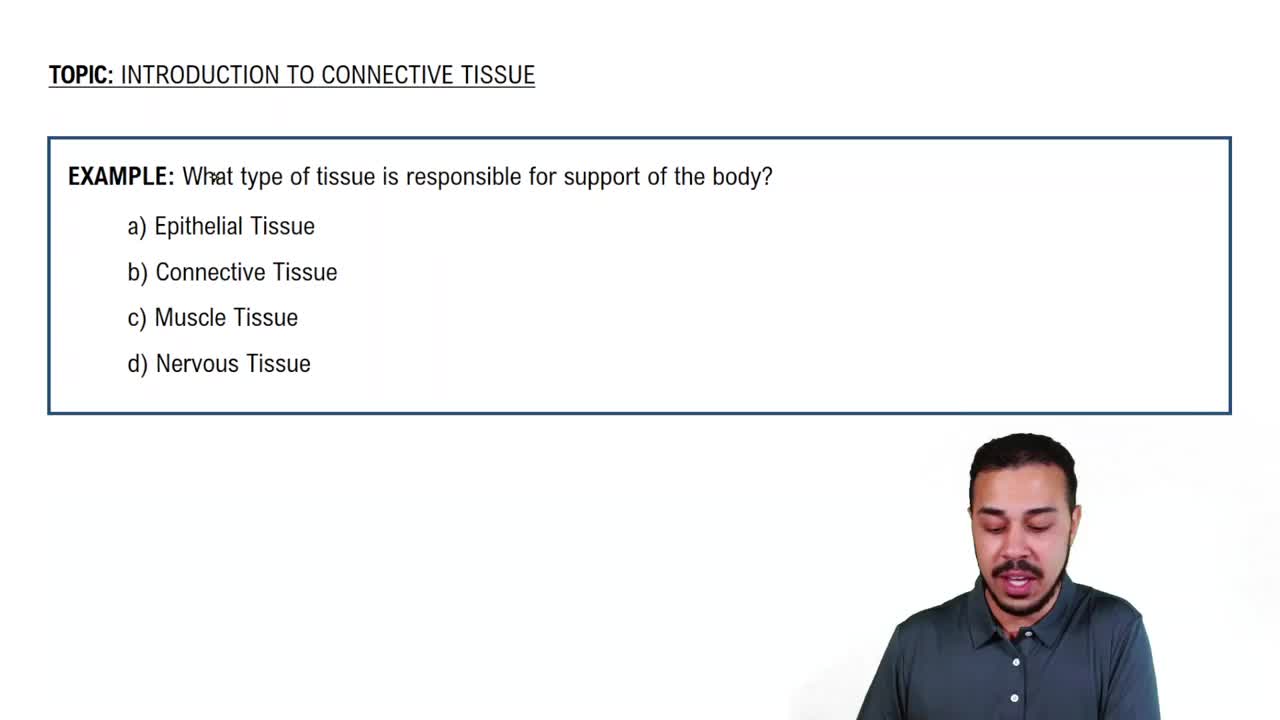
Introduction to Connective Tissue Example 1
6396
views
65
rank
1
comments
Terms in this set (11)
Hide definitions
What are the main protein fibers found in the extracellular matrix (ECM)?
Collagen fibers
,
reticular fibers
, and
elastic fibers
.
What is the role of glycosaminoglycans (GAGs) in the ECM?
GAGs
are long polysaccharide chains that attract water and help maintain the ECM's gel-like consistency.
What is a proteoglycan in the ECM?
A
proteoglycan
is a core protein with attached glycosaminoglycan chains that contribute to the ECM's structure and hydration.
What is a proteoglycan aggregate?
A large complex of proteoglycans bound to a central hyaluronic acid molecule, enhancing the ECM's viscosity.
What is the function of glycoproteins in the ECM?
Glycoproteins
help bind cells to the ECM and assist in cell signaling and adhesion.
What is the phospholipid bilayer in the cell membrane?
A double layer of phospholipids forming the basic structure of the cell membrane, providing a barrier and fluid matrix.
What are integral proteins in the cell membrane?
Integral proteins
span the phospholipid bilayer and function in transport, signaling, and structural support.
What is the extracellular fluid in the ECM?
The fluid surrounding cells that contains nutrients, signaling molecules, and waste products.
Describe collagen fibers in the ECM.
Collagen fibers
provide tensile strength and structural support to tissues.
Describe reticular fibers in the ECM.
Reticular fibers
form a fine meshwork that supports soft tissues and organs.
Describe elastic fibers in the ECM.
Elastic fibers
allow tissues to stretch and recoil, providing elasticity.
 BackBack
 06:37