Cover body surfaces, line body cavities, and form protective sheets around organs.
What are the types of epithelial membranes?
Cutaneous membranes (skin), mucous membranes, and serous membranes.
What is the cutaneous membrane?
The skin, a dry membrane exposed to air, with a superficial keratinized stratified squamous epithelium and underlying dense connective tissue dermis.
Where are mucous membranes found and what is their function?
Line body cavities open to the exterior (respiratory, digestive, urinary, reproductive tracts) and are often adapted for absorption or secretion.
What layers compose mucous membranes?
Surface epithelium (stratified squamous or simple columnar) resting on lamina propria (loose connective tissue).
What are serous membranes and their structure?
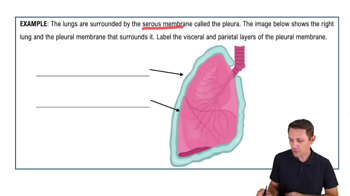
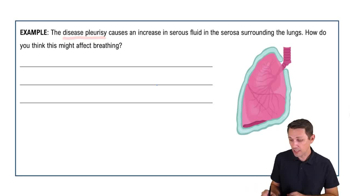
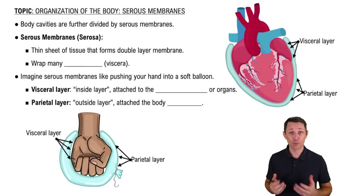
Line body cavities closed to the exterior; occur in pairs with visceral layer covering organs and parietal layer lining cavity walls, separated by serous fluid.
Name the three specific serous membranes and their locations.
Peritoneum (abdominal cavity), pleura (around lungs), and pericardium (around heart).
What is the synovial membrane and its function?
A connective tissue membrane lining joint capsules and tendon sheaths; secretes lubricating synovial fluid.
What are the main components of the integumentary system?
Skin (cutaneous membrane) and skin derivatives: sweat glands, oil glands, hair, and nails.
What are the primary functions of the skin?
Protection, regulation of body temperature, excretion of wastes, synthesis of vitamin D, and sensory reception.
Describe the epidermis.
The outermost layer of skin made of keratinized stratified squamous epithelium; contains keratinocytes producing keratin.
What is the dermis composed of?
Dense connective tissue containing collagen and elastic fibers, blood vessels, sweat and oil glands, and sensory receptors.
What is the hypodermis (subcutaneous tissue)?
A layer beneath the dermis composed mostly of adipose tissue; anchors skin to underlying organs and insulates the body.
List the layers of the epidermis from deep to superficial.
Stratum basale, stratum spinosum, stratum granulosum, stratum lucidum (only in thick skin), and stratum corneum.
What is the role of melanocytes and melanin?
Melanocytes produce melanin pigment in the stratum basale, which protects against UV radiation and determines skin color.
What are sebaceous glands and their function?
Oil glands that produce sebum to lubricate skin and hair, prevent brittleness, and kill bacteria; activated at puberty.
What are the two types of sweat glands and their differences?
Eccrine glands open directly to skin surface and regulate temperature; apocrine glands open into hair follicles and produce sweat with fatty acids.
What is the function of sweat?
Helps dissipate heat, excretes waste, and inhibits bacterial growth due to its acidic nature.
What structures are associated with hair?
Hair follicle, hair root, arrector pili muscle, sebaceous gland, and sweat gland.
What is the 'Rule of Nines' used for?
A method to estimate the extent of burns by dividing the body into 11 areas, each representing about 9% of total body surface.
Describe the three degrees of burns.
First-degree: epidermis damaged; second-degree: epidermis and upper dermis damaged with blisters; third-degree: entire skin layer destroyed.
When are burns considered critical?
If over 25% of body has second-degree burns, over 10% has third-degree burns, or third-degree burns affect face, hands, or feet.
 Back
 4:09