 Back
Hearing and Equilibrium Physiology - Anatomy & Physiology
 5:05

Terms in this set (14)
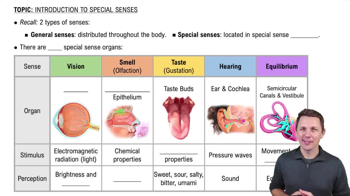
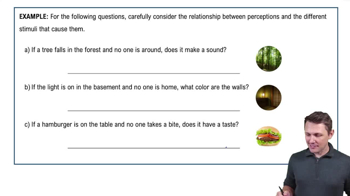
Sound is the stimulus for hearing, and movement is the stimulus for equilibrium.
Hair cells perform transduction by converting stimuli into neural signals.
Neurons next to hair cells generate and transmit the neural signals.
Several different parts of the brain integrate these signals, including the auditory cortex and brainstem nuclei.
Sound consists of pressure waves traveling through a medium.
Wavelength is the distance between two consecutive peaks of a sound wave.
Frequency, measured in Hertz (Hz), determines the pitch of a sound.
Decibels measure the intensity or loudness of sound.
Resonance is the amplification of sound waves when they match the natural frequency of an object.
The vestibulocochlear nerve transmits auditory signals to the brain.
The cochlear nucleus is the first brainstem nucleus to receive auditory input.
The inferior colliculus processes auditory signals in the midbrain.
The medial geniculate nucleus of the thalamus relays auditory signals to the auditory cortex.
The auditory cortex is the final processing center for sound perception.