 Back
BackHistology and Tissue Types in Anatomy & Physiology
 03:32
03:32
Terms in this set (25)
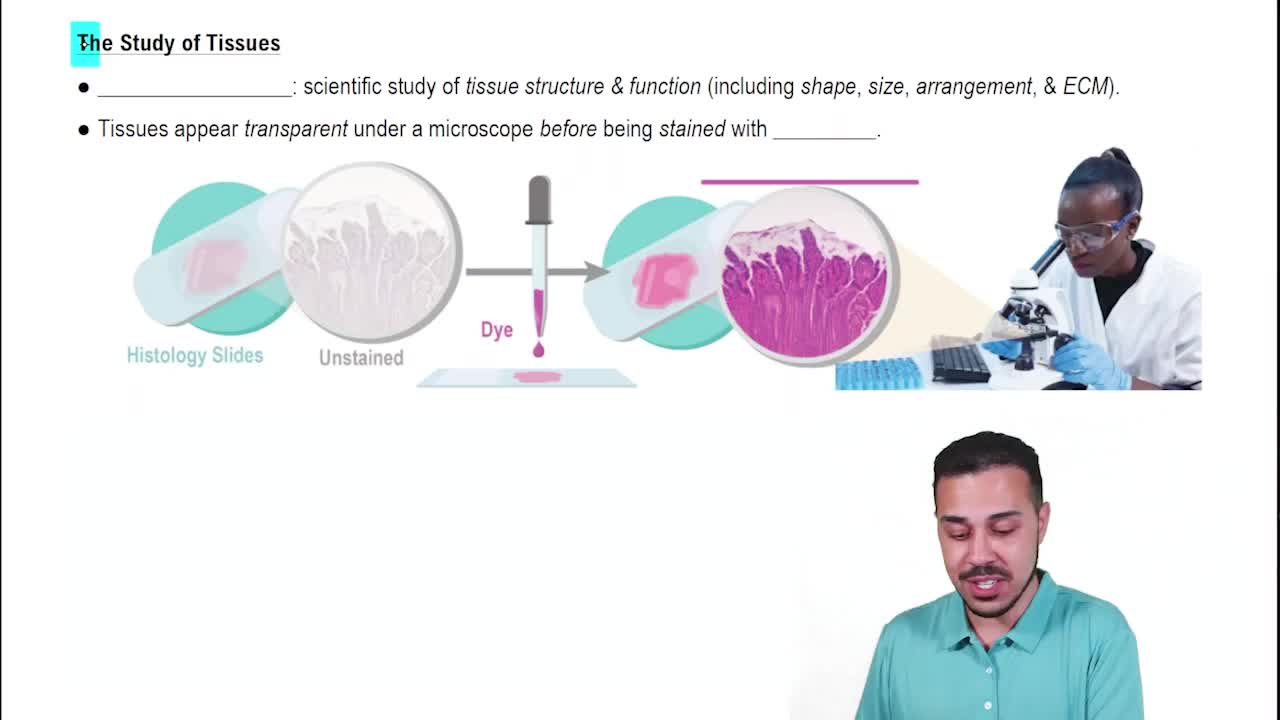
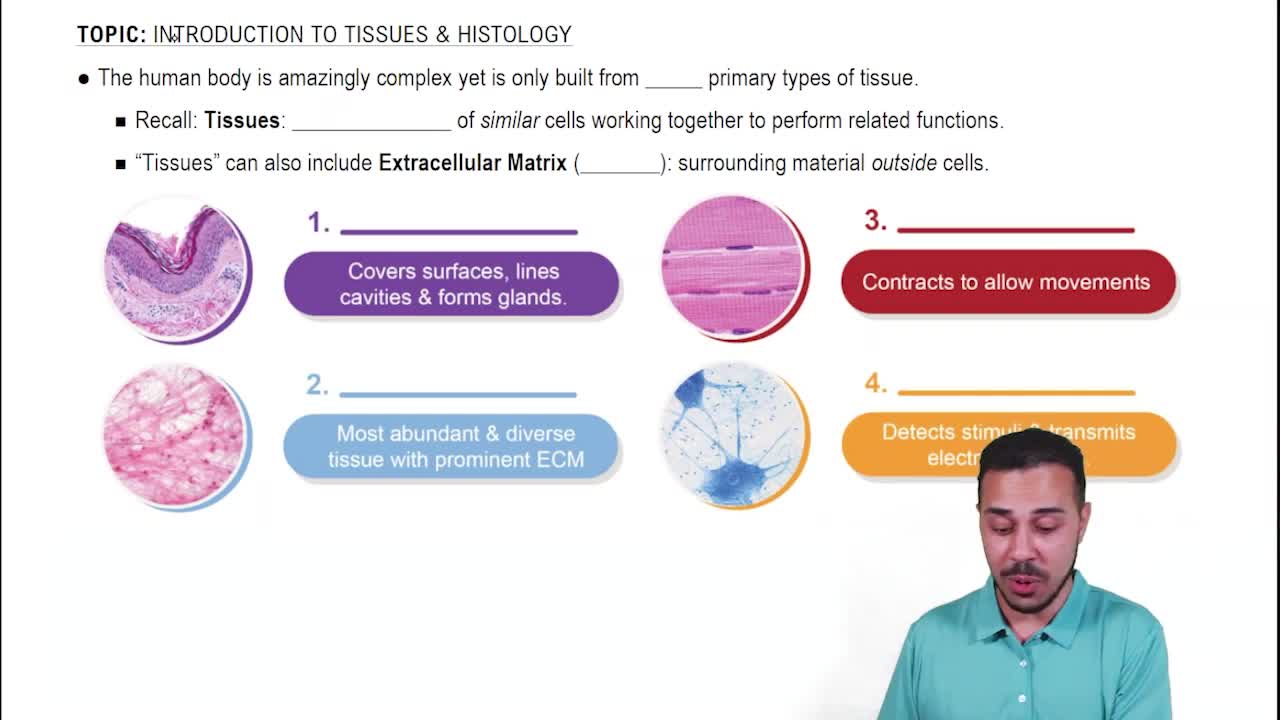
Histology is the study of tissues, which are groups of structurally and functionally related cells and their external environment performing common functions.
A discrete population of cells and the surrounding material called the Extracellular Matrix (ECM).
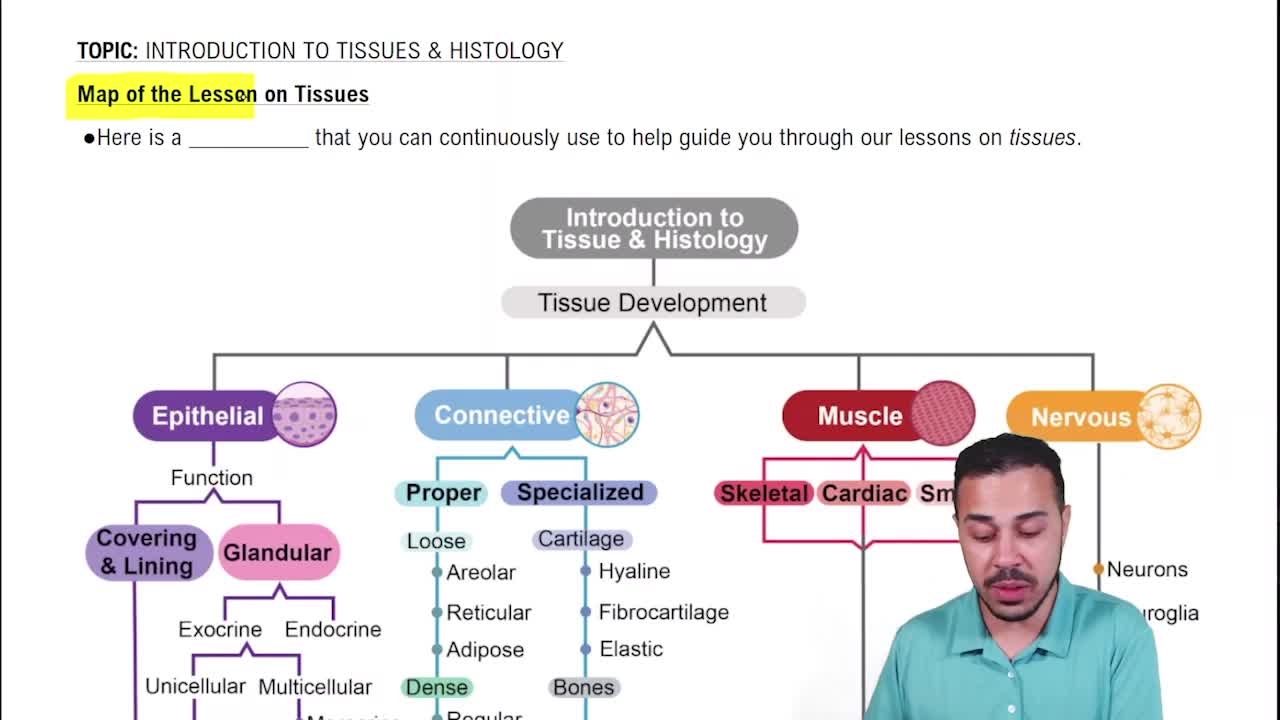
Epithelial, Connective, Muscular, and Nervous tissues.
Provides strength, directs cell placement, regulates cell activity, and holds cells in position.
Ground substance (gel-like with extracellular fluid, water, ions, nutrients, macromolecules) and protein fibers (collagen, elastic, reticular).
Negatively charged polysaccharides that attract ions and water, contributing to the gel-like ground substance.
Collagen fibers: strong, resist tension.
Elastic fibers: stretch and recoil.
Reticular fibers: thin collagen forming supportive networks.
Tight junctions: prevent passage of molecules.
Desmosomes: distribute mechanical stress.
Gap junctions: allow small substances to pass between cells.
Protection, immune defense, secretion, transport, and sensation.
Simple: one layer.
Stratified: multiple layers.
Pseudostratified: appears multilayered but is one layer.
Squamous: flat.
Cuboidal: cube-shaped.
Columnar: tall.
Allows rapid diffusion; found in lungs, blood vessels, and serous membranes.
Paracellular: substances pass between cells.
Transcellular: substances pass through cells via membrane and cytosol.
Multiple layers with flat apical cells; provides protection; found in skin, mouth, esophagus.
Exocrine glands: release products via ducts.
Endocrine glands: secrete hormones directly into blood.
Merocrine: exocytosis.
Holocrine: cell ruptures.
Apocrine: cytoplasm pinched off.
Bind, support, protect, and transport substances.
Loose (areolar), dense irregular, dense regular collagenous, dense regular elastic, reticular, and adipose tissues.
Cartilage, bone, and blood.
Hyaline: fine collagen, covers bone ends.
Fibrocartilage: thick collagen bundles.
Elastic: elastic fibers, found in ear and larynx.
Fibroblasts (produce fibers and ground substance), adipocytes (store lipids), mast cells (inflammatory mediators), and phagocytes (engulf foreign substances).
Skeletal: voluntary, multinucleate.
Cardiac: involuntary, branched, intercalated discs.
Smooth: involuntary, spindle-shaped, found in hollow organs.
Neurons: generate and conduct impulses.
Neuroglial cells: support neurons and maintain environment.
Serous (line body cavities), synovial (line joint cavities), mucous (line passages open to outside), and cutaneous (skin).
Regeneration: damaged cells replaced with same type.
Fibrosis: collagen fills defect, forming scar tissue.