Skip to main content
Anatomy & Physiology
My Course
Learn
Exam Prep
AI Tutor
Study Guides
Textbook Solutions
Flashcards
Explore
Try the app
My Course
Learn
Exam Prep
AI Tutor
Study Guides
Textbook Solutions
Flashcards
Explore
Try the app
Back
Human Organ Systems Overview
You can tap to flip the card.
Integumentary system function
You can tap to flip the card.
👆
Integumentary system function
Covers and protects tissues from injury.
Track progress
Control buttons has been changed to "navigation" mode.
1/23
Recommended videos
02:29
Introduction to Organ Systems
29806
views
756
rank
02:18
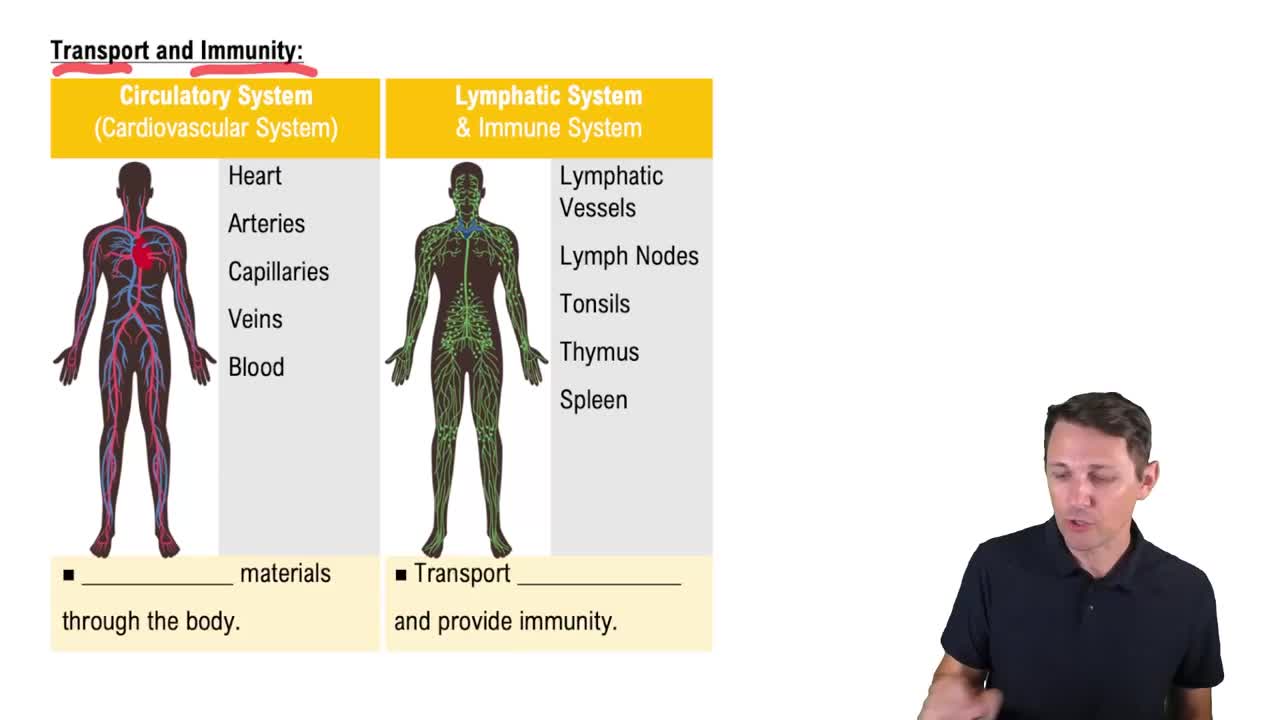
Transport and Immunity
17046
views
464
rank
1
comments
02:12
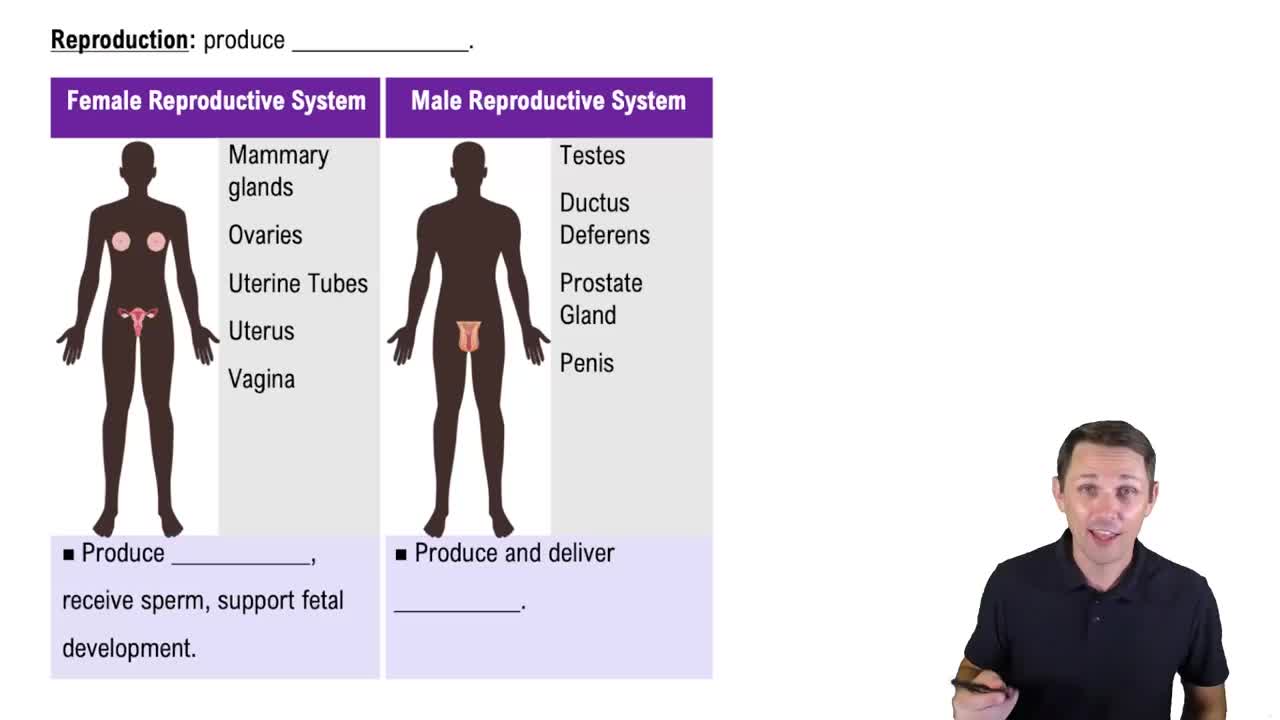
Reproduction
14274
views
384
rank
2
comments
Terms in this set (23)
Hide definitions
Integumentary system function
Covers and protects tissues from injury.
Integumentary system structures
Hair, nails, skin.
Skeletal system function
Protects and supports body organs.
Skeletal system structures
Bones, joints.
Muscular system function
Allows manipulation of environment, locomotion, and facial expression.
Muscular system structures
Muscles.
Nervous system function
Fast acting control system for the body.
Nervous system structures
Brain, spinal cord, nerves.
Endocrine system function
Glands secrete hormones to regulate growth, reproduction, and nutrient use.
Endocrine system structures
Thyroid, pineal, pituitary, thymus, adrenal, pancreas, ovary, testis.
Cardiovascular system function
Blood vessels transport blood carrying oxygen, carbon dioxide, nutrients, and waste; heart pumps blood.
Cardiovascular system structures
Heart, blood vessels.
Lymphatic system function
Picks up fluid leaked from blood vessels, disposes debris, houses white blood cells, and mounts immune response.
Lymphatic system structures
Red bone marrow, thymus, lymphatic vessels, thoracic duct, spleen, lymph nodes.
Respiratory system function
Keeps blood supplied with oxygen and removes carbon dioxide; gas exchange in lungs.
Respiratory system structures
Nasal cavity, pharynx, larynx, trachea, lung, bronchus.
Digestive system function
Breaks down food for distribution to body cells; eliminates foodstuffs as feces.
Digestive system structures
Oral cavity, esophagus, liver, stomach, small intestine, large intestine, rectum, anus.
Urinary system function
Eliminates waste from body; regulates water, electrolyte, and acid-base balance of blood.
Urinary system structures
Kidney, ureter, urinary bladder, urethra.
Reproductive system function
Produces offspring, sperm/egg, sex hormones, and milk.
Male reproductive system structures
Prostate, penis, testis, scrotum, ductus deferens.
Female reproductive system structures
Mammary glands, ovary, uterus, vagina, uterine tube.
 BackBack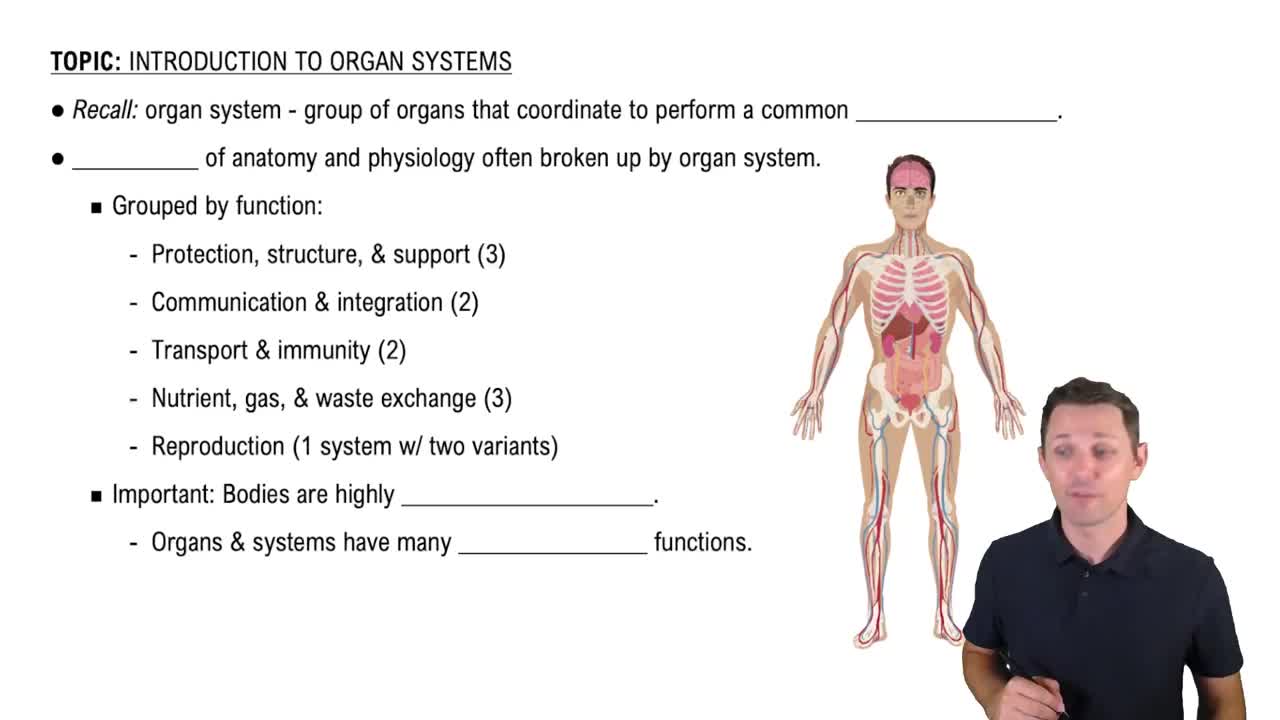
 02:29
02:29