 Back
Lymphatic and Immune System - Anatomy & Physiology
 3:32

Terms in this set (23)
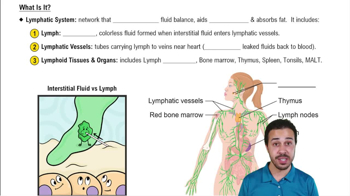
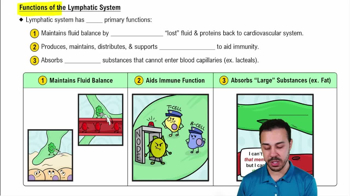
The lymphatic system returns excess tissue fluid to the bloodstream, absorbs fats from the digestive tract, and helps defend the body against pathogens.
Lymph is a clear fluid derived from interstitial fluid that circulates through lymphatic vessels, carrying immune cells and waste products.
Lymph flows from lymphatic capillaries to larger lymphatic vessels, then to lymph nodes, and finally drains into the collecting ducts which return it to the bloodstream.
Lymph nodes filter lymph to remove pathogens and debris; they are located along lymphatic vessels, especially in the neck, armpits, and groin.
The thymus is located in the upper chest and matures T lymphocytes essential for adaptive immunity.
The spleen is located in the upper left abdomen and filters blood, removes old red blood cells, and helps mount immune responses.
Neutrophils, eosinophils, basophils (granulocytes); lymphocytes, monocytes (agranulocytes). Each has distinct functions in immunity and different relative frequencies.
Neutrophils are granulocytes, most abundant WBCs (~60-70%), and are the first responders that phagocytize bacteria.
Eosinophils are granulocytes (~2-4%), involved in allergic responses and combat parasitic infections.
Basophils are granulocytes (<1%), release histamine and other chemicals to promote inflammation.
Lymphocytes are agranulocytes (~20-25%), including T cells and B cells, responsible for adaptive immunity.
Monocytes are agranulocytes (~3-8%), which mature into macrophages that phagocytize pathogens and debris.
Pus is a thick fluid of dead WBCs, pathogens, and tissue debris, indicating an active infection and immune response.
Innate defenses are nonspecific immune responses present at birth that protect against a wide range of pathogens.
Mechanical barriers include skin and mucous membranes that physically block pathogen entry.
Chemical barriers include enzymes in saliva, stomach acid, and antimicrobial proteins that destroy pathogens.
Species resistance is the natural immunity a species has against certain pathogens that affect other species.
Phagocytosis is the process where cells like neutrophils and macrophages engulf and destroy pathogens.
Fever raises body temperature to inhibit pathogen growth and enhance immune function.
An antigen is any substance that triggers an adaptive immune response by being recognized as foreign.
T cells destroy infected cells; B cells produce antibodies; Natural killer cells attack abnormal cells.
Vaccines expose the immune system to antigens to stimulate immunity without causing disease.
Whole-microbe (live or killed), sub-unit (parts of microbes), and genetic (DNA/RNA-based) vaccines.