 Back
Lymphatic, Immune, and Respiratory Systems - Anatomy & Physiology
 3:32

Terms in this set (30)
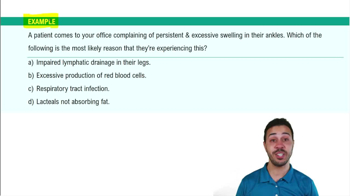
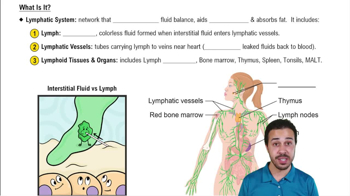
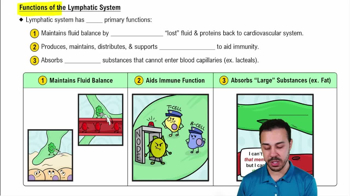
The lymphatic system returns interstitial fluid to the bloodstream, absorbs fats from the digestive tract, and participates in immune responses by housing lymphocytes.
Whole blood contains cells and plasma; plasma is the fluid portion of blood; interstitial fluid bathes tissue cells; lymph is interstitial fluid collected into lymphatic vessels.
Lymphatic vessels have thinner walls, more valves, and carry lymph unidirectionally; blood vessels carry blood under pressure and have thicker walls.
Lymph flows from lymphatic capillaries → larger lymphatic vessels → lymph nodes → lymph trunks → lymph ducts → subclavian veins.
Innate immunity is nonspecific, immediate defense; adaptive immunity is specific, slower, and has memory.
Include skin and mucous membranes with physical, chemical, and microbiological defenses like acidic pH, enzymes, and normal flora.
Recognition and attachment, engulfment, formation of phagosome, fusion with lysosome, digestion, and exocytosis of debris.
NK cells destroy virus-infected and tumor cells by inducing apoptosis without prior sensitization.
Complement proteins enhance inflammation, opsonize pathogens, and form membrane attack complexes to lyse cells.
Caused by tissue injury or infection; benefits include isolating pathogens, removing debris, and promoting healing.
Pyrogens reset hypothalamic thermostat to raise body temperature, which inhibits pathogens and enhances immune function.
Antibody-mediated uses B cells and antibodies; cell-mediated uses T cells to destroy infected or abnormal cells.
An antigen triggers immune response; a self-antigen is a normal body molecule recognized as self to prevent autoimmunity.
Class I MHC found on all nucleated cells; Class II MHC on antigen-presenting cells; both present antigens to T cells.
Immunocompetence is the ability of lymphocytes to recognize specific antigens; self-tolerance prevents immune attack on self.
Antigen activates specific lymphocyte clone, which proliferates into effector and memory cells for targeted immunity.
Y-shaped molecule with two heavy and two light chains; variable regions bind antigen; constant region determines class and function.
Active immunity results from exposure to antigen; passive immunity is transfer of antibodies from another source.
Includes ventilation, pulmonary gas exchange, gas transport in blood, and tissue gas exchange.
Conducting zone transports air; respiratory zone is where gas exchange occurs (alveoli).
Upper: nose, nasal cavity, pharynx; Lower: larynx, trachea, bronchi, lungs.
Protects airway, produces sound, and routes air and food into proper channels.
Vestibular folds protect airway; vocal folds produce sound by vibrating during exhalation.
Flexible tube with C-shaped hyaline cartilage rings that keep airway open and allow esophageal expansion.
Bronchi have cartilage and glands; bronchioles lack cartilage and have smooth muscle to regulate airflow.
Thin barrier between alveolar air and blood for efficient gas exchange.
Movement of air into and out of lungs; includes inspiration and expiration.
Gas pressure inversely related to volume; lung volume changes cause air to flow in or out.
Include tidal volume, inspiratory reserve volume, expiratory reserve volume, residual volume, and capacities like vital capacity.
Total pressure of gas mixture equals sum of partial pressures of individual gases.