 Back
BackLymphatic System
 3:32
3:32
Terms in this set (23)
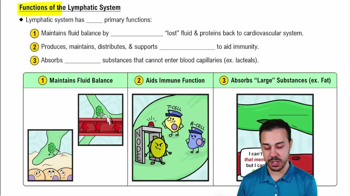
1. Returns excess interstitial fluid to the bloodstream.
2. Provides immune defense by filtering lymph and housing lymphocytes.
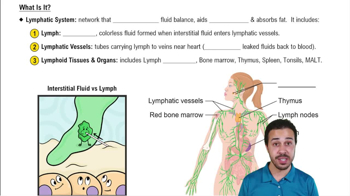
A network of vessels, nodes, and organs that transports lymph and supports immune function.
Clear fluid derived from interstitial fluid that circulates in lymphatic vessels.
Fluid that surrounds tissue cells, providing nutrients and removing waste.
The liquid component of blood that carries cells and proteins throughout the body.
Thin-walled vessels that carry lymph from tissues toward the heart, equipped with valves to prevent backflow.
Small, blind-ended vessels that absorb interstitial fluid to form lymph.
Specialized lymphatic capillaries in the small intestine that absorb dietary fats.
A duct that drains lymph from the right upper limb, right side of the head, and thorax into the right subclavian vein.
The largest lymphatic vessel that drains lymph from most of the body into the left subclavian vein.
A sac-like reservoir at the start of the thoracic duct that collects lymph from the lower body.
Composed of three layers: endothelium, smooth muscle, and connective tissue with valves to ensure one-way flow.
Transport lymph, maintain fluid balance, and facilitate immune cell movement.
Mechanism using skeletal muscle contractions and vessel valves to propel lymph through vessels.
Small, bean-shaped organs with a fibrous capsule, cortex with lymphoid follicles, and medulla containing macrophages.
Filter lymph, trap pathogens, and activate immune responses.
Primarily drains into the axillary lymph nodes, important in breast cancer spread.
Axillary, cervical, and inguinal regions due to their role in filtering lymph from major body areas.
Lymphoid tissues in the pharynx that trap pathogens entering through the mouth and nose.
Located in the anterior mediastinum, behind the sternum and above the heart.
Site of T lymphocyte maturation and development of immune tolerance.
Located in the upper left abdomen, lateral to the stomach.
Filters blood, removes old red blood cells, and helps mount immune responses.