 Back
Lymphatic System - Anatomy & Physiology
 3:32

Terms in this set (29)
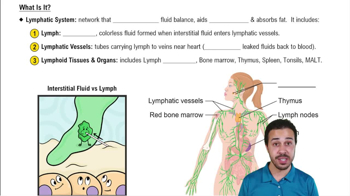
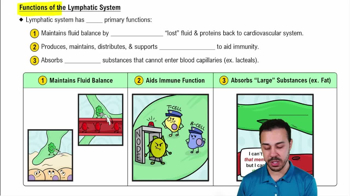
The lymphatic system is a network of vessels, tissues, and organs that helps maintain fluid balance, absorbs fats, and supports immunity.
The two main components are lymphatic vessels and lymphoid tissues/organs.
Functions include fluid balance, fat absorption from the digestive tract, and immune defense.
Immunity is the body's ability to resist or defend against infection and disease.
The fluid is called lymph, which is interstitial fluid collected from tissues.
Lymphatic capillaries are tiny, blind-ended vessels that absorb interstitial fluid to form lymph.
Lymphoid follicles are dense clusters of lymphocytes found in lymphoid tissues, often sites of immune activation.
Examples include follicles in lymph nodes, tonsils, and Peyer's patches in the ileum.
Major trunks include jugular (head/neck), subclavian (upper limbs), bronchomediastinal (thorax), intestinal (abdomen), and lumbar (lower limbs, pelvis).
The intestinal and lumbar trunks drain into the cisterna chyli, a sac-like reservoir.
The thoracic duct receives lymph from the cisterna chyli, left jugular, left subclavian, and left bronchomediastinal trunks.
The right lymphatic duct drains lymph from the right side of the head, neck, thorax, and right upper limb.
Lymph vessels join the venous system at the junction of the jugular vein and subclavian vein on the left and right sides.
Lymph vessels have valves that prevent backflow and ensure one-way lymph movement.
Lymph moves by skeletal muscle contractions, respiratory movements, and valve action in vessels.
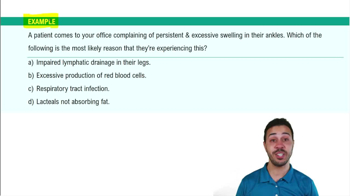
Edema is swelling caused by excess interstitial fluid accumulation.
Lymphedema is swelling due to impaired lymph drainage, often from lymph vessel blockage.
Lacteals are specialized lymphatic capillaries in the small intestine that absorb dietary fats.
Reticular tissue is a connective tissue with reticular fibers produced by reticular cells, forming a supportive network in lymphoid organs.
Reticular fibers provide a supportive framework for lymphoid tissues and organs.
The two types are B cells (produce antibodies) and T cells (cell-mediated immunity).
Macrophages are phagocytic cells that engulf pathogens and debris in lymphoid tissues.
Dendritic cells capture antigens and present them to lymphocytes to initiate immune responses.
Phagocytosis is the process by which cells engulf and digest pathogens or debris.
MALT is lymphoid tissue in mucous membranes, found in respiratory, digestive, and urogenital tracts.
Germinal centers are zones in lymphoid follicles where B cells proliferate after activation by pathogens.
Specialized MALTs include the tonsils in the oral and nasal cavities.
Peyer's patches are specialized MALTs found in the ileum of the small intestine.
The appendix contains specialized MALT associated with the large intestine.