 Back
Lymphatic System and Lymphoid Organs - Anatomy & Physiology
 3:32

Terms in this set (20)
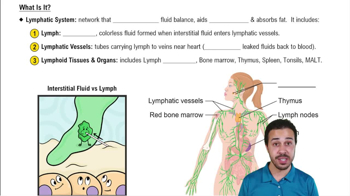
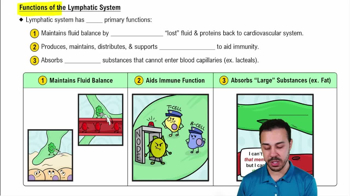
Returns fluids leaked from the vascular system back to the blood and cleanses lymph through lymph nodes.
Fluid contained in lymphatic vessels that originates from excess tissue fluid.
One-way swinging door valves that are permeable to fluid, proteins, cell debris, pathogens, and cancer cells; retrieve excess fluid from tissue.
Lymphatic capillaries → collecting lymphatic vessels → lymphatic trunks → lymphatic ducts → blood stream at jugular and subclavian vein junctions.
Milking action of skeletal muscles, thoracic pressure changes during breathing, valves preventing backflow, arterial pulsations, and smooth muscle contractions in vessels.
Reticular tissue, which supports lymphocytes and other immune cells.
Macrophages, B and T lymphocytes, dendritic cells, and reticular cells.
Diffuse lymphoid tissue (loose cells) and lymphoid follicles (solid, spherical bodies with germinal centers).
Red bone marrow (B cell maturation) and thymus (T cell maturation).
Lymph nodes, spleen, and MALT; sites where mature lymphocytes encounter antigens and become activated.
Cleansing lymph by macrophages and activating immune responses by lymphocytes encountering antigens.
Dense fibrous capsule with trabeculae, cortex with lymphoid follicles and germinal centers, and medulla with medullary cords containing B and T cells.
Enters via afferent vessels, moves through subcapsular and medullary sinuses, exits via fewer efferent vessels allowing immune processing.
Removes bloodborne pathogens and aged red blood cells, site for lymphocyte proliferation, stores platelets and monocytes.
Guards body entryways against pathogens; includes tonsils, Peyer’s patches, and appendix.
Palatine (oral cavity), lingual (base of tongue), pharyngeal (nasopharynx), and tubal (auditory tube openings).
Trap bacteria and expose immune cells to antigens to develop immune memory.
Clusters of lymphoid follicles in the small intestine and appendix that trap bacteria and generate memory lymphocytes.
Primary lymphoid organ for T cell maturation, no B cells or follicles, stroma made of epithelial cells, contains thymic corpuscles.
Prominent in newborns, grows in childhood, atrophies after puberty, replaced by fibrous and fatty tissue in old age.