 Back
Membranes in Anatomy & Physiology
 4:09

Terms in this set (20)
A membrane is a thin layer of tissue that covers a surface, lines a cavity, or divides a space or organ.
Epithelial membranes and connective tissue membranes.
They cover body surfaces and line body cavities, providing protection and secretion.
Cutaneous, mucous, and serous membranes.
The skin, which covers the body surface and protects underlying tissues.
They line body cavities that open to the exterior, such as the respiratory and digestive tracts.
To secrete mucus that lubricates and protects the lining of organs.
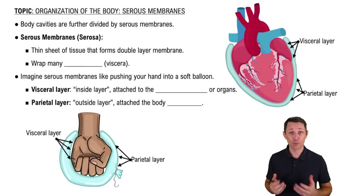
Thin membranes that line closed body cavities and cover organs, producing serous fluid for lubrication.
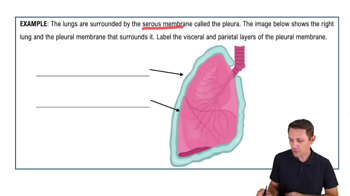
Parietal layer lines the cavity; visceral layer covers the organ.
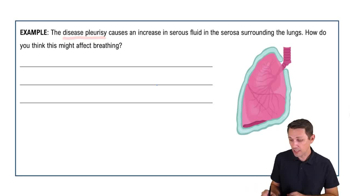
It reduces friction between the parietal and visceral layers during organ movement.
Membranes made only of connective tissue, such as synovial membranes in joints.
They line the cavities of freely movable joints, producing synovial fluid.
To lubricate joints and nourish cartilage.
Mucous membranes open to the exterior and secrete mucus; serous membranes line closed cavities and secrete serous fluid.
Stratified squamous epithelium over dense connective tissue.
They protect organs, reduce friction, and facilitate movement and exchange of substances.
Epithelial membranes include an epithelial layer; connective tissue membranes do not.
The pleura around the lungs or the peritoneum in the abdominal cavity.
The simple squamous epithelium that forms the epithelial layer of serous membranes.
By protecting organs, controlling permeability, and facilitating fluid balance.