Back

MIDTERM

Control buttons has been changed to "navigation" mode.
1/53
  • Chin region

    Mental

  • Cheek region

    Buccal

  • Lowest cavity within pelvis

    Pelvic cavity

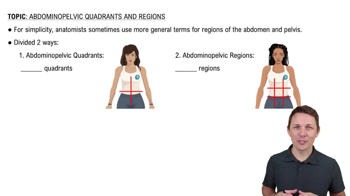
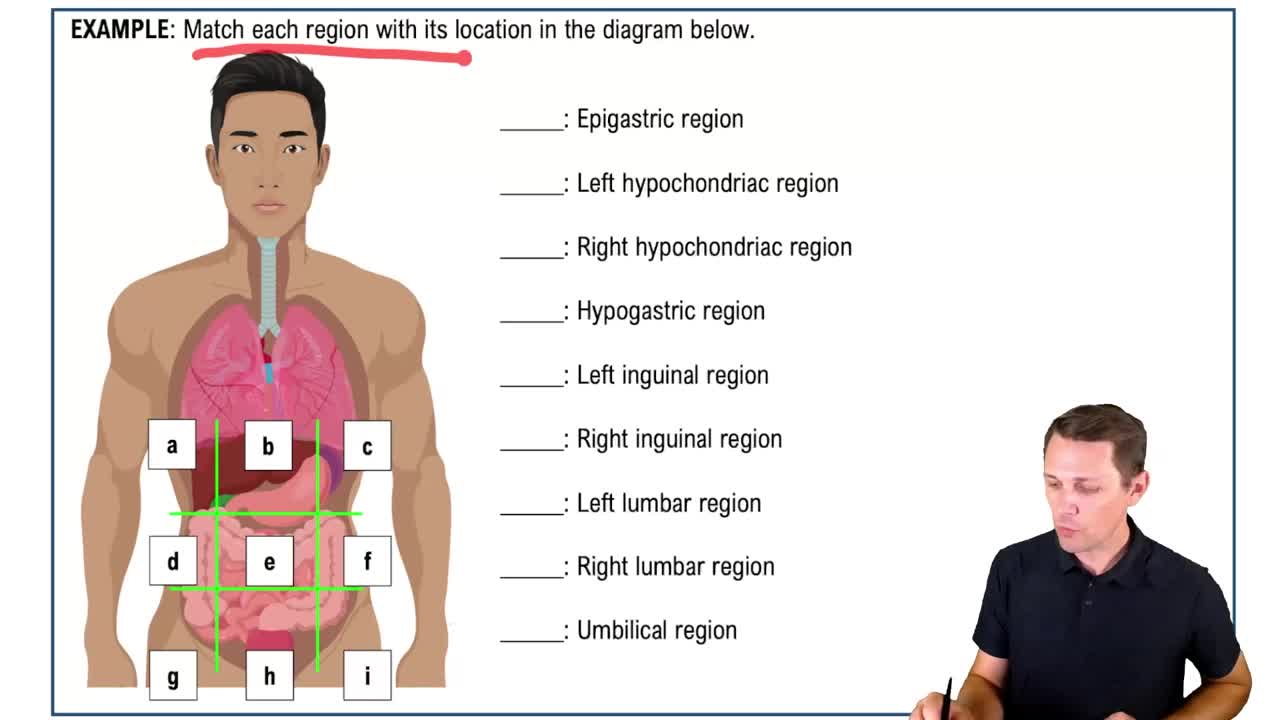
  • Top right abdominopelvic region

    Right hypochondriac

  • Bottom left abdominopelvic region

    Left iliac

  • Middle abdominopelvic region

    Umbilical

  • Total magnification of high power objective

    400X

  • Total magnification of low power objective

    100X

  • Total magnification of oil immersion objective

    1000X

  • Total magnification of scanning objective

    40X

  • Image stays in focus when magnification changes

    Parfocal

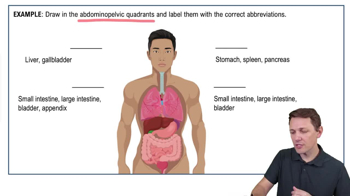
  • Lower left quadrant of abdomen

    LLQ

  • Quadrant where majority of stomach resides

    LUQ

  • Organ system showing veins, heart, arteries

    Cardiovascular system

  • Function of organ system showing kidneys and bladder

    Eliminates wastes

  • Osteoclast

    Bone destroying cells

  • Erythrocyte

    Red blood cells

  • Leukocyte

    White blood cells

  • Neuron

    Nerve cell

  • Neuroglial cells

    Helper cells to neurons, nourish and support

  • Phases of mitosis in order

    Prophase, Metaphase, Anaphase, Telophase

  • Prophase key events

    Nuclear envelope breaks down, chromosomes visible, centrioles move to poles, mitotic spindle forms

  • Metaphase key event

    Chromosomes line up on metaphase plate (equator)

  • Anaphase key event

    Sister chromatids separate, cytokinesis begins

  • Telophase key event

    Daughter chromosomes reach poles, nuclear envelope reforms, nucleolus reappears, cleavage furrow forms

  • Skeletal muscle characteristics

    Striated, voluntary, multinucleated, attached to bone

  • Smooth muscle characteristics

    No striations, involuntary, uninucleated, found in hollow organs

  • Cardiac muscle characteristics

    Striated, involuntary, usually uninucleated, found in heart, has intercalated discs

  • Simple cuboidal epithelium

    One layer of cube-shaped cells; located in kidney tubules; functions in secretion and absorption

  • Simple columnar epithelium

    One layer of tall cells; located in gastrointestinal tract; functions in secretion and absorption

  • Stratified squamous keratinized epithelium

    Several layers with flat, keratinized apical cells; located in skin; functions in protection and secretion

  • Transitional epithelium

    Several layers with shape changing cells; located in urinary bladder; allows stretching

  • Simple squamous epithelium

    One layer of flattened cells; located in capillaries; allows diffusion and filtration

  • Pseudostratified columnar epithelium

    One layer of cells of differing heights; located in trachea; moves secretions by cilia

  • Main cells involved in nervous tissue impulse conduction

    Neurons

  • Nervous tissue cells that nourish and support neurons

    Neuroglia

  • Parts of neuron that carry impulses away from and toward cell body

    Axons carry impulses away; dendrites carry impulses toward cell body

  • Fibrocartilage location and function

    Located in intervertebral discs; provides support

  • Areolar connective tissue location and function

    General packing material around blood vessels and organs; provides strength, elasticity, support

  • Dense regular connective tissue location and function

    Located in tendons and ligaments; provides strong attachment sites

  • Adipose connective tissue location and function

    Located subcutaneously; provides insulation and energy storage

  • Hyaline cartilage location

    Ends of long bones and nasal septum

  • Elastic cartilage location

    External ear and epiglottis

  • Reticular connective tissue location

    Lymph nodes and lymphatic organs

  • Dense irregular connective tissue location and function

    Located in dermis and joint capsules; provides strength and resists stress

  • Bone and blood as connective tissues

    Both have specialized cells scattered in extracellular matrix

  • Microscope part that controls light amount passing through stage

    Iris diaphragm

  • How to calculate total magnification on microscope

    Ocular lens power × objective lens power

  • Cell cycle phases

    Interphase (G1, S, G2) and Mitosis (Prophase, Metaphase, Anaphase, Telophase)

  • Function of mitochondrion

    Site of ATP production

  • Function of rough endoplasmic reticulum

    Protein synthesis (has ribosomes)

  • Function of smooth endoplasmic reticulum

    Lipid synthesis

  • Function of lysosome

    Recycles old organelles and intracellular digestion