 Back
BackMuscle Anatomy & Physiology Study Guide
 6:31
6:31
Terms in this set (31)
Movement, posture maintenance, heat production, and stabilizing joints.
Properties of muscle tissues and the differences
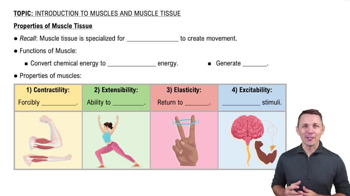
Excitability, contractility, extensibility, and elasticity.
Bundles of muscle fibers grouped together within a muscle.
The cytoplasm of a muscle fiber containing glycogen and myoglobin.
A specialized smooth ER that stores and releases calcium ions to trigger muscle contraction.
Thin filaments are mainly actin; thick filaments are mainly myosin, both essential for contraction.
The functional contractile unit of a muscle fiber, defined by Z discs.
Site where a motor neuron releases acetylcholine to stimulate muscle fiber contraction.
Calcium binds to troponin, causing tropomyosin to move and expose binding sites on actin for myosin.
Slow oxidative, fast oxidative, and fast glycolytic fibers differ in speed and fatigue resistance.
Muscles that work together to perform the same movement.
Examples include parallel, fusiform, pennate, and circular muscle arrangements.
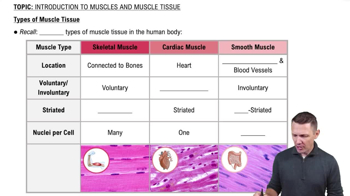
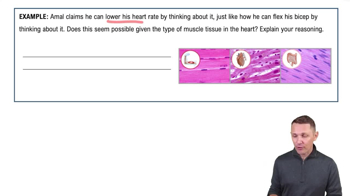
Skeletal: voluntary movement; cardiac: heart pumping; smooth: involuntary control of organs.
Epimysium surrounds the whole muscle, perimysium surrounds fascicles, endomysium surrounds individual fibers.
Depolarization: Na+ influx makes inside positive; repolarization: K+ efflux restores negative resting potential.
Some motor units are active, producing graded muscle tension rather than full contraction.
Myosin heads pull actin filaments inward, shortening the sarcomere during contraction.
I band and H zone shorten; A band remains constant.
Calcium binds to troponin, causing tropomyosin to move and expose myosin-binding sites on actin.
Through creatine phosphate system, anaerobic glycolysis, and aerobic respiration.
A motor neuron and all muscle fibers it controls; smaller motor units allow more precise control.
Smooth muscle regenerates better than skeletal or cardiac muscle.
Made of muscle fibers, connective tissue, blood vessels, and nerves.
A broad, flat tendon-like sheet connecting muscle to bone or other muscles.
In the sarcoplasmic reticulum of muscle fibers.
Fatigue occurs from energy depletion and waste buildup; recovery uses oxygen to restore ATP and clear metabolites.
It stimulates muscle fibers by binding receptors at the neuromuscular junction.
Myoglobin stores and transports oxygen within muscle cells.
Calcium binds calmodulin, activating myosin light-chain kinase to enable cross-bridge cycling.
Fulcrum is the pivot point; lever is the bone; load is the resistance to movement.
criteria to name muscles?
Location, Name, size