 Back
Nervous System and Special Senses - Anatomy & Physiology
 04:36

Terms in this set (21)
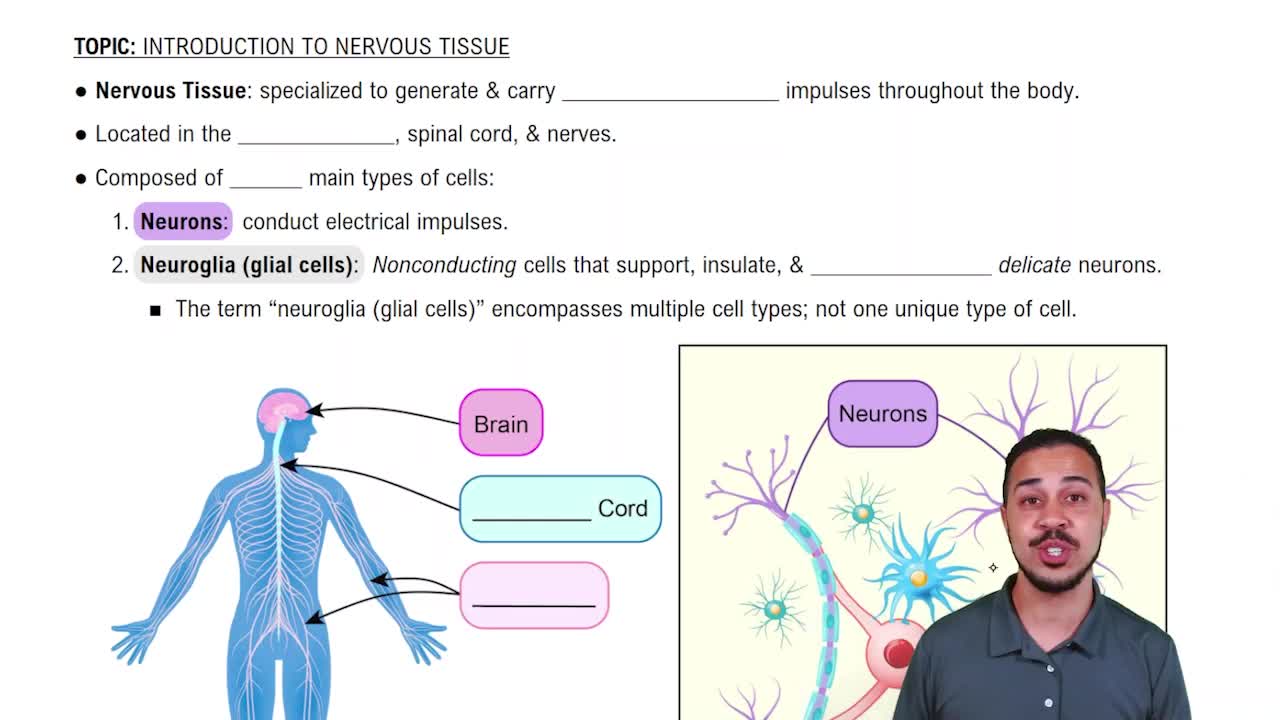
The nervous system is divided into the central nervous system (CNS) and the peripheral nervous system (PNS). It consists of neurons and supporting cells that transmit and process information.
To detect stimuli, process information, and coordinate responses to maintain homeostasis and control body functions.
Electrical impulses trigger release of neurotransmitters from the presynaptic neuron, which cross the synaptic cleft and bind to receptors on the postsynaptic neuron, generating a new impulse.
The CNS includes the brain and spinal cord, responsible for processing sensory information and coordinating motor output.
Controls higher functions like thought, memory, emotion, and voluntary movement.
Conducts signals between the brain and body and mediates reflexes.
Controls muscles of facial expression and conveys taste sensations from the anterior two-thirds of the tongue.
Provides sensation to the face and controls muscles involved in mastication (chewing).
Transmits visual information from the retina to the brain.
Controls parasympathetic output to thoracic and abdominal organs, affecting heart rate, digestion, and respiratory rate.
A neural pathway that controls a reflex action, typically involving a sensory neuron, interneuron, and motor neuron.
Allows rapid, involuntary responses to stimuli to protect the body and maintain homeostasis.
The patellar nerve mediates the knee-jerk reflex.
Prepares the body for 'fight or flight' by increasing heart rate, dilating pupils, and inhibiting digestion.
Promotes 'rest and digest' activities by slowing heart rate, constricting pupils, and stimulating digestion.
Sympathetic activates the body for stress; parasympathetic conserves energy and restores the body.
Include the eyes (vision), ears (hearing and balance), nose (smell), and tongue (taste).
Detects light and converts it into neural signals for vision.
Detects sound waves for hearing and monitors balance and spatial orientation.
Detects airborne chemicals for the sense of smell.
Contains taste buds that detect sweet, sour, salty, bitter, and umami flavors.