 Back
Respiratory System Basics - Anatomy & Physiology
 4:28

Terms in this set (20)
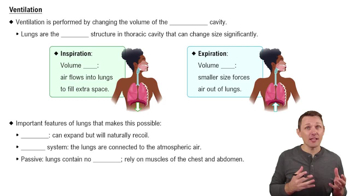
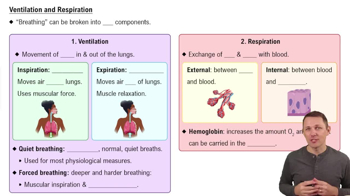
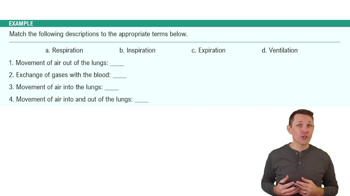
Ventilation is the process of moving air into and out of the lungs, enabling gas exchange with the environment.
Respiration refers to the biochemical process of gas exchange where oxygen is taken in and carbon dioxide is expelled at the cellular level.
Inspiration is the active process of inhaling air into the lungs by expanding the thoracic cavity.
Exhalation is the passive process of expelling air from the lungs by reducing the thoracic cavity volume.
The upper respiratory tract includes the nose, nasal cavity, pharynx, and larynx.
The lower respiratory tract consists of the trachea, bronchi, bronchioles, and lungs.
The diaphragm contracts during inspiration, increasing thoracic volume and drawing air into the lungs.
Intercostal muscles assist in expanding and contracting the rib cage during ventilation.
Ventilation is the mechanical movement of air, while respiration is the cellular gas exchange process.
The nasal cavity filters, warms, and humidifies incoming air before it reaches the lungs.
The larynx protects the airway and houses the vocal cords for sound production.
The trachea serves as the main airway conducting air to the bronchi and lungs.
Bronchi are the two main branches from the trachea that direct air into each lung.
Bronchioles are smaller branches of bronchi that lead air to the alveoli for gas exchange.
The alveoli are tiny air sacs where oxygen and carbon dioxide are exchanged with blood.
Exhalation occurs when respiratory muscles relax, decreasing thoracic volume and pushing air out of the lungs.
Surfactant reduces surface tension in alveoli, preventing collapse during exhalation.
Mucus and cilia in the respiratory tract trap and remove dust and microbes.
Tidal volume is the air moved during normal breathing; vital capacity is the maximum air exhaled after a deep breath.
Oxygen is essential for producing ATP by enabling aerobic metabolism in cells.