Skip to main content
Anatomy & Physiology
My Course
Learn
Exam Prep
AI Tutor
Study Guides
Textbook Solutions
Flashcards
Explore
Try the app
My Course
Learn
Exam Prep
AI Tutor
Study Guides
Textbook Solutions
Flashcards
Explore
Try the app
Back
Set #1 Axial Skeleton and Bone Tissue - Anatomy & Physiology
You can tap to flip the card.
Diaphysis (Long Bone)
You can tap to flip the card.
👆
Diaphysis (Long Bone)
The elongated, cylindrical shaft of a long bone located between the proximal and distal epiphyses.
Track progress
Control buttons has been changed to "navigation" mode.
1/35
Recommended videos
1:07
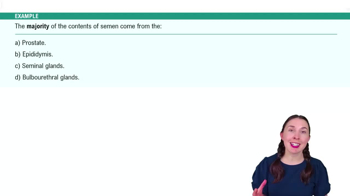
Anatomy of the Male Reproductive System Example 2
3395
views
56
rank
3:19
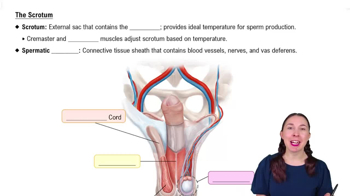
The Scrotum
4897
views
75
rank
0:59
Anatomy of the Male Reproductive System Example 4
3356
views
45
rank
Terms in this set (35)
Hide definitions
Diaphysis (Long Bone)
The elongated, cylindrical shaft of a long bone located between the proximal and distal epiphyses.
Epiphysis (Long Bone)
The expanded structural end of a long bone at both proximal and distal extremities of the bone shaft.
Medullary (Marrow) Cavity
The hollow internal space within the diaphysis of a long bone containing yellow bone marrow in adults.
Epiphyseal Line/Plate
The remnant of the hyaline cartilage growth plate located in the metaphysis between epiphysis and diaphysis.
Compact Bone
Dense, hard bone tissue forming the protective outer layer of all bones and the bulk of the diaphysis.
Spongy Bone
Lightweight bone tissue with a lattice of trabeculae, primarily inside epiphyses and flat or irregular bones.
Osteon
The structural and functional unit of compact bone; cylindrical structures with mineral matrix and osteocytes in concentric layers.
Concentric and Interstitial Lamellae
Concentric lamellae are rings of calcified matrix around a central canal; interstitial lamellae are remnants of old osteons between intact ones.
Central Canal
A microscopic tunnel running longitudinally through an osteon housing blood vessels and nerves.
Osteocytes
Mature bone cells that maintain the bone matrix, located inside lacunae.
Lacunae
Tiny fluid-filled cavities within bone matrix, each housing a single osteocyte.
Canaliculi
Microscopic canals connecting lacunae and the central canal for nutrient and waste exchange.
Trabeculae
Interconnecting plates or spikes forming the meshwork of spongy bone tissue.
Periosteum
A fibrous, cellular membrane covering the external surface of bones except at joint surfaces.
Frontal Bone
The anterior bone forming the forehead and roofs of the orbital sockets.
Frontal Sinus
An air-filled cavity within the frontal bone just above the eyebrows.
Parietal Bones
A pair of bones forming the superior and lateral sides of the cranium.
Superior Temporal Line
A curved ridge on the lateral surface of the parietal bone serving as an attachment for temporal fascia.
Occipital Bone
The single bone forming the posterior wall and base of the cranium.
Foramen Magnum
The large opening at the base of the occipital bone through which the spinal cord passes to the brainstem.
Occipital Condyles
Paired oval projections on either side of the foramen magnum that articulate with the first cervical vertebra (Atlas).
Superior Nuchal Line
A horizontal ridge extending laterally from the external occipital protuberance for neck and back muscle attachment.
External Occipital Protuberance
A prominent midline projection on the outer posterior surface of the occipital bone.
Temporal Bones
Paired bones forming the lower lateral walls and part of the skull base.
External Acoustic Meatus
The canal in the temporal bone leading inward to the eardrum.
Mastoid Process
A large, rounded bony projection on the temporal bone posterior to the external acoustic meatus.
Styloid Process
A sharp, needle-like projection pointing downward from the inferior surface of the temporal bone.
Stylomastoid Foramen
A tiny opening between the styloid and mastoid processes allowing passage of the facial nerve.
Mandibular Fossa
An oval depression on the inferior surface of the zygomatic process of the temporal bone that articulates with the mandible.
Zygomatic Process (Temporal Bone)
A long bar projecting anteriorly from the temporal bone to meet the zygomatic bone, forming part of the zygomatic arch.
Petrous Part (Temporal Bone)
The wedge-shaped internal region of the temporal bone forming part of the cranial floor and housing internal ear structures.
Carotid Canal
A passageway piercing the petrous part of the temporal bone transmitting the internal carotid artery.
Sphenoid Bone
A complex, butterfly-shaped bone in the middle of the skull base that connects all cranial bones.
Sphenoidal Sinus
An air-filled cavity located deep within the body of the sphenoid bone.
Greater Wings (Sphenoid Bone)
Large lateral projections from the sphenoid body forming parts of the middle cranial fossa floor and lateral skull walls.
 BackBack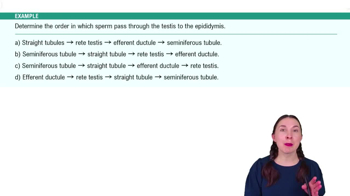
 1:07
1:07