 Back
Skull Bones Identification - Anatomy & Physiology
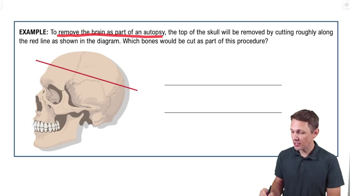
 2:12

Terms in this set (20)
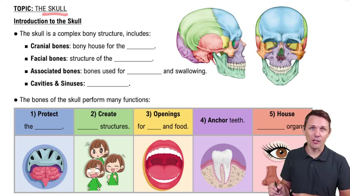
Cranial bones and facial bones.
Frontal, parietal (2), temporal (2), occipital, sphenoid, and ethmoid bones.
They protect the brain and provide attachment sites for head and neck muscles.
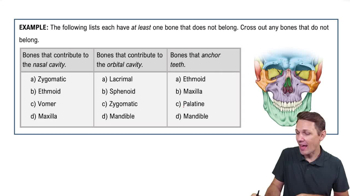
Mandible, maxillae (2), zygomatic (2), nasal (2), lacrimal (2), palatine (2), inferior nasal conchae (2), and vomer.
The mandible.
The frontal bone.
It acts as a keystone bone, articulating with all other cranial bones.
At the back and base of the skull.
The zygomatic bones.
They form the bridge of the nose.
The lacrimal bones.
They form the upper jaw and hold the upper teeth.
The vomer.
They form the posterior part of the hard palate and part of the nasal cavity.
Inside the nasal cavity, forming part of the lateral walls.
The joint between the frontal and parietal bones.
The joint between the two parietal bones.
The joint between the parietal bones and the occipital bone.
The joint between the parietal and temporal bones.
The occipital bone, allowing passage of the spinal cord.