 Back
Tissues II – Connective, Muscle, & Nervous Tissues
 06:37

Terms in this set (20)
Mesenchyme is an embryonic connective tissue that gives rise to all other connective tissues.
The extracellular matrix is composed of ground substance and protein fibers such as collagen, elastic, and reticular fibers.
Areolar tissue, adipose tissue, and reticular tissue.
Areolar tissue has a loose arrangement of fibers, provides cushioning, and is found beneath epithelial tissues throughout the body.
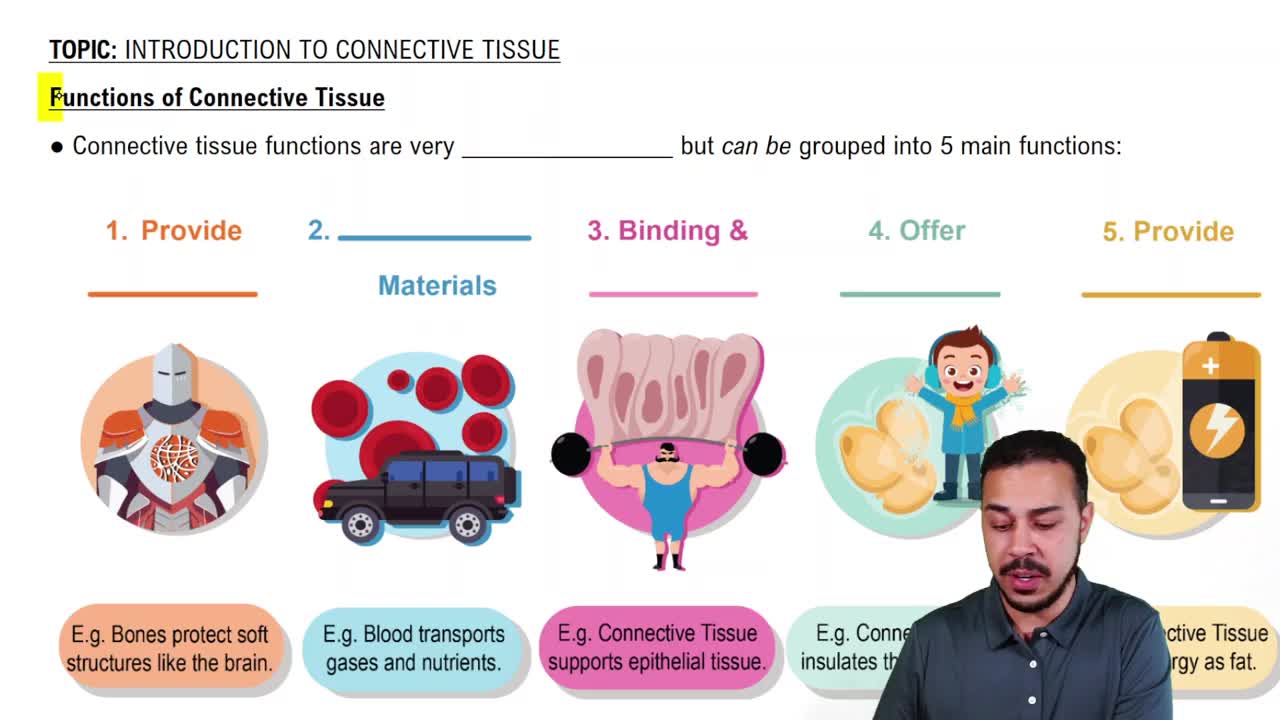
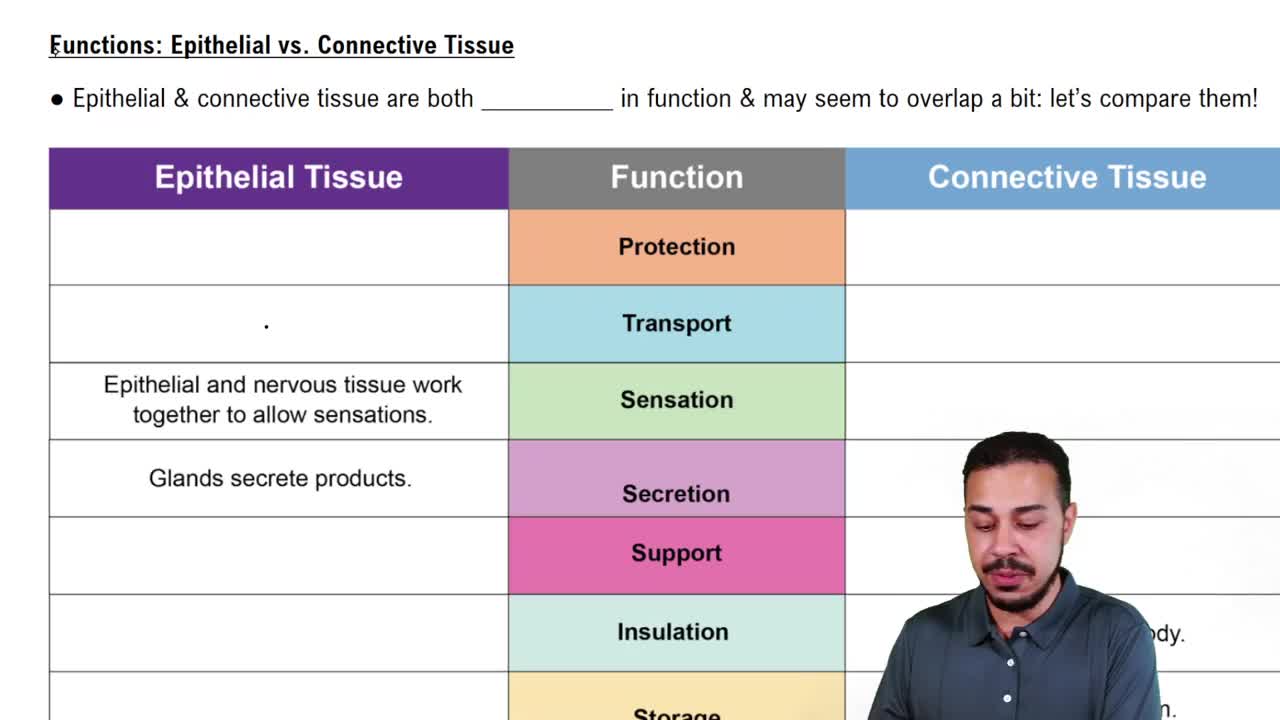
Adipose tissue stores energy as fat, insulates the body, and cushions organs.
Reticular tissue forms a supportive framework in lymphoid organs like lymph nodes, spleen, and bone marrow.
Dense regular connective tissue has collagen fibers aligned in parallel, providing strong tensile strength in one direction, found in tendons and ligaments.
Dense irregular connective tissue has collagen fibers arranged irregularly, allowing strength in multiple directions, found in dermis and organ capsules.
Elastic connective tissue contains many elastic fibers, allowing tissues like large arteries and certain ligaments to stretch and recoil.
Hyaline cartilage (glass-like, supports and cushions), elastic cartilage (flexible, found in ear), fibrocartilage (tough, shock absorber in intervertebral discs).
Bone tissue provides structural support, protects organs, and stores minerals like calcium.
Blood has a liquid extracellular matrix called plasma and functions in transport of gases, nutrients, and immune cells.
Skeletal muscle, cardiac muscle, and smooth muscle.
Skeletal muscle is voluntary, striated, multinucleated, and attached to bones for movement.
Cardiac muscle is involuntary, striated, has intercalated discs, and is found only in the heart.
Smooth muscle is involuntary, non-striated, found in walls of hollow organs, and controls slow, sustained contractions.
Neurons, which transmit electrical signals, and neuroglia (glial cells), which support and protect neurons.
Regeneration replaces damaged tissue with the same cell type, restoring function; fibrosis replaces tissue with scar tissue, which does not restore full function.
Epithelial tissues, bone, areolar connective tissue, dense irregular connective tissue, and blood have high regenerative capacity.
Cardiac muscle and nervous tissue in the brain and spinal cord have limited or no regenerative ability.