 Back
Types of Epithelial and Connective Tissues
 07:25

Terms in this set (20)
Simplified types: squamous, cuboidal, columnar; can be simple (one layer) or stratified (multiple layers).
Connective tissue proper includes loose and dense connective tissues that support and bind other tissues.
Connective tissue proper and specialized connective tissues like cartilage, bone, and blood.
Cartilage is a flexible, avascular connective tissue with chondrocytes in a gel-like matrix.
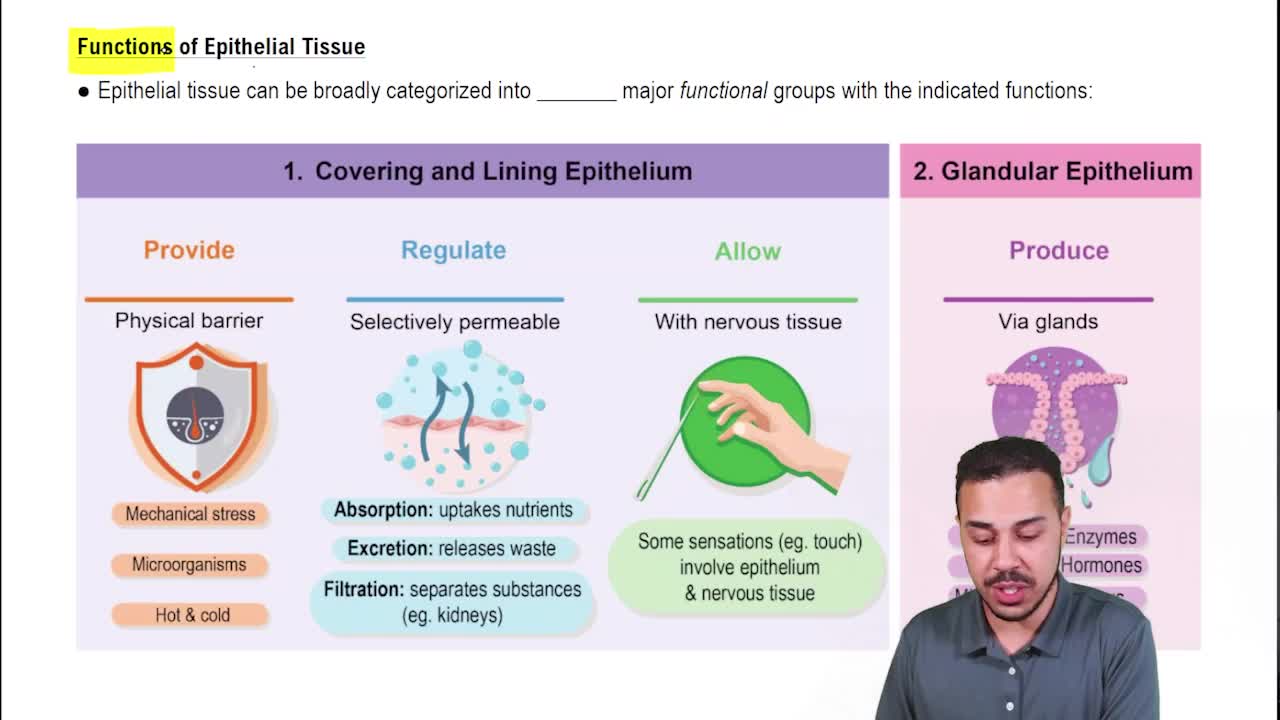
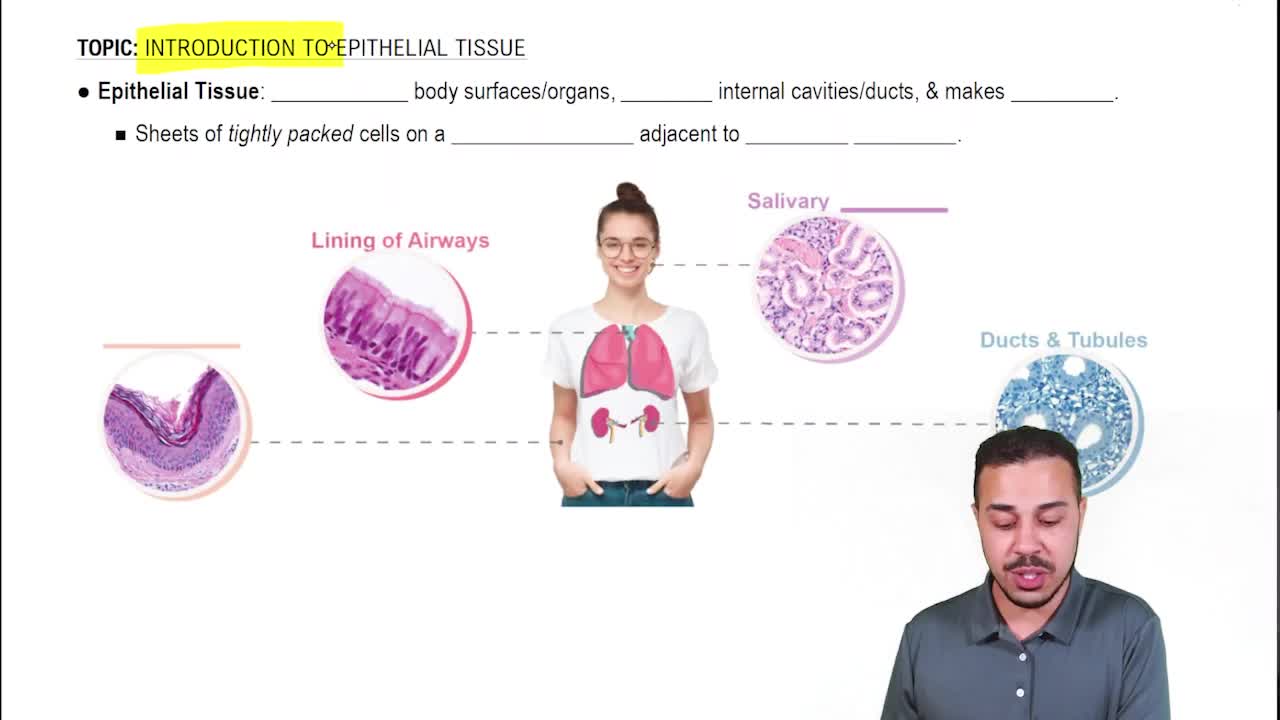
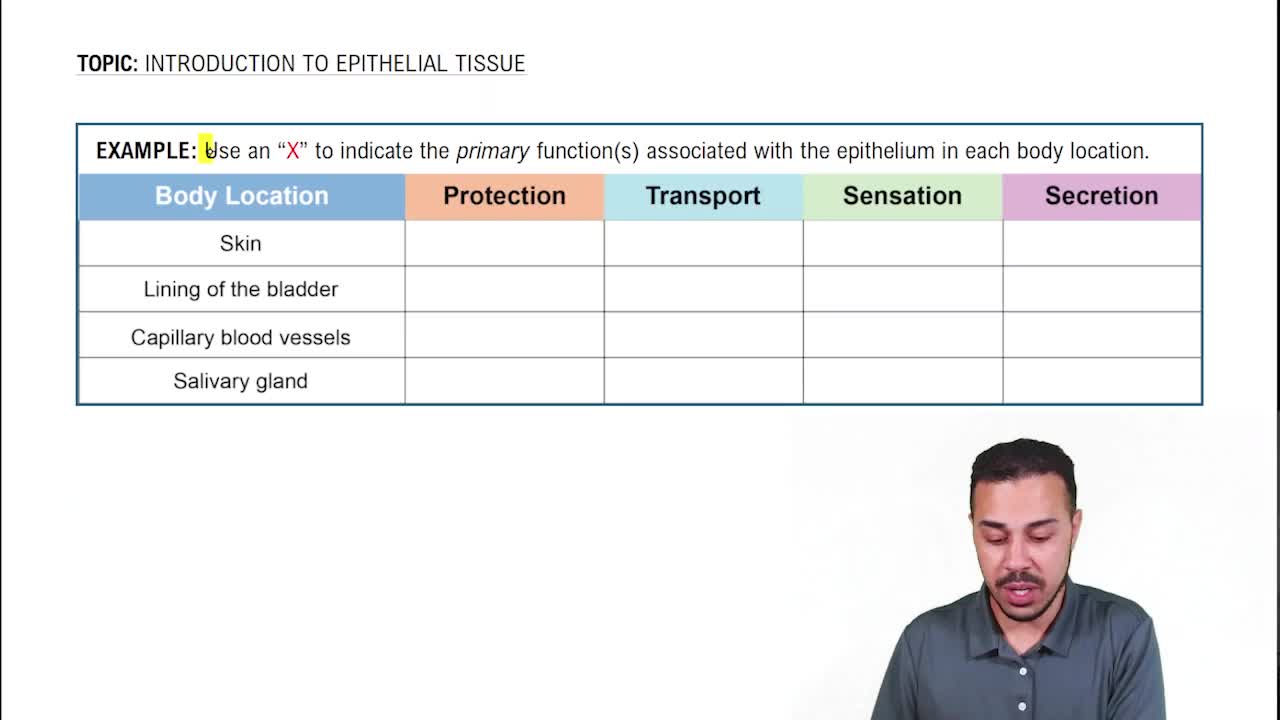
To cover body surfaces, line cavities, and form glands for protection, absorption, and secretion.
A single layer of flat cells allowing diffusion and filtration, found in lungs and blood vessels.
Connective tissue proper with loosely arranged fibers providing cushioning and support.
Dense connective tissue has tightly packed collagen fibers for strength, found in tendons and ligaments.
Fibroblasts, macrophages, mast cells, and adipocytes.
Protein fibers (collagen, elastin) and ground substance (fluid, proteoglycans).
They produce and maintain the cartilage matrix.
In areas subject to abrasion like skin, mouth, and esophagus.
Hyaline cartilage is firm and glassy; elastic cartilage is flexible due to elastic fibers.
Provides strong attachment in one direction, found in tendons and ligaments.
Pseudostratified ciliated columnar epithelium.
A type of loose connective tissue specialized in storing fat.
To connect, support, protect, and insulate organs and tissues.
A tough cartilage with dense collagen fibers, found in intervertebral discs and menisci.
A thin layer that anchors epithelium to underlying connective tissue.
Support, flexibility, and cushioning in joints and structures.