 Back
Types of Epithelial and Connective Tissues
 07:25


Terms in this set (20)
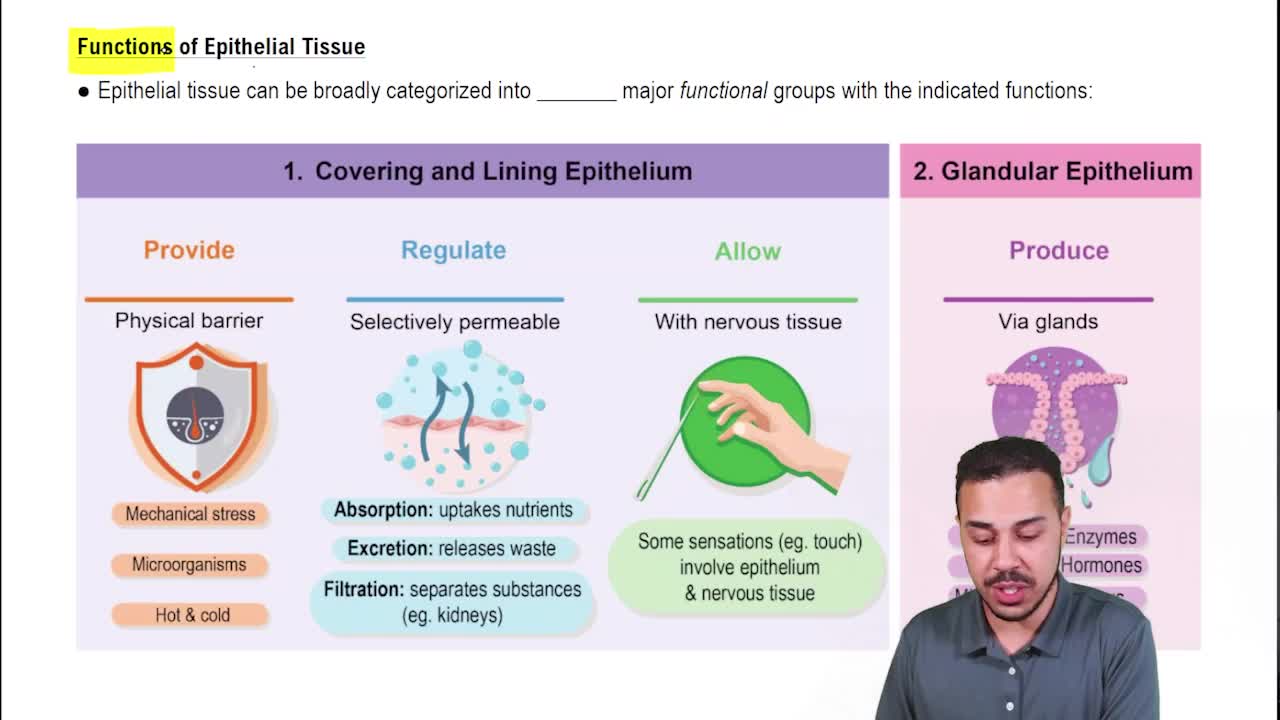
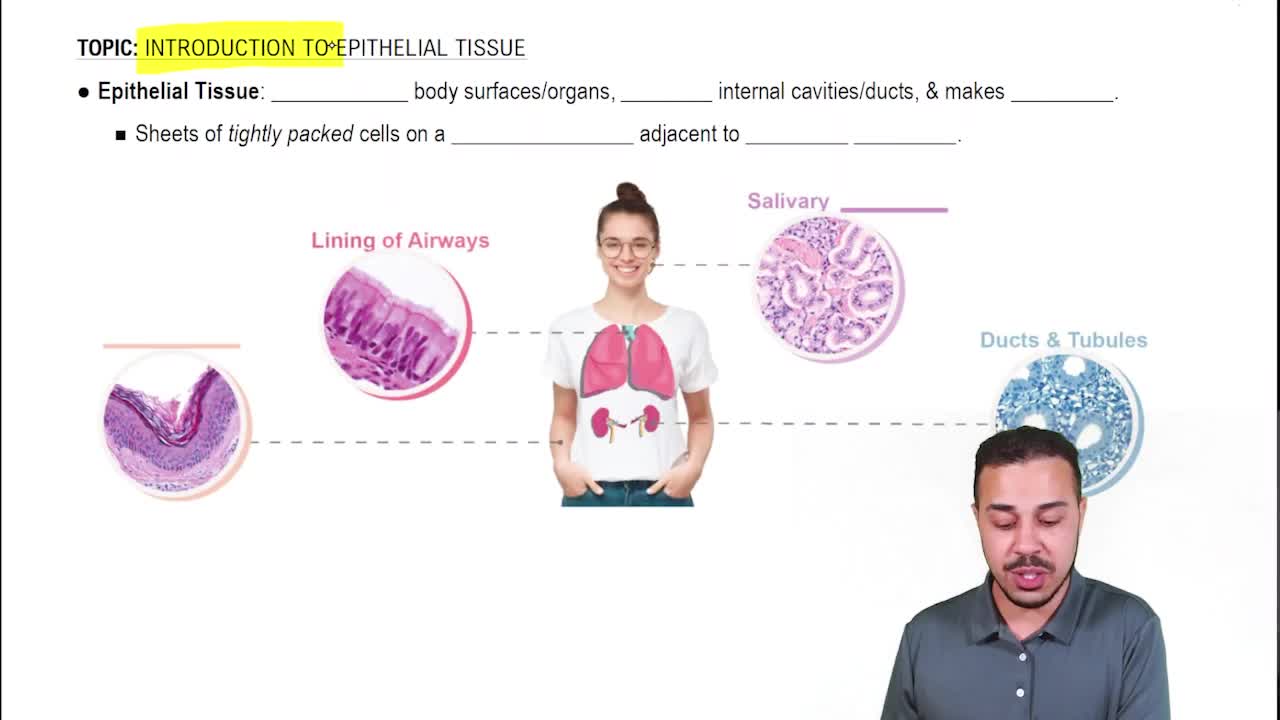
Protection, absorption, filtration, secretion, and sensory reception.
Squamous (flat), cuboidal (cube-shaped), and columnar (tall and column-like).
Simple epithelium has one cell layer; stratified epithelium has multiple layers.
Supports, binds, protects, insulates, and transports substances within the body.
Cells, fibers, and ground substance (extracellular matrix).
Collagen (strength), elastic (stretch), and reticular (support network).
Loose connective tissue has more ground substance and fewer fibers; dense connective tissue has more fibers and less ground substance.
Areolar tissue, which cushions organs and holds tissue fluids.
Adipose tissue stores energy and insulates the body.
Chondrocytes embedded in a firm matrix.
Hyaline, elastic, and fibrocartilage.
Tendons, composed of dense regular connective tissue.
Ligaments, made of dense regular connective tissue.
Single layer of flat cells allowing rapid diffusion and filtration.
In the respiratory tract, often with cilia and goblet cells.
Allows stretching and recoiling, found in the urinary bladder.
Reticular connective tissue.
A gel-like material that fills space between cells and fibers, facilitating nutrient and waste exchange.
Connective tissue with a liquid matrix called plasma.
They produce fibers and ground substance of the extracellular matrix.