 Back
A&P Exam 1 Study Guide: Chapters 1–5 (Human Body, Chemistry, Cells, Tissues, Integumentary System)
Study Guide - Smart Notes
 Tailored notes based on your materials, expanded with key definitions, examples, and context.
Chapter 1: The Human Body – An Orientation
Complementarity, Hierarchy, and Homeostasis
The study of anatomy and physiology is grounded in the principle that structure determines function. The human body is organized into a hierarchy of increasing complexity, and homeostasis is essential for survival.
Complementarity: Function always reflects structure. For example, the heart's muscular walls enable it to pump blood efficiently.
Hierarchy of Complexity: Levels include chemical, cellular, tissue, organ, organ system, and organism.
Homeostasis: The body's ability to maintain stable internal conditions despite external changes.
Feedback Mechanisms:
Negative Feedback: Reduces the effect of the stimulus (e.g., body temperature regulation).
Positive Feedback: Enhances the stimulus (e.g., blood clotting, labor contractions).
Anatomical Terminology and Body Organization
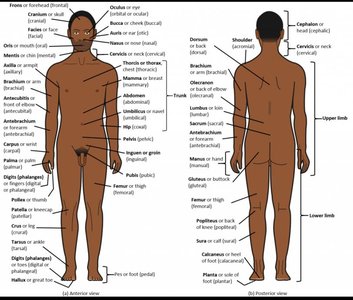
Anatomical Regions: Frontal (forehead), Orbital (eye), Buccal (cheek), Mental (chin), Cervical (neck).
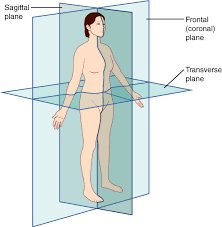
Body Planes: Sagittal (left/right), Frontal (anterior/posterior), Transverse (superior/inferior).
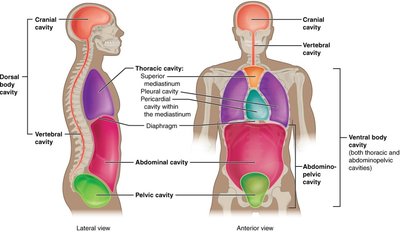
Body Cavities: Dorsal (cranial, vertebral), Ventral (thoracic, abdominopelvic).
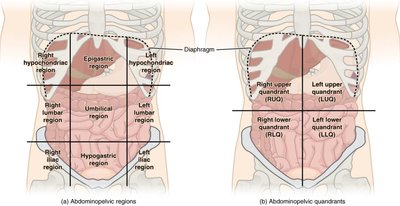
Abdominopelvic Regions: Umbilical, Epigastric, left/right Hypochondriac regions.
Chapter 2: Chemistry Comes Alive
Basic Chemistry and Biological Molecules
Chemistry underlies all physiological processes. The body is composed primarily of four elements and relies on chemical bonds and reactions for structure and function.
Major Elements: Oxygen, Carbon, Hydrogen, Nitrogen (CHON) make up 96.1% of body mass.
Bonding Types:
Ionic Bonds: Electrons are transferred, forming charged ions (e.g., salts).
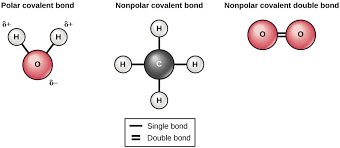
Covalent Bonds: Electrons are shared; can be polar (unequal sharing) or nonpolar (equal sharing).
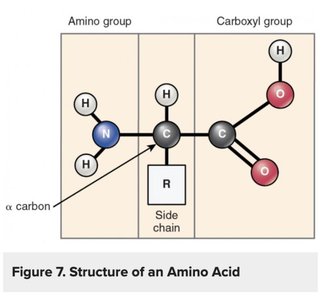
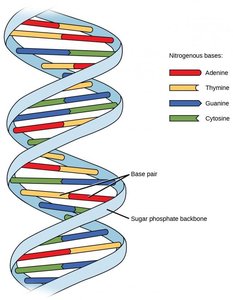
Inorganic vs. Organic Compounds: Inorganic (water, salts, acids/bases) lack carbon; organic (carbohydrates, lipids, proteins, nucleic acids) are carbon-based.
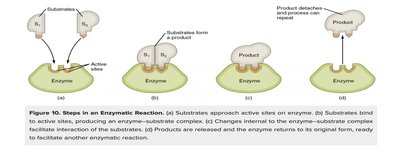
Enzymes: Biological catalysts that lower activation energy and speed up reactions.
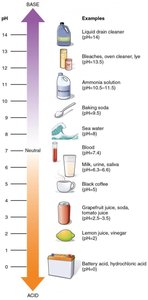
pH Scale: Measures hydrogen ion concentration; blood pH must remain between 7.35 and 7.45.
Chapter 3: Cells – The Living Units
Cell Structure and Function
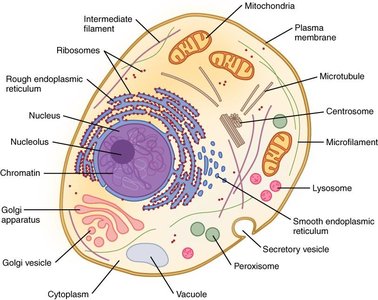
Cells are the basic units of life, with specialized structures and functions. The plasma membrane regulates entry and exit, and organelles perform essential cellular processes.
Cell Theory: All living things are composed of cells; cells arise from pre-existing cells.
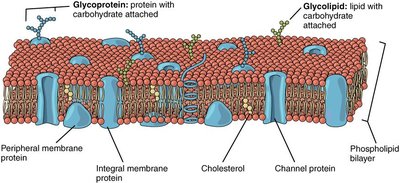
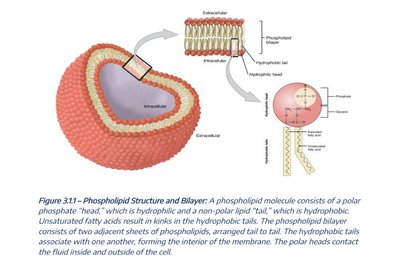
Fluid Mosaic Model: The plasma membrane is a phospholipid bilayer with embedded proteins.
Transport Mechanisms:
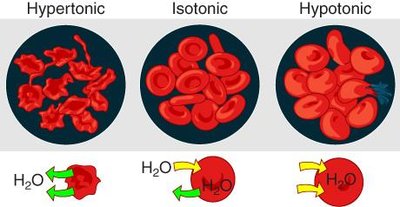
Passive: Diffusion (simple/facilitated), osmosis (no energy required).
Active: Solute pumps (e.g., Na+-K+ pump), vesicular transport (endo/exocytosis) require ATP.
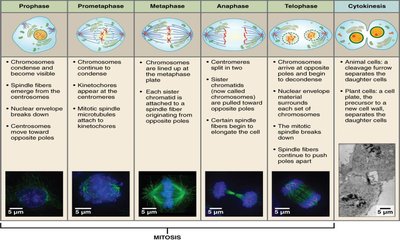
Cell Life Cycle: Interphase (G1, S, G2) and Mitotic phase (Prophase, Metaphase, Anaphase, Telophase).
Chapter 4: Tissue – The Living Fabric
Types and Functions of Tissues
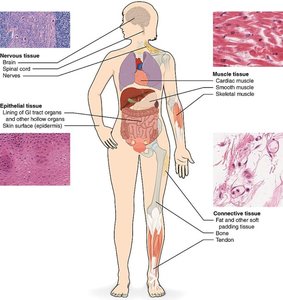
Tissues are groups of similar cells performing common functions. The four primary tissue types are epithelial, connective, muscle, and nervous tissue.
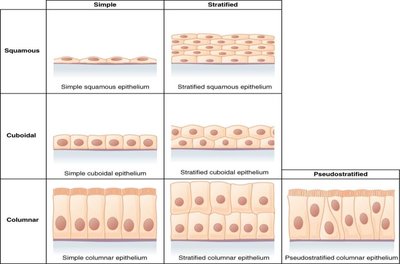
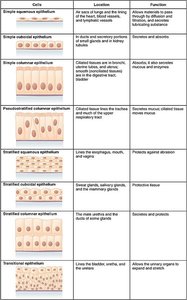
Epithelial Tissue: Covers and lines surfaces; classified by cell shape (squamous, cuboidal, columnar) and layers (simple, stratified).
Connective Tissue: Supports, protects, and binds; characterized by extracellular matrix (ground substance and fibers: collagen, elastic, reticular).
Muscle Tissue: Specialized for movement; includes skeletal, cardiac, and smooth muscle.
Nervous Tissue: Composed of neurons (transmit impulses) and neuroglia (support cells).
Chapter 5: The Integumentary System
Structure and Function of the Skin
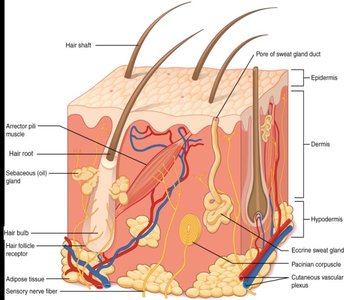
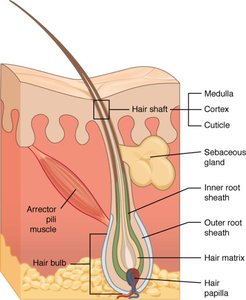
The integumentary system includes the skin and its derivatives. It protects the body, regulates temperature, and provides sensory information.
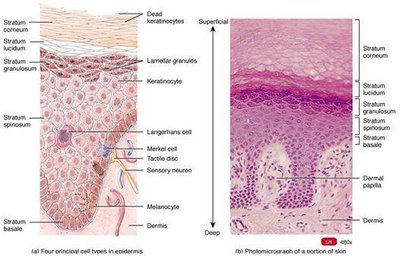
Skin Layers: Epidermis (epithelial), Dermis (connective), Hypodermis (subcutaneous fat).
Keratinization: Keratinocytes produce keratin and die as they move toward the surface.
Skin Pigments: Melanin (brown/black), Carotene (yellow/orange), Hemoglobin (pink/red).
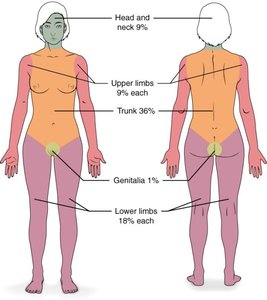
Burn Classification:
1st Degree: Epidermis only.
2nd Degree: Epidermis and upper dermis.
3rd Degree: Entire thickness of skin (full thickness).
Additional info:
Serous Membranes: The pleura covers the lungs (visceral pleura) and lines the cavity wall (parietal pleura).
Electrolytes: Substances that dissociate into ions in solution; major ions include Na+, K+, Ca2+.
Carbohydrates: Monosaccharides (single sugars), disaccharides (two sugars), polysaccharides (many sugars).
ATP: The cell's energy currency because it directly powers cellular work, unlike glucose which must be metabolized first.
Resting Membrane Potential: Maintained by the sodium-potassium pump, which moves 3 Na+ out and 2 K+ in, creating an electrochemical gradient.
Cartilage Healing: Cartilage is avascular, so it heals more slowly than bone or skin, which have rich blood supplies.
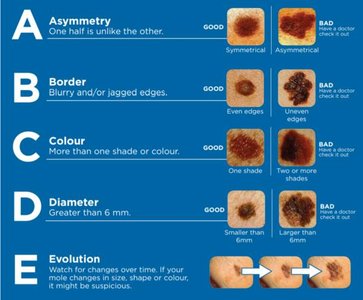
ABCDE of Skin Cancer: Asymmetry, Border, Color, Diameter, Evolution—criteria for identifying malignant melanoma.
