 Back
BackAcid-Base Balance and pH Regulation in Human Physiology
Study Guide - Smart Notes
 Tailored notes based on your materials, expanded with key definitions, examples, and context.
Acid-Base Balance
Introduction to Acid-Base Balance
The maintenance of acid-base balance is essential for normal cellular function and overall homeostasis. The body uses several mechanisms to regulate the concentration of hydrogen ions (H+) in body fluids, thereby maintaining the pH within a narrow range.
pH of Body Fluids
The pH of a solution is a measure of its hydrogen ion concentration. It is defined as the negative logarithm (base 10) of the hydrogen ion concentration:
Neutral pH: 7.0 (equal concentrations of H+ and OH-)
Acidic pH: < 7.0 (higher H+ concentration)
Alkaline (Basic) pH: > 7.0 (lower H+ concentration)
Normal blood pH: 7.35–7.45
Arterial blood pH: ~7.45
Venous blood pH: ~7.35
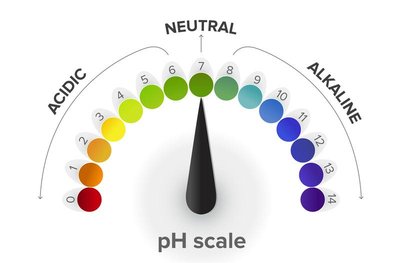
The pH scale is logarithmic; each unit change represents a tenfold change in H+ concentration.
Mechanisms That Control pH of Body Fluids
Three coordinated homeostatic mechanisms maintain the normal pH of body fluids and prevent large swings when excess acids or bases are present:
Chemical (Buffer) Mechanism
Respiratory Mechanism
Urinary Mechanism
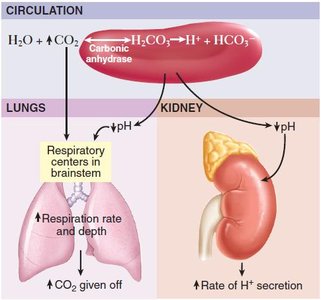
These mechanisms act at different speeds: buffers act immediately, respiratory changes occur within minutes, and renal adjustments take hours.
Chemical Buffer Systems
Buffers are substances that minimize changes in pH when acids or bases are added. The main buffer system in the blood is the sodium bicarbonate–carbonic acid buffer pair:
Sodium bicarbonate (NaHCO3)
Carbonic acid (H2CO3)
The normal ratio of NaHCO3 to H2CO3 is 20:1. This ratio is critical for maintaining blood pH.
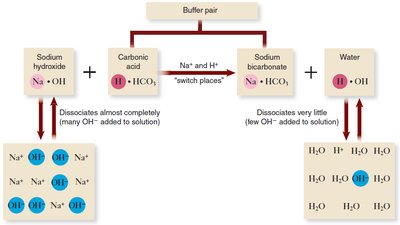
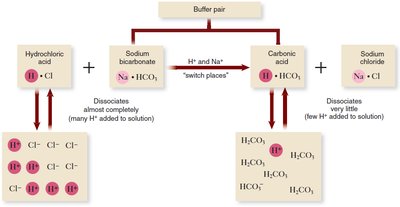
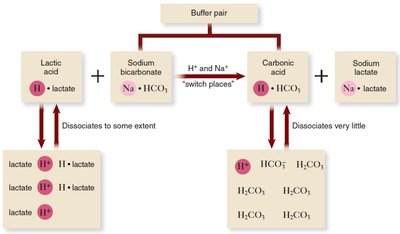
Buffer pairs work by exchanging ions to neutralize added acids or bases, preventing drastic pH changes.
Physiological pH Control Mechanisms
Respiratory Mechanism
The respiratory system regulates pH by controlling the amount of CO2 exhaled. CO2 combines with water to form carbonic acid, which dissociates into H+ and HCO3-:
Increased respiration removes more CO2, reducing H2CO3 and raising pH. Decreased respiration retains CO2, increasing H2CO3 and lowering pH.
Urinary Mechanism
The kidneys regulate blood pH by excreting H+ and reabsorbing HCO3-. This process occurs mainly in the distal tubules:
Secretion of H+ and ammonia (NH3) into urine
Reabsorption of NaHCO3 into blood
This is the most effective long-term regulator of blood pH.
pH Imbalances: Acidosis and Alkalosis
Disturbances in acid-base balance are classified as acidosis (pH < 7.35) or alkalosis (pH > 7.45). These can be caused by metabolic or respiratory factors:
Metabolic acidosis: Bicarbonate deficit (e.g., severe diarrhea, diabetic ketoacidosis)
Metabolic alkalosis: Bicarbonate excess (e.g., severe vomiting)
Respiratory acidosis: Carbonic acid excess (e.g., hypoventilation, COPD)
Respiratory alkalosis: Carbonic acid deficit (e.g., hyperventilation)
The body can compensate for these imbalances by adjusting the buffer ratio, respiratory rate, or renal function.
Clinical Applications
Diabetic Ketoacidosis
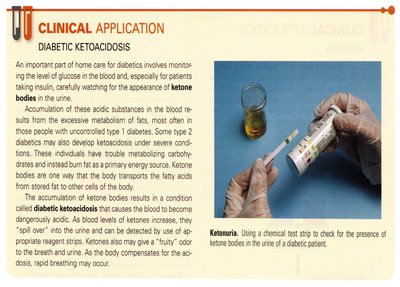
In uncontrolled diabetes, accumulation of ketone bodies leads to metabolic acidosis. Ketone bodies can be detected in urine (ketonuria) using chemical test strips.
Vomiting and Acid-Base Imbalance
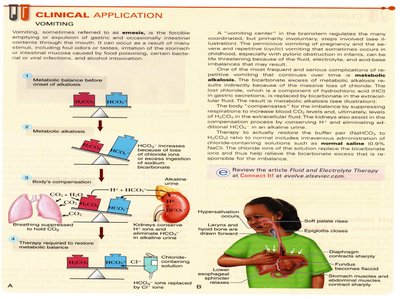
Severe vomiting can cause metabolic alkalosis due to loss of gastric acid (HCl), leading to a relative excess of bicarbonate in the blood.
Cardiac Arrest and Respiratory Acidosis
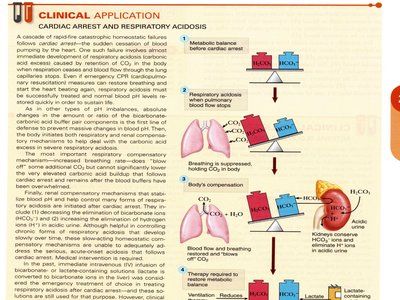
Cardiac arrest leads to respiratory acidosis due to accumulation of CO2 and lactic acid. The body attempts to compensate via buffering and renal mechanisms.
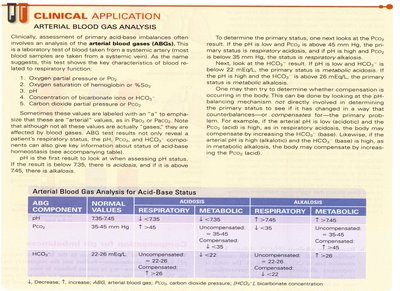
Arterial Blood Gas (ABG) Analysis
ABG analysis is used to assess acid-base status in clinical settings. Key components include pH, PCO2, and HCO3-. The table below summarizes normal and abnormal values:
ABG Component | Normal Value | Respiratory Acidosis | Metabolic Acidosis | Respiratory Alkalosis | Metabolic Alkalosis |
|---|---|---|---|---|---|
pH | 7.35–7.45 | <7.35 | <7.35 | >7.45 | >7.45 |
PCO2 (mmHg) | 35–45 | >45 | Normal or <35 | <35 | Normal or >45 |
HCO3- (mEq/L) | 22–26 | Normal or >26 | <22 | Normal or <22 | >26 |
Review and Quick Check Questions
How can breathing affect the pH of blood?
By what mechanism can the kidney change the pH of the blood?
What is the theory behind "bicarbonate loading," and what is the long-term effect of this practice?
What is acidosis? What is alkalosis?
What factors may cause a metabolic disturbance in pH?
What situations may cause a respiratory disturbance in pH?
How does vomiting sometimes create an acid-base imbalance?
Summary Table: Buffer Systems and Their Actions
Buffer System | Components | Action |
|---|---|---|
Bicarbonate Buffer | NaHCO3 / H2CO3 | Buffers fixed acids and bases in blood |
Phosphate Buffer | Na2HPO4 / NaH2PO4 | Buffers acids in urine and intracellular fluid |
Protein Buffer | Hemoglobin, plasma proteins | Bind or release H+ as needed |
Additional info: The concept of homeostasis, as described by Walter Cannon, is fundamental to understanding acid-base balance. Clinical applications such as diabetic ketoacidosis, vomiting, and cardiac arrest illustrate the importance of acid-base regulation in health and disease.
