 Back
Anatomical Position: The Foundation of Human Body Orientation
Study Guide - Smart Notes
 Tailored notes based on your materials, expanded with key definitions, examples, and context.
Anatomical Position
Definition and Importance
The anatomical position is a standardized posture used as a reference point in describing the locations and relationships of body parts. This universal system ensures clarity and consistency in anatomical terminology, allowing healthcare professionals and students to communicate effectively about the human body.
Reference System: All directional terms (such as left, right, anterior, posterior) are based on the body being in anatomical position.
Clarity: The terms "right" and "left" always refer to the subject's right and left, not the observer's.
Characteristics of the Standard Anatomical Position
The body is erect and standing.
Feet are together or slightly apart.
Palms are facing forward with the thumbs pointing away from the body.
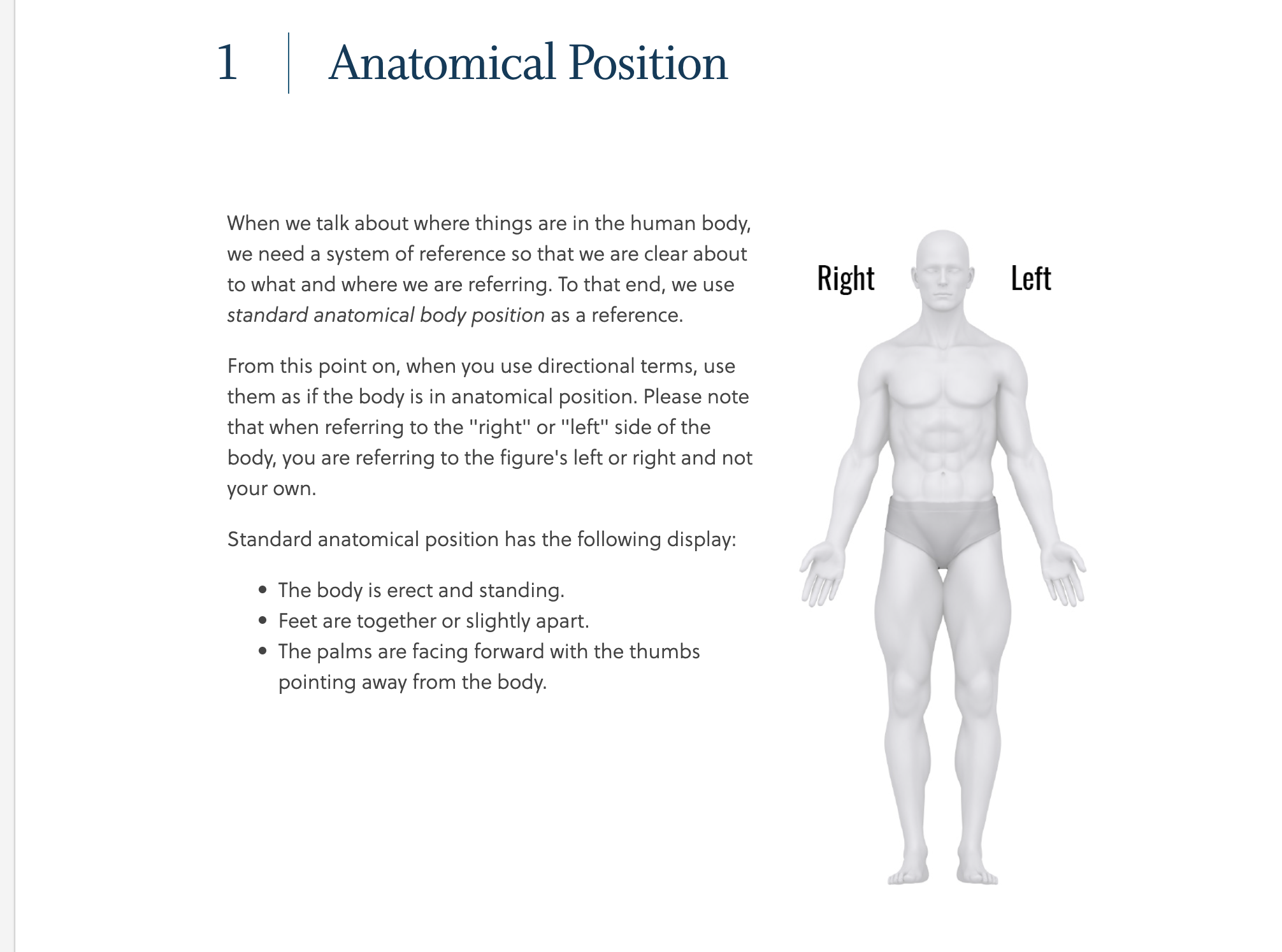
Application of Anatomical Position
Whenever anatomical terminology is used, it is assumed that the body is in this standard position. This is crucial for describing locations, directions, and relationships of body structures accurately.
Example: The heart is medial to the lungs, meaning it is closer to the midline of the body when in anatomical position.
Directional Terms: Terms such as superior, inferior, anterior, posterior, medial, and lateral are all defined with respect to the anatomical position.
