 Back
Anatomy 35 – Chapter 20: Circulatory System - Blood
Study Guide - Smart Notes
 Tailored notes based on your materials, expanded with key definitions, examples, and context.
Circulatory System: Blood
Introduction
The blood is a vital connective tissue that circulates throughout the body, performing essential functions such as transport, regulation, and protection. Understanding its composition and the formation of its elements is crucial for comprehending the physiology of the circulatory system.
Functions and Composition of Blood
Major Functions of Blood
Transport: Blood transports hormones, nutrients, oxygen, and removes metabolic wastes from tissues.
Regulation: Maintains homeostasis, including thermoregulation, fluid balance, and pH balance.
Protection: Defends tissues from infection and disease through immune responses.
Volume: Adults have approximately 4–6 liters of blood.
Components of Blood
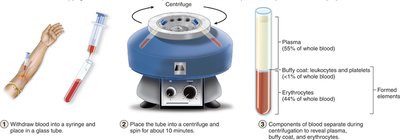
Plasma: The liquid matrix, slightly more than 50% of whole blood.
Formed Elements: The cellular portion, slightly less than 50% of whole blood, including erythrocytes (red blood cells), leukocytes (white blood cells), and thrombocytes (platelets).
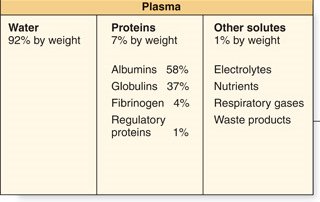
Plasma Composition
~92% water
~7% proteins (albumins, globulins, fibrinogen, regulatory proteins)
~1% other solutes (electrolytes, nutrients, respiratory gases, waste products)
Water | Proteins | Other solutes |
|---|---|---|
92% by weight | 7% by weight Albumins 58% Globulins 37% Fibrinogen 4% Regulatory proteins 1% | 1% by weight Electrolytes Nutrients Respiratory gases Waste products |
Formed Elements
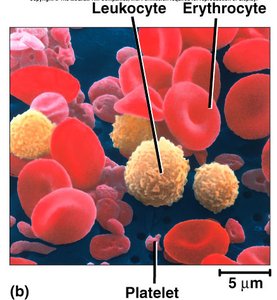
Erythrocytes (RBCs): Transport oxygen and carbon dioxide.
Leukocytes (WBCs): Defend against pathogens.
Thrombocytes (Platelets): Involved in blood clotting.
Hemopoiesis – Blood Cell Formation
Overview of Hemopoiesis
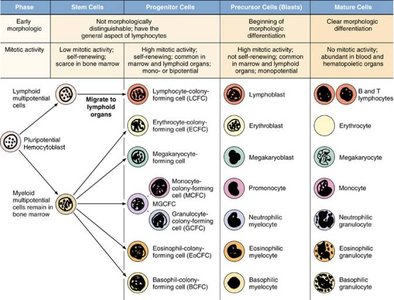
Hemopoiesis is the process of blood cell formation, occurring primarily in the red bone marrow. All formed elements originate from a common stem cell called the hemocytoblast (pluripotent hematopoietic stem cell).
Erythropoiesis: Formation of erythrocytes (RBCs)
Thrombopoiesis: Formation of platelets
Leukopoiesis: Formation of leukocytes (WBCs)
Formed Elements
Erythrocytes (Red Blood Cells)
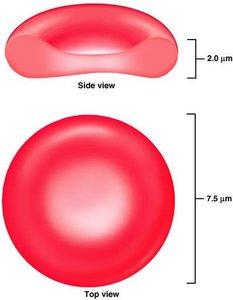
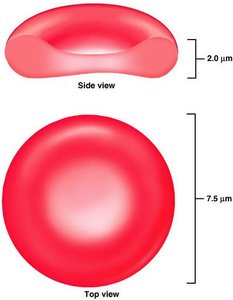
Erythrocytes are biconcave, anucleate cells specialized for oxygen and carbon dioxide transport. Their shape increases surface area for gas exchange and flexibility for passage through capillaries.
Hemoglobin (Hb): The main protein in RBCs, responsible for carrying nearly all oxygen and about 23% of carbon dioxide. Each hemoglobin molecule contains four heme groups, each binding one O2 molecule.
Production: Erythropoiesis occurs in red bone marrow, regulated by erythropoietin (EPO) from the kidneys in response to hypoxia.
Lifespan: RBCs circulate for about 120 days before being removed by macrophages in the spleen, liver, and bone marrow.
Thrombocytes (Platelets)
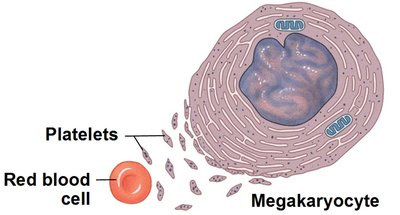
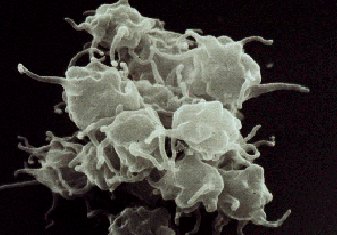
Platelets are small, anucleate cytoplasmic fragments derived from megakaryocytes in the bone marrow. They play a critical role in hemostasis (blood clotting).
Origin: Platelets are produced by fragmentation of megakaryocytes.
Function: Inactive platelets are smooth; upon activation by vessel injury, they become sticky and help form a platelet plug. Fibrinogen is converted to fibrin, stabilizing the clot.
Leukocytes (White Blood Cells)
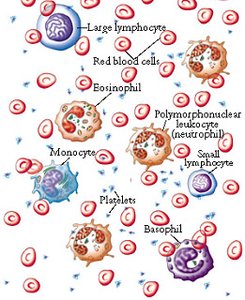
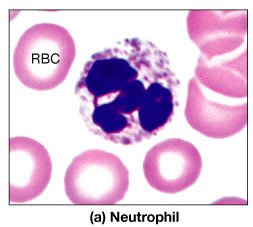
Leukocytes are immune cells that protect the body from infection and disease. They are classified as granulocytes or agranulocytes based on the presence of cytoplasmic granules.
Granulocytes: Neutrophils, eosinophils, basophils
Agranulocytes: Monocytes, lymphocytes
Granulocytes
Neutrophils: Most common WBC (50–70%), first responders to infection, phagocytize pathogens and debris.
Eosinophils: 2–4% of WBCs, combat parasitic infections and modulate allergic responses.
Basophils: Rarest WBC (<1%), release histamine to initiate inflammation.
Agranulocytes
Monocytes: 2–8% of WBCs, largest WBC, become macrophages in tissues and phagocytize pathogens.
Lymphocytes: 20–30% of WBCs, include B cells (produce antibodies), T cells (cell-mediated immunity), and NK cells (destroy abnormal cells).
Blood Typing
Classification of RBCs
Blood typing is based on the presence of antigens on the surface of erythrocytes and antibodies in the plasma. The most clinically significant blood group systems are the ABO and Rh systems.
Antigens: Molecules on RBC surfaces that trigger immune responses.
Antibodies: Plasma proteins (immunoglobulins) that recognize and bind to specific antigens.
ABO Blood Typing
Type A: A antigens on RBCs, anti-B antibodies in plasma
Type B: B antigens on RBCs, anti-A antibodies in plasma
Type AB: Both A and B antigens, no anti-A or anti-B antibodies (universal recipient)
Type O: No A or B antigens, both anti-A and anti-B antibodies (universal donor)
Summary Table: Formed Elements of Blood
Element | Main Function | Relative Abundance |
|---|---|---|
Erythrocytes | Transport O2 and CO2 | ~99% of formed elements |
Leukocytes | Immune defense | ~1% of formed elements |
Thrombocytes | Blood clotting | ~1% of formed elements |
Additional info: The notes above integrate and expand upon the provided lecture content, filling in missing details about the functions, formation, and classification of blood components, as well as the principles of blood typing. All images included are directly relevant to the adjacent explanations and reinforce the academic content.
