 Back
BackAnatomy & Physiology I: The Human Body – An Orientation
Study Guide - Smart Notes
 Tailored notes based on your materials, expanded with key definitions, examples, and context.
The Human Body: An Orientation
Introduction to Anatomy & Physiology
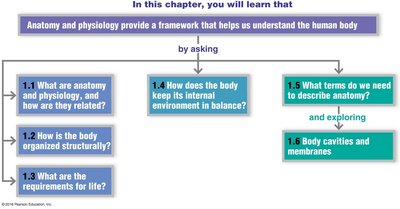
Anatomy and physiology provide a foundational framework for understanding the human body. Mastery of anatomical terminology is essential for accurate communication in health sciences.
Anatomy: The study of the structure of body parts and their relationships.
Physiology: The study of the function of body parts and how they carry out life-sustaining activities.
Complementarity of Structure and Function: Function always reflects structure; what a structure can do depends on its specific form.
Subdivisions of Anatomy
Anatomy is divided into several subfields, each focusing on different aspects of the body’s structure.
Gross (Macroscopic) Anatomy: Study of large, visible structures.
Regional Anatomy: Examines all structures in a specific area.
System Anatomy: Focuses on individual organ systems (e.g., cardiovascular, nervous).
Surface Anatomy: Studies internal structures as they relate to the skin surface.
Microscopic Anatomy: Structures too small to be seen with the naked eye.
Cytology: Study of cells.
Histology: Study of tissues.
Developmental Anatomy: Anatomical and physiological development throughout life.
Embryology: Study of development before birth.
Subdivisions of Physiology
Physiology is typically studied by organ systems and often focuses on cellular and molecular levels.
Renal Physiology: Kidney function.
Cardiovascular Physiology: Heart and blood vessels.
Physiology relies on understanding physical and chemical principles (e.g., electrical currents, pressure, movement).
Structural Organization of the Human Body
Levels of Organization
The human body is organized from the smallest chemical level to the whole organism.
Chemical Level: Atoms, molecules, and organelles.
Cellular Level: Single cells.
Tissue Level: Groups of similar cells.
Organ Level: Two or more types of tissues.
Organ System Level: Organs working closely together.
Organismal Level: All organ systems combined to make the whole organism.
Requirements for Life
Necessary Life Functions
To maintain life, the body must perform several essential functions:
Maintaining Boundaries: Separation between internal and external environments (e.g., plasma membranes, skin).
Movement: Muscular system enables movement of body parts and substances.
Responsiveness: Ability to sense and respond to stimuli (e.g., withdrawal reflex, breathing rate control).
Digestion: Breakdown and absorption of food.
Metabolism: All chemical reactions in body cells; includes catabolism (breakdown) and anabolism (synthesis).
Excretion: Removal of wastes (e.g., urea, carbon dioxide, feces).
Reproduction: Cellular division for growth/repair and production of offspring.
Growth: Increase in size of body part or organism.
Survival Needs
Humans require several factors for survival, which must be present in appropriate amounts:
Nutrients: Chemicals for energy and cell building (carbohydrates, proteins, fats, minerals, vitamins).
Oxygen: Essential for energy release from food; survival without oxygen is limited to minutes.
Water: Most abundant chemical; necessary for chemical reactions and as a fluid base.
Normal Body Temperature: Chemical reactions are affected if temperature deviates from 37°C.
Appropriate Atmospheric Pressure: Required for adequate breathing and gas exchange.
Homeostasis
Definition and Importance
Homeostasis is the maintenance of relatively stable internal conditions despite continuous environmental changes. It is a dynamic equilibrium, constantly readjusting as needed, and is maintained by contributions from all organ systems.
Homeostatic Controls
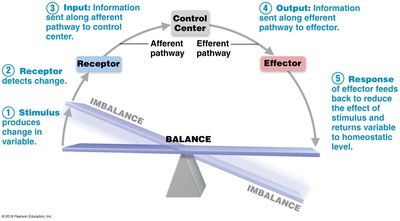
Homeostatic control involves three main components:
Receptor (Sensor): Monitors environment and responds to stimuli.
Control Center: Determines set point, receives input, and decides response.
Effector: Receives output and provides the means to respond.
Responses can reduce (negative feedback) or enhance (positive feedback) the original stimulus.
Negative Feedback
Negative feedback is the most common mechanism in the body. It reduces or shuts off the original stimulus, causing the variable to change in the opposite direction.
Example: Regulation of body temperature (nervous system mechanism).
Example: Regulation of blood glucose by insulin (endocrine system mechanism).
Positive Feedback
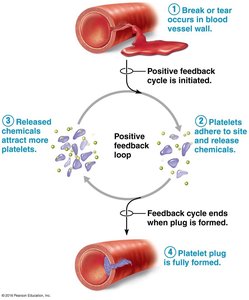
Positive feedback enhances or exaggerates the original stimulus, often resulting in a cascade effect. It usually controls infrequent events that do not require continuous adjustment.
Example: Enhancement of labor contractions by oxytocin.
Example: Platelet plug formation and blood clotting.
Homeostatic Imbalance
Disturbances in homeostasis increase the risk of disease and contribute to aging-related changes. If negative feedback mechanisms are overwhelmed, destructive positive feedback mechanisms may take over, such as in heart failure.
Organ Systems Overview
Respiratory System
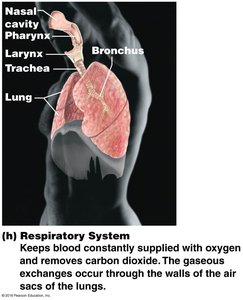
The respiratory system keeps blood constantly supplied with oxygen and removes carbon dioxide. Gaseous exchanges occur through the walls of the air sacs of the lungs.
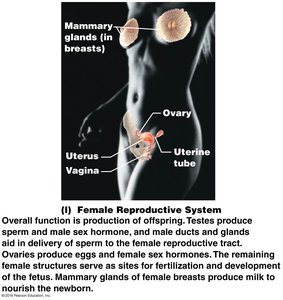
Female Reproductive System
The overall function of the female reproductive system is the production of offspring. Ovaries produce eggs and female sex hormones. The remaining structures serve as sites for fertilization and development of the fetus. Mammary glands produce milk to nourish the newborn.
Summary Table: Levels of Structural Organization
Level | Description | Example |
|---|---|---|
Chemical | Atoms, molecules, organelles | Water, proteins |
Cellular | Single cell | Muscle cell |
Tissue | Groups of similar cells | Muscle tissue |
Organ | Two or more types of tissues | Heart |
Organ System | Organs working together | Cardiovascular system |
Organismal | All organ systems combined | Human body |
Summary Table: Necessary Life Functions
Function | Description |
|---|---|
Maintaining Boundaries | Separation between internal and external environments |
Movement | Muscular system enables movement |
Responsiveness | Ability to sense and respond to stimuli |
Digestion | Breakdown and absorption of food |
Metabolism | All chemical reactions in body cells |
Excretion | Removal of wastes |
Reproduction | Cellular division and production of offspring |
Growth | Increase in size |
Key Equations
Metabolism: Sum of catabolism and anabolism
Homeostatic Feedback Loop: Negative feedback reduces deviation from set point
Additional info: Academic context was added to expand brief points and clarify the structural organization, homeostatic mechanisms, and organ system functions for exam preparation.
