 Back
BackANP College Course Study Guide: Anatomy, Physiology, and Biomolecules
Study Guide - Smart Notes
 Tailored notes based on your materials, expanded with key definitions, examples, and context.
Q1. The study of internal & external structures and the physical interrelationships between body parts is ___________.
Background
Topic: Anatomy vs. Physiology
This question tests your understanding of the definitions and distinctions between anatomy, physiology, biology, and pathology.
Key Terms:
Anatomy: The study of the structure of body parts and their relationships.
Physiology: The study of the function of body parts.
Biology: The study of living organisms.
Pathology: The study of disease.
Step-by-Step Guidance
Read each definition carefully and match it to the description in the question.
Focus on the phrase "internal & external structures" and "physical interrelationships." Which term best fits?
Eliminate options that focus on function or disease rather than structure.
Try solving on your own before revealing the answer!
Q2. Which of the following is NOT a subtype of macroscopic anatomy?
Background
Topic: Types of Anatomy
This question tests your knowledge of the subdivisions of anatomy, specifically macroscopic (gross) anatomy.
Key Terms:
Macroscopic (Gross) Anatomy: Study of structures visible to the naked eye.
Regional Anatomy: Study of specific regions of the body.
Surface Anatomy: Study of external features.
Systemic Anatomy: Study of organ systems.
Histology: Study of tissues (microscopic anatomy).
Step-by-Step Guidance
Recall the difference between macroscopic and microscopic anatomy.
Identify which option is not visible to the naked eye.
Eliminate options that are clearly macroscopic.
Try solving on your own before revealing the answer!
Q3. The study of how disease affects structures is _________.
Background
Topic: Pathological Anatomy
This question tests your understanding of the branch of anatomy that deals with structural changes caused by disease.
Key Terms:
Pathological Anatomy: Study of structural changes caused by disease.
Regional Anatomy: Study of body regions.
Surface Anatomy: Study of external features.
Developmental Anatomy: Study of changes from conception to adulthood.
Step-by-Step Guidance
Focus on the phrase "how disease affects structures." Which term matches this description?
Recall the definition of pathological anatomy.
Eliminate options that do not involve disease.
Try solving on your own before revealing the answer!
Q4. The study of blood CELLS would be classified as __________.
Background
Topic: Microscopic Anatomy
This question tests your knowledge of the subdivisions of anatomy, specifically those that deal with cells and tissues.
Key Terms:
Histology: Study of tissues.
Cytology: Study of cells.
Regional Anatomy: Study of body regions.
Gross/Macroscopic Anatomy: Study of structures visible to the naked eye.
Step-by-Step Guidance
Consider whether blood cells are studied at the tissue or cellular level.
Recall the definitions of histology and cytology.
Eliminate options that focus on larger structures.
Try solving on your own before revealing the answer!
Q5. What is the anatomical region name for the armpit?
Background
Topic: Anatomical Regions
This question tests your knowledge of anatomical terminology for body regions.
Key Terms:
Axillary: Armpit region.
Brachial: Arm region.
Cephalic: Head region.
Popliteal: Back of knee region.
Step-by-Step Guidance
Recall the anatomical term for the armpit.
Match each option to its corresponding region.
Eliminate options that do not refer to the armpit.
Try solving on your own before revealing the answer!
Q6. What is the anatomical region name for the forehead?
Background
Topic: Anatomical Regions
This question tests your knowledge of anatomical terminology for body regions.
Key Terms:
Frontal: Forehead region.
Buccal: Cheek region.
Oral: Mouth region.
Occipital: Back of head region.
Step-by-Step Guidance
Recall the anatomical term for the forehead.
Match each option to its corresponding region.
Eliminate options that do not refer to the forehead.
Try solving on your own before revealing the answer!
Q7. The carpal region is ______ to the digital region.
Background
Topic: Anatomical Directional Terms
This question tests your understanding of directional terms used in anatomy.
Key Terms:
Proximal: Closer to the point of attachment.
Distal: Farther from the point of attachment.
Medial: Toward the midline.
Lateral: Away from the midline.
Step-by-Step Guidance
Identify the location of the carpal (wrist) and digital (fingers) regions.
Recall the meaning of proximal and distal.
Determine which term describes the relationship between wrist and fingers.
Try solving on your own before revealing the answer!
Q8. The sagittal plane separates the body into
Background
Topic: Anatomical Planes
This question tests your knowledge of the planes used to divide the body.
Key Terms:
Sagittal Plane: Divides the body into right and left portions.
Frontal (Coronal) Plane: Divides the body into anterior and posterior portions.
Transverse Plane: Divides the body into superior and inferior portions.
Step-by-Step Guidance
Recall the definitions of each anatomical plane.
Match the sagittal plane to its correct division.
Eliminate options that do not fit the sagittal plane.
Try solving on your own before revealing the answer!
Q9. The image to the right is of the __________ plane.
Background
Topic: Anatomical Planes
This question tests your ability to identify anatomical planes from diagrams.
Key Terms:
Sagittal Plane: Divides the body into right and left portions.
Median Plane: A specific sagittal plane that divides the body into equal right and left halves.
Frontal Plane: Divides the body into anterior and posterior portions.
Transverse Plane: Divides the body into superior and inferior portions.
Step-by-Step Guidance
Examine the image and identify which direction the body is being divided.
Recall the definitions of each plane.
Determine which plane matches the image.
Try solving on your own before revealing the answer!
Q10. The axillary region is __________ to the sternal region.
Background
Topic: Anatomical Directional Terms
This question tests your understanding of directional terms and anatomical regions.
Key Terms:
Axillary: Armpit region.
Sternal: Chest (sternum) region.
Medial: Toward the midline.
Lateral: Away from the midline.
Deep: Away from the surface.
Distal: Farther from the point of attachment.
Step-by-Step Guidance
Identify the location of the axillary and sternal regions.
Recall the meaning of medial and lateral.
Determine which term describes the relationship between armpit and sternum.
Try solving on your own before revealing the answer!
Q11. What are the 2 subcavities of the dorsal body cavity?
Background
Topic: Body Cavities
This question tests your knowledge of the major body cavities and their subdivisions.
Key Terms:
Dorsal Body Cavity: Contains the cranial and spinal cavities.
Cranial Cavity: Contains the brain.
Spinal (Vertebral) Cavity: Contains the spinal cord.
Abdominal Cavity: Contains digestive organs.
Thoracic Cavity: Contains heart and lungs.
Step-by-Step Guidance
Recall the subdivisions of the dorsal body cavity.
Match each option to the correct cavity.
Eliminate options that are not part of the dorsal cavity.
Try solving on your own before revealing the answer!
Q12. Which of the following is NOT found in the mediastinum?
Background
Topic: Thoracic Cavity and Mediastinum
This question tests your knowledge of the contents of the mediastinum.
Key Terms:
Mediastinum: Central compartment of the thoracic cavity.
Heart, Esophagus, Trachea: Found in the mediastinum.
Lungs: Located outside the mediastinum.
Step-by-Step Guidance
Recall which organs are found in the mediastinum.
Identify which option is not part of the mediastinum.
Eliminate options that are found in the mediastinum.
Try solving on your own before revealing the answer!
Q13. What separates the thoracic cavity from the abdominopelvic cavity?
Background
Topic: Body Cavities
This question tests your knowledge of the anatomical structures that separate body cavities.
Key Terms:
Diaphragm: Muscle that separates the thoracic and abdominopelvic cavities.
Hip Bones: Not a separator of these cavities.
Foramen Magnum: Opening in the skull.
Oral Cavity: Mouth.
Step-by-Step Guidance
Recall the anatomical structure that separates the thoracic and abdominopelvic cavities.
Match each option to its anatomical location.
Eliminate options that do not separate these cavities.
Try solving on your own before revealing the answer!
Q14. Choose the CORRECT description for the iliac regions.
Background
Topic: Abdominal Regions
This question tests your knowledge of the nine regions of the abdomen.
Key Terms:
Iliac Regions: Located on the lower sides of the abdomen.
Lumbar Regions: Middle sides of the abdomen.
Hypogastric Region: Lower middle of the abdomen.
Epigastric Region: Upper middle of the abdomen.
Step-by-Step Guidance
Recall the location of the iliac regions in relation to other abdominal regions.
Match each option to the correct anatomical description.
Eliminate options that do not fit the iliac region.
Try solving on your own before revealing the answer!
Q15. Identify 2 organs found in the epigastric region.
Background
Topic: Abdominal Regions and Organs
This question tests your knowledge of which organs are located in the epigastric region.
Key Terms:
Epigastric Region: Upper central region of the abdomen.
Stomach, Liver, Spleen, Gallbladder: Organs found in various abdominal regions.
Step-by-Step Guidance
Recall which organs are located in the epigastric region.
Match each option to the correct organs.
Eliminate options that do not fit the epigastric region.
Try solving on your own before revealing the answer!
Q16. The umbilical region is
Background
Topic: Abdominal Regions
This question tests your knowledge of the location and relationships of the umbilical region.
Key Terms:
Umbilical Region: Central region of the abdomen.
Lumbar Regions: Middle sides of the abdomen.
Epigastric Region: Upper middle of the abdomen.
Hypogastric Region: Lower middle of the abdomen.
Step-by-Step Guidance
Recall the location of the umbilical region in relation to other abdominal regions.
Match each option to the correct anatomical description.
Eliminate options that do not fit the umbilical region.
Try solving on your own before revealing the answer!
Q17. The fork is sharp to spear food. This statement is
Background
Topic: Types of Explanations in Biology
This question tests your understanding of teleological vs. mechanistic explanations.
Key Terms:
Teleological: Explains why something exists (purpose).
Mechanistic: Explains how something works (process).
Anatomy: Structure.
Physiology: Function.
Step-by-Step Guidance
Identify whether the statement explains structure, function, purpose, or process.
Recall the definitions of teleological and mechanistic explanations.
Match the statement to the correct explanation type.
Try solving on your own before revealing the answer!
Q18. What is homeostasis?
Background
Topic: Homeostasis
This question tests your understanding of the concept of homeostasis in physiology.
Key Terms:
Homeostasis: Maintenance of a stable internal environment.
Physiological Systems: Systems that adjust to maintain balance.
Step-by-Step Guidance
Recall the definition of homeostasis.
Match each option to the correct definition.
Eliminate options that do not fit the concept of homeostasis.
Try solving on your own before revealing the answer!
Q19. What of the following is NOT something we control via homeostasis?
Background
Topic: Homeostatic Regulation
This question tests your knowledge of what factors are regulated by homeostasis.
Key Terms:
Body Temperature, pH, Nutrient Molecules: Regulated by homeostasis.
Nitrogen Gas Levels: Not typically regulated.
Step-by-Step Guidance
Recall which factors are regulated by homeostasis.
Identify which option is not typically controlled.
Eliminate options that are regulated by homeostasis.
Try solving on your own before revealing the answer!
Q20. Which of the following is true of the ECF (In comparison to the ICF)?
Background
Topic: Body Fluid Compartments
This question tests your knowledge of the differences between extracellular fluid (ECF) and intracellular fluid (ICF).
Key Terms:
ECF: Fluid outside cells; high in sodium ions.
ICF: Fluid inside cells; high in potassium ions.
Proteins, Phosphate, Chloride: Found in varying concentrations in ECF and ICF.
Step-by-Step Guidance
Recall the main ions found in ECF and ICF.
Match each option to the correct compartment.
Eliminate options that do not fit the ECF.
Try solving on your own before revealing the answer!
Q21. Which of the following is true of the ICF (In comparison to the ECF)?
Background
Topic: Body Fluid Compartments
This question tests your knowledge of the differences between intracellular fluid (ICF) and extracellular fluid (ECF).
Key Terms:
ICF: Fluid inside cells; high in potassium ions.
ECF: Fluid outside cells; high in sodium ions.
Chloride, Bicarbonate: Found in varying concentrations in ECF and ICF.
Step-by-Step Guidance
Recall the main ions found in ICF and ECF.
Match each option to the correct compartment.
Eliminate options that do not fit the ICF.
Try solving on your own before revealing the answer!
Q22. Which of the following is NOT a subcompartment of the ECF?
Background
Topic: Body Fluid Compartments
This question tests your knowledge of the subdivisions of extracellular fluid (ECF).
Key Terms:
Plasma: Fluid component of blood.
Interstitial Fluid: Fluid between cells.
Intracellular Fluid: Fluid inside cells (not part of ECF).
Step-by-Step Guidance
Recall the subdivisions of ECF.
Identify which option is not part of ECF.
Eliminate options that are subcompartments of ECF.
Try solving on your own before revealing the answer!
Q23. What is meant by the term osmotic equilibrium (with respect to body compartments)?
Background
Topic: Osmosis and Equilibrium
This question tests your understanding of osmotic equilibrium in body compartments.
Key Terms:
Osmotic Equilibrium: No net movement of water across membranes.
Osmotic Pressure: Pressure required to prevent water movement.
Step-by-Step Guidance
Recall the definition of osmotic equilibrium.
Match each option to the correct definition.
Eliminate options that do not fit osmotic equilibrium.
Try solving on your own before revealing the answer!
Q24. What are the five components/steps which accomplish homeostatic regulation in order?
Background
Topic: Homeostatic Regulation
This question tests your knowledge of the steps involved in homeostatic regulation.
Key Terms:
Stimulus: Change in environment.
Receptor: Detects change.
Integrator: Processes information.
Effector: Responds to change.
Response: Action taken.
Step-by-Step Guidance
Recall the order of steps in homeostatic regulation.
Match each option to the correct sequence.
Eliminate options that are out of order.
Try solving on your own before revealing the answer!
Q25. When regulation is achieved by the cells, tissues, organs or organ systems themselves, this is called
Background
Topic: Types of Regulation
This question tests your understanding of intrinsic vs. extrinsic regulation.
Key Terms:
Intrinsic Regulation: Regulation by the organ or tissue itself.
Extrinsic Regulation: Regulation by external systems (e.g., nervous or endocrine).
Negative Feedback: Response reduces stimulus.
Positive Feedback: Response reinforces stimulus.
Step-by-Step Guidance
Recall the definitions of intrinsic and extrinsic regulation.
Match each option to the correct type of regulation.
Eliminate options that do not fit the description.
Try solving on your own before revealing the answer!
Q26. Negative feedback
Background
Topic: Feedback Mechanisms
This question tests your understanding of negative feedback in homeostasis.
Key Terms:
Negative Feedback: Response reduces or opposes the stimulus.
Positive Feedback: Response reinforces the stimulus.
Step-by-Step Guidance
Recall the definition of negative feedback.
Match each option to the correct feedback mechanism.
Eliminate options that do not fit negative feedback.
Try solving on your own before revealing the answer!
Q27. A neutron
Background
Topic: Subatomic Particles
This question tests your knowledge of the properties and functions of neutrons.
Key Terms:
Neutron: Neutral particle in the nucleus.
Proton: Positive particle in the nucleus.
Electron: Negative particle outside the nucleus.
Step-by-Step Guidance
Recall the properties of neutrons.
Match each option to the correct property.
Eliminate options that do not fit neutrons.
Try solving on your own before revealing the answer!
Q28. Choose the correct statement about subatomic particles.
Background
Topic: Subatomic Particles
This question tests your knowledge of the behavior and properties of electrons, protons, and neutrons.
Key Terms:
Valence Electrons: Electrons in the outer shell, involved in bonding.
Protons: Positive particles, determine element identity.
Neutrons: Neutral particles, affect atomic mass.
Step-by-Step Guidance
Recall the properties and behaviors of each subatomic particle.
Match each option to the correct particle.
Eliminate options that do not fit the correct behavior.
Try solving on your own before revealing the answer!
Q29. How many electrons can the first electron shell hold?
Background
Topic: Electron Shells
This question tests your knowledge of the maximum number of electrons in the first shell.
Key Terms:
Electron Shell: Energy levels around the nucleus.
First Shell: Closest to the nucleus.
Step-by-Step Guidance
Recall the maximum number of electrons in the first shell.
Match each option to the correct number.
Eliminate options that do not fit the first shell.
Try solving on your own before revealing the answer!
Q30. An ionic bond forms between
Background
Topic: Chemical Bonds
This question tests your understanding of ionic bonds and how they form.
Key Terms:
Ionic Bond: Formed between a cation and an anion.
Cation: Positively charged ion.
Anion: Negatively charged ion.
Step-by-Step Guidance
Recall the definition of an ionic bond.
Match each option to the correct bond formation.
Eliminate options that do not fit ionic bonds.
Try solving on your own before revealing the answer!
Q31. Hard water has high concentrations of calcium carbonate dissolved in it, but calcium carbonate can also be used as an effective antacid. This is because the calcium and carbonate dissociate (separate) easily in the body fluids allowing the carbonate to reduce the acid in our systems. What kind of bond must link calcium and carbonate in calcium carbonate?
Background
Topic: Chemical Bonds
This question tests your understanding of the types of bonds and their properties.
Key Terms:
Ionic Bond: Easily dissociates in water.
Covalent Bond: Shares electrons.
Hydrophilic/Hydrophobic: Relates to solubility in water.
Step-by-Step Guidance
Recall which bonds dissociate easily in water.
Match each option to the correct bond type.
Eliminate options that do not fit the description.
Try solving on your own before revealing the answer!
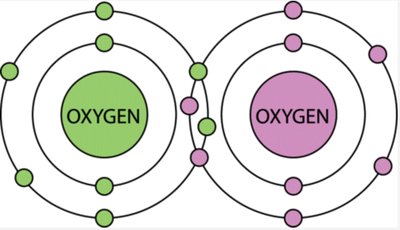
Q32. Is this molecule polar or nonpolar?
Background
Topic: Molecular Polarity
This question tests your ability to identify polar and nonpolar molecules based on their structure.
Key Terms:
Polar Molecule: Unequal sharing of electrons, partial charges.
Nonpolar Molecule: Equal sharing of electrons, no partial charges.
Step-by-Step Guidance
Examine the structure of the molecule.
Identify if there is unequal sharing of electrons.
Determine if the molecule has partial charges.
Try solving on your own before revealing the answer!
Q33. How many electrons are shared in a single covalent bond?
Background
Topic: Covalent Bonds
This question tests your knowledge of the number of electrons shared in a single covalent bond.
Key Terms:
Covalent Bond: Sharing of electrons between atoms.
Single Covalent Bond: Shares a specific number of electrons.
Step-by-Step Guidance
Recall the definition of a single covalent bond.
Identify how many electrons are shared in a single bond.
Eliminate options that do not fit the definition.
Try solving on your own before revealing the answer!
Q34. Which of the following MUST be true of a hydrophilic molecule?
Background
Topic: Hydrophilic vs. Hydrophobic Molecules
This question tests your understanding of the properties of hydrophilic molecules.
Key Terms:
Hydrophilic: Dissolves well in water.
Nonpolar Covalent Bonds: Do not dissolve well in water.
Electronegativity: Affects polarity.
Step-by-Step Guidance
Recall the properties of hydrophilic molecules.
Match each option to the correct property.
Eliminate options that do not fit hydrophilic molecules.
Try solving on your own before revealing the answer!
Q35. All of the following are true of the bonds that hold oxygen and hydrogen together in water EXCEPT that
Background
Topic: Water Molecule Bonds
This question tests your knowledge of the bonds in water molecules.
Key Terms:
Polar Covalent Bonds: Hold oxygen and hydrogen together in water.
Double Bonds: Not present in water.
Partial Charges: Created by polar bonds.
Step-by-Step Guidance
Recall the type of bond in water molecules.
Identify which statement is NOT true.
Eliminate options that are true of water bonds.
Try solving on your own before revealing the answer!
Q36. Hydrogen bonds form
Background
Topic: Hydrogen Bonds
This question tests your understanding of how hydrogen bonds form.
Key Terms:
Hydrogen Bond: Weak bond between hydrogen and electronegative atoms (e.g., oxygen, nitrogen) between molecules.
Step-by-Step Guidance
Recall the definition of a hydrogen bond.
Identify which atoms are involved in hydrogen bonds.
Eliminate options that do not fit the definition.
Try solving on your own before revealing the answer!
Q37. An acid is any substance that _______ the hydrogen ion concentration.
Background
Topic: Acids and Bases
This question tests your understanding of acids and their effect on hydrogen ion concentration.
Key Terms:
Acid: Increases hydrogen ion concentration.
Step-by-Step Guidance
Recall the definition of an acid.
Match each option to the correct effect.
Eliminate options that do not fit the definition.
Try solving on your own before revealing the answer!
Q38. An acidic solution has a pH __________.
Background
Topic: pH Scale
This question tests your knowledge of the pH scale and what constitutes an acidic solution.
Key Terms:
Acidic Solution: pH below 7.
Neutral Solution: pH of 7.
Basic Solution: pH above 7.
Step-by-Step Guidance
Recall the pH range for acidic solutions.
Match each option to the correct pH range.
Eliminate options that do not fit acidic solutions.
Try solving on your own before revealing the answer!
Q39. A strong base __________ dissociates in solution.
Background
Topic: Acids and Bases
This question tests your understanding of the properties of strong bases.
Key Terms:
Strong Base: Completely dissociates in solution.
Step-by-Step Guidance
Recall the definition of a strong base.
Match each option to the correct property.
Eliminate options that do not fit strong bases.
Try solving on your own before revealing the answer!
Q40. Below is an acid-base reaction. Identify the base.
Background
Topic: Acid-Base Reactions
This question tests your ability to identify acids and bases in a chemical reaction.
Key Terms:
Base: Accepts hydrogen ions.
Acid: Donates hydrogen ions.
Step-by-Step Guidance
Identify which reactant is the base in the reaction.
Recall the definitions of acids and bases.
Eliminate options that do not fit the definition.
Try solving on your own before revealing the answer!
Q41. Below is an acid-base reaction. Identify the pH of the products.
Background
Topic: Acid-Base Reactions
This question tests your understanding of the pH of products in an acid-base reaction.
Key Terms:
Acidic: pH below 7.
Basic: pH above 7.
Neutral: pH of 7.
Step-by-Step Guidance
Analyze the products of the reaction.
Recall the pH ranges for acidic, basic, and neutral solutions.
Eliminate options that do not fit the products.
Try solving on your own before revealing the answer!
Q42. When ATP is broken down into ADP and P,
Background
Topic: ATP and Energy
This question tests your understanding of the role of ATP in energy transfer.
Key Terms:
ATP: Adenosine triphosphate, energy currency of the cell.
ADP: Adenosine diphosphate.
Phosphate: Released during ATP breakdown.
Step-by-Step Guidance
Recall what happens when ATP is broken down.
Match each option to the correct process.
Eliminate options that do not fit ATP breakdown.
Try solving on your own before revealing the answer!
Q43. When ATP is formed from ADP and P,
Background
Topic: ATP and Energy
This question tests your understanding of the process of ATP formation.
Key Terms:
ATP Formation: Energy is used to add a phosphate to ADP.
ADP: Adenosine diphosphate.
Phosphate: Added during ATP formation.
Step-by-Step Guidance
Recall what happens when ATP is formed.
Match each option to the correct process.
Eliminate options that do not fit ATP formation.
Try solving on your own before revealing the answer!
Q44. Which of the following is true of a buffer?
Background
Topic: Buffers
This question tests your understanding of the properties and functions of buffers.
Key Terms:
Buffer: Resists changes in pH.
Weak Acid and Weak Base: Components of a buffer.
H+ Ions: Released to neutralize bases.
Step-by-Step Guidance
Recall the properties of buffers.
Match each option to the correct property.
Eliminate options that do not fit buffers.
Try solving on your own before revealing the answer!
Q45. Water has an unusually high specific heat. This is directly related to which one of the following?
Background
Topic: Properties of Water
This question tests your understanding of the property of specific heat in water.
Key Terms:
Specific Heat: Amount of heat required to raise the temperature of water.
Hydrogen Bonds: Responsible for high specific heat.
Step-by-Step Guidance
Recall the property of specific heat in water.
Match each option to the correct property.
Eliminate options that do not fit specific heat.
Try solving on your own before revealing the answer!
Q46. All lipids
Background
Topic: Lipids
This question tests your understanding of the properties of lipids.
Key Terms:
Lipids: Do not dissolve well in water.
Glycerol and Fatty Acids: Components of some lipids.
Energy Content: Lipids have high energy content.
Step-by-Step Guidance
Recall the properties of lipids.
Match each option to the correct property.
Eliminate options that do not fit lipids.
Try solving on your own before revealing the answer!
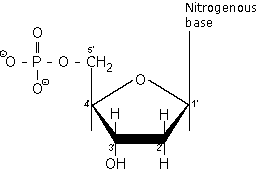
Q47. What molecule is shown here?
Background
Topic: Biomolecules
This question tests your ability to identify biomolecules from their structure.
Key Terms:
Nucleotide: Building block of nucleic acids.
Monosaccharide: Simple sugar.
Steroid: Lipid molecule.
Protein: Made of amino acids.
Step-by-Step Guidance
Examine the structure in the image.
Identify the components (phosphate, sugar, nitrogenous base).
Match the structure to the correct biomolecule.
Try solving on your own before revealing the answer!
Q48. A monomer of fructose (monosaccharide) and glucose combine to form sucrose (table sugar). What type of organic compound in sucrose?
Background
Topic: Carbohydrates
This question tests your understanding of the types of carbohydrates.
Key Terms:
Monosaccharide: Single sugar molecule.
Disaccharide: Two monosaccharides joined together.
Starch, Glycogen: Polysaccharides.
Step-by-Step Guidance
Recall the definition of a disaccharide.
Match each option to the correct compound.
Eliminate options that do not fit sucrose.
Try solving on your own before revealing the answer!
Q49. This biomolecule is used as a building block and for short-term energy storage in the body. Which biomolecule is it?
Background
Topic: Biomolecules
This question tests your understanding of the functions of carbohydrates, proteins, lipids, and nucleic acids.
Key Terms:
Carbohydrate: Short-term energy storage.
Protein: Structure and function.
Lipid: Long-term energy storage.
Nucleic Acid: Genetic information.
Step-by-Step Guidance
Recall the functions of each biomolecule.
Match each option to the correct function.
Eliminate options that do not fit short-term energy storage.
Try solving on your own before revealing the answer!
Q50. A steroid is an example of the biomolecule ________________________ and performs the function(s) of ________________________.
Background
Topic: Biomolecules
This question tests your understanding of the classification and functions of steroids.
Key Terms:
Steroid: Lipid molecule.
Signal Molecule: Hormones.
Structure: Cell membranes.
Step-by-Step Guidance
Recall the classification and functions of steroids.
Match each option to the correct biomolecule and function.
Eliminate options that do not fit steroids.
Try solving on your own before revealing the answer!
Q51. ATP
Background
Topic: ATP Structure and Function
This question tests your knowledge of the structure and function of ATP.
Key Terms:
ATP: Modified nucleic acid, contains three phosphate groups, immediate energy source.
Step-by-Step Guidance
Recall the structure and function of ATP.
Match each option to the correct property.
Eliminate options that do not fit ATP.
Try solving on your own before revealing the answer!
Q52. What would happen to the rate of an enzymatic reversible reaction if you increased the amount of available enzymes?
Background
Topic: Enzymes and Reaction Rates
This question tests your understanding of how enzymes affect reaction rates.
Key Terms:
Enzyme: Protein that speeds up reactions.
Reaction Rate: Speed of a chemical reaction.
Step-by-Step Guidance
Recall the effect of increasing enzyme concentration.
Match each option to the correct effect.
Eliminate options that do not fit enzyme action.
Try solving on your own before revealing the answer!
Q53. Identify the following type of reaction:
Background
Topic: Types of Chemical Reactions
This question tests your knowledge of dehydration, decomposition, replacement, and condensation reactions.
Key Terms:
Dehydration: Removal of water to form a bond.
Decomposition: Breaking down molecules.
Replacement: Exchange of parts between molecules.
Condensation: Formation of water as a byproduct.
Step-by-Step Guidance
Recall the definitions of each reaction type.
Match the reaction to the correct type.
Eliminate options that do not fit the reaction.
Try solving on your own before revealing the answer!
Q54. Carbohydrates are made by reacting glucose monomers (or glucose molecules) together. Each time two glucose molecules are added together, maltose is created and a water is released.
Background
Topic: Synthesis and Dehydration Reactions
This question tests your understanding of synthesis and dehydration reactions in carbohydrate formation.
Key Terms:
Synthesis: Formation of larger molecules.
Dehydration: Removal of water during synthesis.
Hydrolysis: Addition of water to break bonds.
Step-by-Step Guidance
Recall the process of forming carbohydrates from glucose monomers.
Identify which reaction releases water.
Eliminate options that do not fit the process.
Try solving on your own before revealing the answer!
