 Back
BackBasic Chemistry for Anatomy & Physiology: Structure, Bonds, and Biological Molecules
Study Guide - Smart Notes
 Tailored notes based on your materials, expanded with key definitions, examples, and context.
Basic Chemistry Concepts
Introduction to Chemistry in Physiology
Chemistry is fundamental to understanding the structure and function of the human body. All physiological processes are based on chemical interactions, making chemistry essential for anatomy and physiology students.
Chemistry studies the composition of substances and their changes.
Body structure and function are determined by chemical principles.
Concepts of Matter and Energy
States and Properties of Matter
Matter is anything that occupies space and has mass. It exists in three states: solid, liquid, and gas. Matter can undergo physical changes (altering form but not composition) or chemical changes (altering chemical composition).
Solid: Definite shape and volume.
Liquid: Definite volume, takes shape of container.
Gas: No definite shape or volume.
Energy Types
Energy is the ability to do work and exists in various forms:
Kinetic energy: Energy in motion.
Potential energy: Stored energy.
Chemical energy: Stored in chemical bonds; transferred to ATP in cells.
Composition of Matter: Elements and Atoms
Elements and Atomic Structure
Elements are the fundamental units of matter. The human body is primarily composed of four elements: oxygen, carbon, hydrogen, and nitrogen. Atoms are the building blocks of elements, each with unique properties.
Atomic symbol: One or two letter abbreviation for each element.
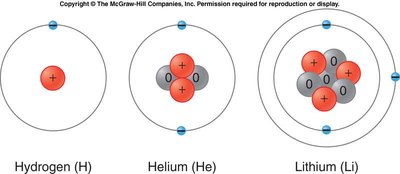
Atoms: Composed of protons, neutrons, and electrons.
Atoms of the same element have identical properties; different elements vary in size, weight, and bonding behavior.
Atomic Structure and Subatomic Particles
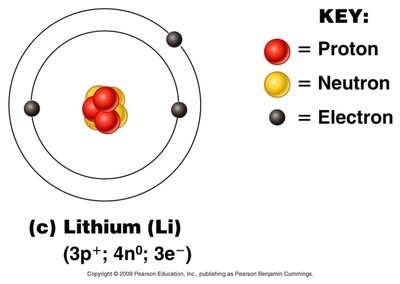
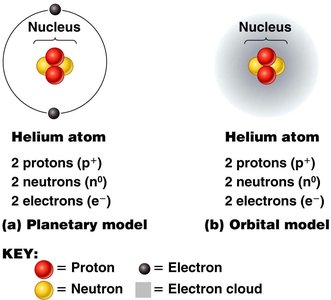
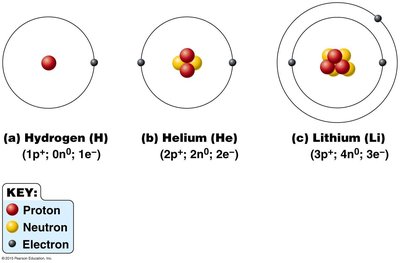
Atoms consist of a nucleus (protons and neutrons) and electrons orbiting outside the nucleus. Atoms are electrically neutral when the number of protons equals the number of electrons.
Proton (p+): Positive charge, mass = 1
Neutron (n0): No charge, mass = 1
Electron (e-): Negative charge, mass ≈ 0
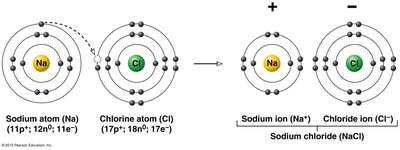
Ions: Atoms that have gained or lost electrons
Identifying Elements: Atomic Number, Mass Number, Isotopes
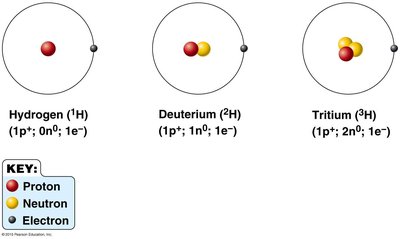
Each element is defined by its atomic number (number of protons). The mass number is the sum of protons and neutrons. Isotopes are atoms of the same element with different numbers of neutrons.
Atomic number: Number of protons; determines the element.
Mass number: Sum of protons and neutrons.
Isotopes: Same element, different neutron count.
Atomic weight: Average mass of all isotopes, close to mass number of most abundant isotope.
Molecules and Compounds
Molecules and Chemical Formulas
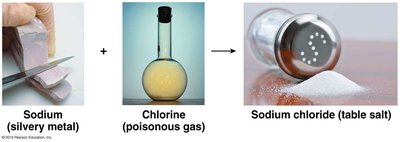
Molecules are formed when two or more atoms combine chemically. Compounds are molecules made from atoms of different elements. Biomolecules are organic molecules produced by living organisms.
Molecule: Two or more atoms chemically bonded.
Compound: Molecule with atoms from different elements.
Biomolecules: Proteins, carbohydrates, lipids, nucleic acids.
Chemical Bonds and Reactions
Role of Electrons and Electron Shells
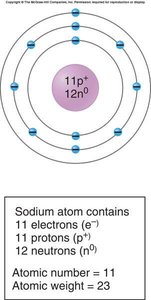
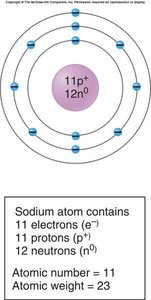
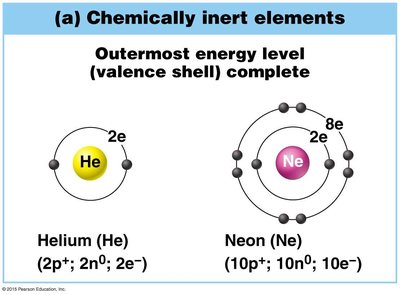
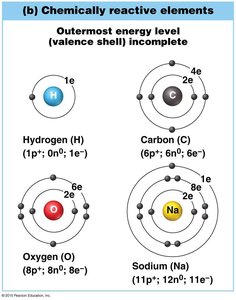
Electrons occupy energy levels called shells. The outermost shell (valence shell) determines chemical bonding behavior. Atoms are stable when their valence shell is full (rule of eights).
First shell: 2 electrons
Second shell: 8 electrons
Third shell: 18 electrons
Valence electrons: Electrons in the outermost shell
Chemically Inert vs. Reactive Elements
Atoms with complete valence shells are chemically inert and do not form bonds. Atoms with incomplete valence shells are chemically reactive and seek stability by gaining, losing, or sharing electrons.
Inert: Valence shell complete (e.g., noble gases)
Reactive: Valence shell incomplete (e.g., hydrogen, carbon, oxygen, sodium)
Types of Chemical Bonds
Chemical bonds are forces of attraction between atoms. The main types are ionic, covalent, and hydrogen bonds.
Ionic bond: Electrons are transferred from one atom to another, forming ions.
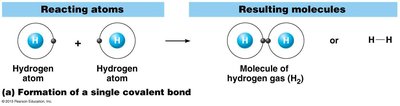
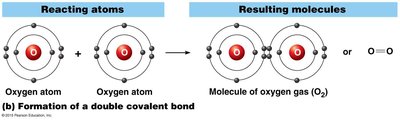
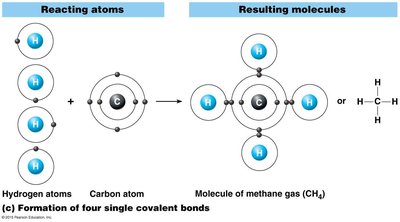
Covalent bond: Electrons are shared between atoms. Can be single, double, or polar/nonpolar.
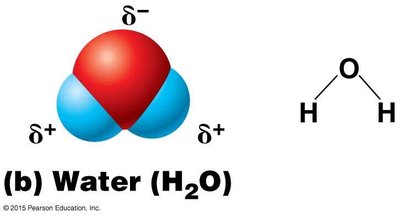
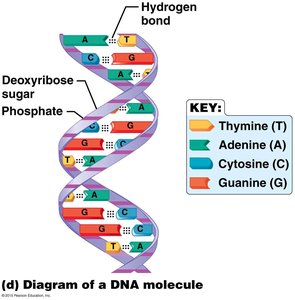
Hydrogen bond: Weak attraction between a slightly positive hydrogen and a negative region of a polar molecule.
Chemical Formulas
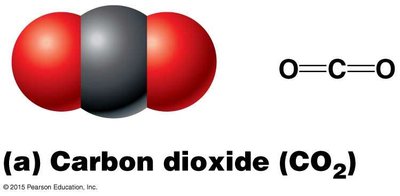
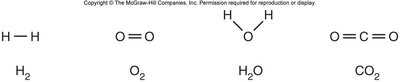
Chemical formulas represent the composition of molecules. Molecular formulas show the types and numbers of atoms; structural formulas show the arrangement.
Molecular formula: e.g., H2O, CO2
Structural formula: Shows how atoms are bonded
Patterns of Chemical Reactions
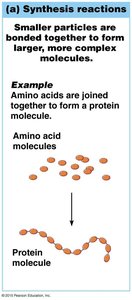
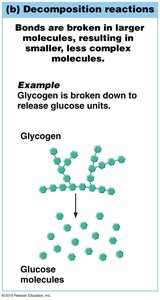
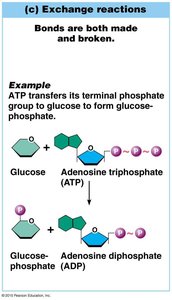
Chemical reactions involve reactants and products. The main types are synthesis, decomposition, and exchange reactions.
Synthesis: Atoms/molecules combine; energy absorbed (anabolic)
Decomposition: Molecule broken down; energy released (catabolic)
Exchange: Bonds are both made and broken; parts are switched
Biochemistry: Chemical Composition of Living Matter
Inorganic and Organic Compounds
Inorganic compounds do not have a carbon backbone and are usually small and simple. Organic compounds are large, covalently bonded molecules based on carbon and hydrogen.
Inorganic: Water, O2, CO2, salts, acids, bases
Organic: Carbohydrates, lipids, proteins, nucleic acids
Properties of Water
Water is the most abundant inorganic compound in the body and is vital for physiological processes.
High heat capacity: Absorbs/releases heat, stabilizes body temperature
Polarity/solvent properties: Universal solvent, dissolves solutes
Chemical reactivity: Participates in hydrolysis reactions
Cushioning: Protects organs (e.g., cerebrospinal fluid, amniotic fluid)
Salts, Acids, and Bases
Salts dissociate into ions in water, forming electrolytes. Acids are proton donors; bases are proton acceptors. The pH scale measures H+ concentration.
Salts: NaCl, CaCl2, KCl
Acids: HCl → H+ + Cl-
Bases: NaOH → Na+ + OH-
Neutralization: HCl + NaOH → H2O + NaCl
pH scale: 0-14; 7 = neutral, <7 = acidic, >7 = basic
Buffers: Maintain stable pH
Organic Molecules: Carbohydrates, Lipids, Proteins, Nucleic Acids
Organic molecules are based on carbon and contain functional groups that determine their properties. Many are polymers formed by dehydration synthesis and broken down by hydrolysis.
Carbohydrates: Sugars and starches; classified as monosaccharides, disaccharides, polysaccharides
Lipids: Triglycerides, phospholipids, steroids; energy storage and membrane structure
Proteins: Built from amino acids; structural and functional roles
Nucleic acids: DNA, RNA, ATP; genetic information and energy transfer
Tables and Data
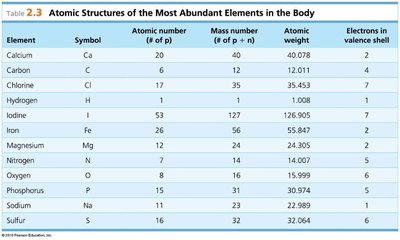
Atomic Structures of the Most Abundant Elements in the Body
This table summarizes the atomic properties of key elements found in the human body, including their atomic number, mass number, atomic weight, and electrons in the valence shell.
Element | Symbol | Atomic number (# of p) | Mass number (# of p + n) | Atomic weight | Electrons in valence shell |
|---|---|---|---|---|---|
Calcium | Ca | 20 | 40 | 40.078 | 2 |
Carbon | C | 6 | 12 | 12.011 | 4 |
Chlorine | Cl | 17 | 35 | 35.453 | 7 |
Hydrogen | H | 1 | 1 | 1.008 | 1 |
Iodine | I | 53 | 127 | 126.905 | 7 |
Iron | Fe | 26 | 56 | 55.847 | 2 |
Magnesium | Mg | 12 | 24 | 24.305 | 2 |
Nitrogen | N | 7 | 14 | 14.007 | 5 |
Oxygen | O | 8 | 16 | 15.999 | 6 |
Phosphorus | P | 15 | 31 | 30.974 | 5 |
Sodium | Na | 11 | 23 | 22.989 | 1 |
Sulfur | S | 16 | 32 | 32.064 | 6 |
Summary
This guide covers the essential chemistry concepts for anatomy and physiology, including matter, energy, atomic structure, chemical bonds, reactions, and the major classes of biological molecules. Understanding these principles is foundational for further study in human physiology and biochemistry.
