 Back
Basic Chemistry for Anatomy & Physiology I: Matter, Energy, and Atomic Structure
Study Guide - Smart Notes
 Tailored notes based on your materials, expanded with key definitions, examples, and context.
Basic Chemistry for Anatomy & Physiology I
1. Matter and Energy
Understanding matter and energy is foundational for studying anatomy and physiology, as all biological processes depend on chemical interactions.
Matter: Anything that occupies space and has mass. It exists in three states:
Solid: Definite shape and volume.
Liquid: Definite volume, takes the shape of its container.
Gas: Neither definite shape nor volume.
Physical changes: Do not alter the basic nature of a substance (e.g., melting, freezing).
Chemical changes: Alter the chemical composition of a substance (e.g., burning, rusting).
Energy: The ability to do work. It does not have mass or occupy space.
Kinetic energy: Energy in action (e.g., muscle contraction).
Potential energy: Stored energy (e.g., energy stored in chemical bonds).

Forms of energy:
Chemical energy: Stored in chemical bonds (e.g., ATP in cells).
Electrical energy: Movement of charged particles (e.g., nerve impulses).
Mechanical energy: Directly involved in moving matter (e.g., muscle movement).
Radiant energy: Travels in waves (e.g., light, X-rays).
Energy Conversion: Energy can be converted from one form to another. For example, chemical energy from food is converted to ATP, which powers cellular work.
2. Elements and Atoms
Elements are the simplest forms of matter with unique chemical properties. Atoms are the smallest units of elements that retain their properties.
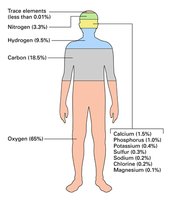
Major elements in the human body: Carbon (C), Hydrogen (H), Oxygen (O), Nitrogen (N) make up 96% of living matter.
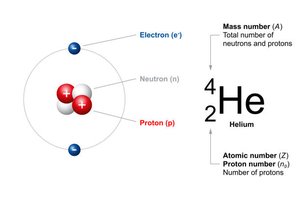
Atoms: Consist of a nucleus (protons and neutrons) and orbiting electrons.
Subatomic particles:
Protons (p+): Positive charge, in nucleus.
Neutrons (n0): No charge, in nucleus.
Electrons (e–): Negative charge, orbit nucleus.
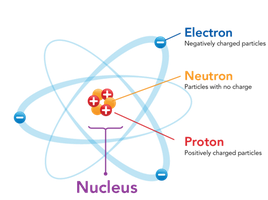
Atoms are electrically neutral when the number of protons equals the number of electrons.
Ions: Atoms that have gained or lost electrons, resulting in a charge.
3. Atomic Models
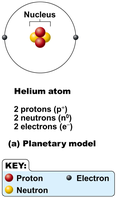
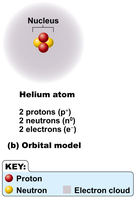
Atomic models help visualize the structure of atoms and the arrangement of subatomic particles.
Planetary model: Electrons orbit the nucleus like planets around the sun.
Orbital model: Electrons are found in a cloud around the nucleus.
4. Identifying Elements
Each element is identified by its atomic number, mass number, and atomic weight.
Atomic number (Z): Number of protons in the nucleus (also equals number of electrons in a neutral atom).
Mass number (A): Sum of protons and neutrons in the nucleus.
Atomic weight: Average mass of all isotopes of an element.
5. Isotopes and Radioactivity
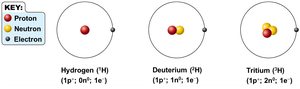
Isotopes are atoms of the same element with different numbers of neutrons. Some isotopes are radioactive and decay over time, releasing energy.
Isotopes: Same atomic number, different mass numbers.
Radioactive isotopes: Unstable, decay to more stable forms, used in medical imaging and tracing biological molecules.
6. Molecules and Compounds
Molecules are formed when two or more atoms bond together. Compounds are molecules composed of different elements.
Molecule: Two or more atoms of the same element bonded (e.g., O2).
Compound: Two or more atoms of different elements bonded (e.g., H2O).
7. Electron Shells and Chemical Bonding
Electrons occupy energy levels called shells. The arrangement of electrons determines an atom’s chemical behavior.
First shell: up to 2 electrons
Second shell: up to 8 electrons
Third shell: up to 18 electrons
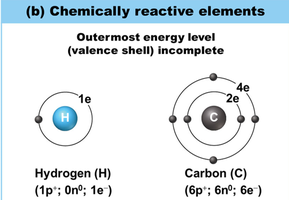
Valence shell: Outermost shell; determines reactivity.
Rule of eights (octet rule): Atoms are most stable with 8 electrons in their valence shell (except for the first shell, which is full with 2 electrons).
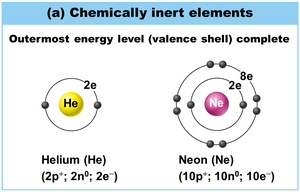
Inert elements: Have complete valence shells (e.g., noble gases).
Reactive elements: Incomplete valence shells; tend to gain, lose, or share electrons to achieve stability.
8. Types of Chemical Bonds
Chemical bonds form when atoms interact to achieve stable electron configurations.
Ionic bonds: Formed by the transfer of electrons from one atom to another, resulting in oppositely charged ions (cations and anions) that attract each other.
Covalent bonds: Formed when atoms share electrons. Can be single, double, or triple bonds.
Nonpolar covalent bonds: Electrons are shared equally.
Polar covalent bonds: Electrons are shared unequally, creating partial charges.
Hydrogen bonds: Weak attractions between a hydrogen atom and an electronegative atom (e.g., oxygen or nitrogen). Important in water and biological molecules.
9. Patterns of Chemical Reactions
Chemical reactions in the body involve the making and breaking of bonds, essential for metabolism and physiology.
Synthesis reactions (A + B → AB): Atoms or molecules combine; energy is absorbed.
Decomposition reactions (AB → A + B): Molecules are broken down; energy is released.
Exchange reactions (AB + C → AC + B): Involve both synthesis and decomposition; atoms are rearranged.
Dehydration synthesis: Monomers join to form polymers by removing water.
Hydrolysis: Polymers are broken down into monomers by adding water.
Reversible reactions: Indicated by double arrows; direction depends on conditions.
10. Summary Table: Major Elements in the Human Body
Element | Symbol | Body % | Role |
|---|---|---|---|
Oxygen | O | 65% | Component of water, needed for cellular respiration |
Carbon | C | 18.5% | Backbone of organic molecules |
Hydrogen | H | 9.5% | Component of water and most organic molecules |
Nitrogen | N | 3.3% | Component of proteins and nucleic acids |
Calcium | Ca | 1.5% | Bone structure, muscle contraction |
Phosphorus | P | 1.0% | ATP, nucleic acids, bones |
Potassium | K | 0.4% | Nerve function, muscle contraction |
Sulfur | S | 0.3% | Proteins |
Sodium | Na | 0.2% | Nerve function, fluid balance |
Chlorine | Cl | 0.2% | Fluid balance |
Magnesium | Mg | 0.1% | Enzyme function |
Additional info: This summary provides foundational chemistry concepts essential for understanding the structure and function of the human body in anatomy and physiology. Mastery of these topics is critical for further study of cell biology, metabolism, and physiological processes.
