 Back
Basic Chemistry Principles for Anatomy & Physiology
Study Guide - Smart Notes
 Tailored notes based on your materials, expanded with key definitions, examples, and context.
Basic Chemistry Principles
What is Matter?
Matter is anything that takes up space (has volume) and has mass. All substances in the universe are forms of matter, which exists in three primary states: solid, liquid, and gas. The state of matter depends on the arrangement and energy of its particles.
Solid: Particles are tightly packed and vibrate in place, giving solids a definite shape and volume.
Liquid: Particles are less tightly packed than in solids and can move past each other, allowing liquids to flow and take the shape of their container.
Gas: Particles are far apart and move freely, filling any available space.
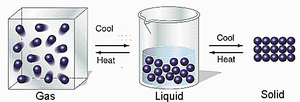
Energy changes (heating or cooling) can cause matter to change from one state to another by altering the kinetic energy of its particles.
Basic Atomic Structure
Subatomic Particles
Atoms are the basic units of matter, composed of three main subatomic particles:
Protons (p+): Positively charged particles located in the nucleus.
Neutrons (n0): Neutral particles (no charge) also found in the nucleus.
Electrons (e-): Negatively charged particles that orbit the nucleus in regions called orbitals.
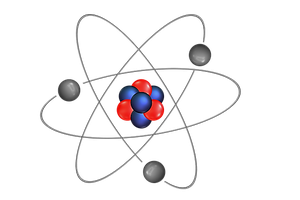
The nucleus contains protons and neutrons, while electrons move in orbitals around the nucleus.
Atomic Number and Neutrality
The atomic number of an element is equal to the number of protons in its nucleus. In a neutral atom, the number of protons equals the number of electrons, resulting in no net charge.
Example: Hydrogen (H) has an atomic number of 1, meaning it has 1 proton and 1 electron.
Free Radicals and Cellular Damage
Definition and Biological Impact
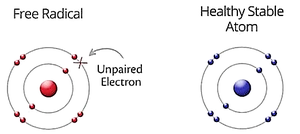
A free radical is any atom, molecule, or ion with an unpaired electron in its outer orbital, making it highly reactive. Free radicals can be generated by normal cell metabolism, exposure to certain chemicals (e.g., mercury), or forms of energy (e.g., X-rays).
Excessive free radicals can damage DNA and other cellular components, contributing to aging and disease.
Unstable Atoms and Chemical Bonds
Reactivity and Stability
Atoms important to biological systems are often unstable due to incomplete outer electron shells. These atoms become stable by:
Losing electrons
Gaining electrons
Sharing electrons
These processes result in the formation of ionic or covalent bonds, creating molecules and compounds essential for life (e.g., O2, H2O, NaCl).
Covalent Bonds
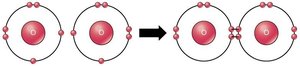
A covalent bond is formed when two atoms share one or more pairs of electrons. Covalent bonds can be:
Nonpolar: Electrons are shared equally (e.g., O2 molecule).
Polar: Electrons are shared unequally, creating partial charges (e.g., H2O molecule).
Ionic Bonds
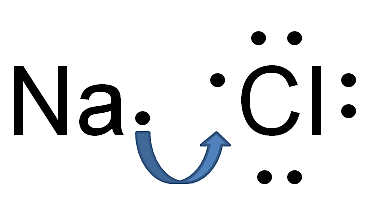
An ionic bond is formed when one atom transfers electrons to another, resulting in oppositely charged ions that attract each other. The atom that loses electrons becomes a cation (positive ion), and the atom that gains electrons becomes an anion (negative ion).
Example: Sodium (Na) loses an electron to chlorine (Cl), forming Na+ and Cl- ions, which bond to form NaCl (table salt).
Hydrogen Bonds
Hydrogen bonds are weak attractions between the slightly positive hydrogen atom of one molecule and a slightly negative atom (often oxygen or nitrogen) of another molecule. Although weak individually, hydrogen bonds are crucial for the structure and properties of water and biological macromolecules.
Hydrogen bonds are responsible for water's high surface tension and its role as a universal solvent.
Surface Tension and Water
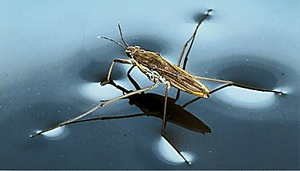
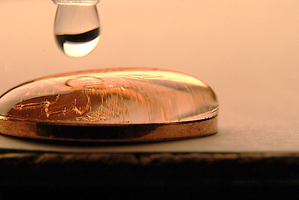
Hydrogen bonds between water molecules create surface tension, which forms a barrier that prevents small objects from entering the water and helps maintain the shape of water droplets.
Surface tension is important in biological systems, such as preventing dust from entering the eye and allowing insects to walk on water.
Types of Chemical Reactions in Human Physiology
Decomposition Reactions
Decomposition reactions break down complex molecules into simpler ones. When water is involved, the process is called hydrolysis. The sum of all decomposition reactions in the body is called catabolism.
Example: Sucrose + H2O → Glucose + Fructose (catalyzed by sucrase)
Synthesis Reactions
Synthesis reactions build complex molecules from simpler ones. The removal of water to form a bond is called dehydration synthesis. The sum of all synthesis reactions is called anabolism.
Example: Amino acid + Amino acid → Peptide (formation of a peptide bond)
Exchange Reactions
Exchange reactions involve the transfer or swapping of parts between molecules to form new products. These reactions are essential in metabolism, such as the transfer of a phosphate group from ATP to glucose.
Example: Glucose + ATP → Glucose-phosphate + ADP
Enzymes: Biological Catalysts
Role and Mechanism
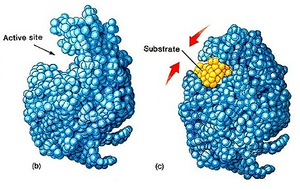
Enzymes are proteins that act as biological catalysts, speeding up chemical reactions by lowering the activation energy required. They are highly specific, with each enzyme acting on a particular substrate at its active site, often described as a "lock and key" mechanism.
Enzymes are not consumed or changed by the reaction.
They are essential for sustaining life by enabling metabolic reactions to occur rapidly and efficiently.

Importance of Water in Human Physiology
Properties and Functions
Water is the most abundant substance in the human body, making up about two-thirds of total body weight. It is vital for life due to its unique properties:
Solubility: Many substances dissolve in water, facilitating transport and chemical reactions.
Reactivity: Water participates in hydrolysis and dehydration synthesis reactions.
High heat capacity: Water resists rapid temperature changes, helping maintain body temperature.
Lubrication: Water reduces friction between body surfaces (e.g., joints, organs).
Aqueous Solutions
Water as the Solvent
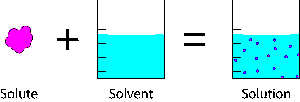
An aqueous solution is a solution in which water is the solvent. Most chemical reactions in the body occur in aqueous solutions. A solution consists of a solute (substance dissolved) and a solvent (substance doing the dissolving).
Water's polarity allows it to dissolve many substances, making it an effective solvent for biological reactions.
Hydrophilic vs. Hydrophobic Substances
Hydrophilic substances are water-loving and dissolve easily in water due to their polarity (e.g., salts, sugars). Hydrophobic substances are water-fearing, nonpolar, and do not dissolve in water (e.g., oils, fats).
pH of Body Fluids
Definition and Importance
The pH scale measures the concentration of hydrogen ions (H+) in an aqueous solution, indicating how acidic or basic the solution is. The scale ranges from 0 (most acidic) to 14 (most basic), with 7 being neutral.
Body fluids must maintain a narrow pH range for proper physiological function (e.g., blood pH: 7.35–7.45).
Acid-Base Balance
Maintaining proper pH is critical because even small shifts can disrupt cellular function. The body regulates pH through:
Removal of CO2 (respiratory system)
Buffer systems (e.g., bicarbonate HCO3-)
Excretion of H+ ions (kidneys)
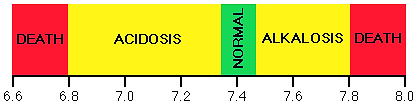
Abnormal pH can damage cells, disrupt protein structure, and lead to organ dysfunction or death.
Salts: Importance in Physiology
Definition and Functions
A salt is an ionic compound that dissociates in water to form positive and negative ions (electrolytes). Salts are essential for:
Regulating fluid balance (osmotic flow of water)
Nerve and muscle function (Na+, K+, Ca2+)
Maintaining acid-base balance (buffers such as HCO3-)
Acid-Base Balance: Buffers, CO2 Removal, and H+ Excretion
The body produces acids and bases during metabolism. To maintain homeostasis, acid–base balance is regulated by:
Respiratory removal of CO2
Buffer systems (e.g., bicarbonate)
Renal excretion of H+
These mechanisms work together to keep body fluid pH within a narrow, healthy range.
