 Back
BackBIO 1141/1147 Principles of Anatomy & Physiology I: Syllabus and Course Structure Study Notes
Study Guide - Smart Notes
 Tailored notes based on your materials, expanded with key definitions, examples, and context.
Course Overview
Introduction to Anatomy & Physiology I
This course is the first in a two-semester sequence exploring the structure and function of the human body. It covers foundational concepts in anatomy and physiology, including terminology, biochemistry, cells, tissues, and major organ systems such as the integumentary, skeletal, muscular, nervous, and endocrine systems.
Credit Hours: 4 (3 classroom, 2 lab per week)
Prerequisites: DEV 0015 or MAT 0600 AND MAT 0100 OR MAT 1130
Corequisite: BIO 1147 Lab for Principles of Anatomy & Physiology I
Course Outcomes
Anatomical and Physiological Competence
Students will develop proficiency in using formal anatomical terminology and scientific language to describe tissues, organs, and physiological processes. The course emphasizes the relationship between anatomical structure and physiological function, as well as the mechanisms and control systems underlying body homeostasis.
Anatomical competence: Identify and locate tissues and organs; relate structure to function.
Physiological competence: Describe physiological processes, mechanisms, and biochemical pathways.
Homeostatic mechanisms: Explain organ system contributions to homeostasis and their interdependence.
Textbooks and Resources
Required and Optional Materials
Required: Anatomy and Physiology, Marieb and Hoehn, 7th edition, 2020, Pearson
Lab Guide: Biology 1147-1248 Anatomy and Physiology Lab Guide, 2019 (Online and print)
Optional: A Photographic Atlas of Anatomy & Physiology, Hebert and Heisler, 2015, Pearson
Optional: Mastering A&P publisher resources (course ID: hayes91601)
Course Structure and Schedule
Weekly Topics and Laboratory Activities
The course follows a structured schedule, with each week focusing on specific chapters and laboratory activities. Major topics include:
Ch. 1: The Human Body: An Orientation
Ch. 2: Chemistry Comes Alive
Ch. 3: Cells: The Living Units
Ch. 4: Tissue: The Living Fabric (covered in lab)
Ch. 5: The Integumentary System
Ch. 6: Bones and Skeletal Tissues
Ch. 7: The Skeleton (lab focus)
Ch. 8: Joints
Ch. 9: Muscles and Muscle Tissue
Ch. 10: The Muscular System (lab focus)
Ch. 11: Fundamentals of the Nervous System and Nervous Tissue
Ch. 12: The Central Nervous System
Ch. 13: The Peripheral Nervous System and Reflex Activity
Ch. 14: The Autonomic Nervous System
Ch. 15: The Endocrine System
Laboratory activities include microscope work, molecular models, histology, skeletal system identification, muscle and nervous system dissections, and practical quizzes.
Assessment and Grading
Exams, Quizzes, and Grading Scale
Student performance is evaluated through lecture exams, lab exams, and quizzes. The grading scale is as follows:
Lecture Exams: 6 regular exams + 1 comprehensive (lowest grade dropped)
Lab Exams: 3 practical exams
Lab Quizzes: Total of 50 points
Extra Credit: Up to 25 points (lecture only)
Grade | Total Points | Percentage |
|---|---|---|
A | 800-716 | 90% or higher |
B | 715-636 | 80-89% |
C | 635-556 | 70-79% |
D | 555-476 | 60-69% |
F | 475-0 | Less than 60% |
Policies and Expectations
Attendance, Academic Integrity, and Accommodations
Attendance: Required for all classes; notify instructor in case of emergency.
Academic Integrity: No unauthorized materials or communication during exams; violations result in severe consequences.
Accessibility: Students must inform the instructor of any accommodations needed at the start of the semester.
Religious Holiday Accommodations: Up to three days per semester for religious observances with proper notice.
Student and Instructor Expectations
Responsibilities and Support
Students: Attend class, come prepared, participate, and communicate with the instructor as needed.
Instructor: Foster active learning, provide guidance, and be available for questions and support.
Potential Consequences of Withdrawal
Academic and Financial Implications
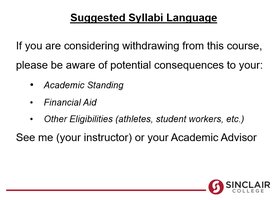
Withdrawing from the course may affect your academic standing, financial aid, and eligibility for other programs (such as athletics or student employment). Consult your instructor or academic advisor before making a decision.
Additional info:
The syllabus and schedule directly align with the standard chapters and topics for an Anatomy & Physiology college course, covering all foundational systems and processes listed in the reference chapter titles. The course structure ensures comprehensive coverage of both anatomical and physiological principles, with integrated laboratory experiences to reinforce learning.
