 Back
BackBIO 231 Chapter 1 Concept Check – Study Guidance
Study Guide - Smart Notes
 Tailored notes based on your materials, expanded with key definitions, examples, and context.
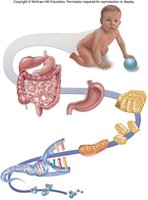
Q2. Organize the following list in order from simplest to most complex: Organelles, Cells, Tissue, Organ, Organ System
Background
Topic: Levels of Structural Organization in the Human Body
This question tests your understanding of how biological structures are organized from the smallest functional units to the most complex systems in the body.
Key Terms:
Organelle: Specialized structures within a cell that perform specific functions (e.g., mitochondria, nucleus).
Cell: The basic unit of life; all living things are made up of cells.
Tissue: Groups of similar cells that perform a common function.
Organ: Structures composed of two or more tissue types that perform specific functions.
Organ System: Groups of organs that work together to perform complex functions.
Step-by-Step Guidance
Start by identifying the smallest unit in the list. Think about what makes up a cell and what is found inside it.
Next, determine what is formed when many organelles come together.
Consider what is created when many similar cells work together for a common purpose.
Think about how different tissues combine to form a larger structure with a specific function.
Finally, identify what is formed when multiple organs work together to achieve a common goal in the body.
Try solving on your own before revealing the answer!
Final Answer:
1. Organelles → 2. Cells → 3. Tissue → 4. Organ → 5. Organ System
This order reflects the increasing complexity from the smallest functional units to the most complex systems in the human body.
