 Back
BackBIO 232 – Anatomy & Physiology II: Course Overview and Study Guide
Study Guide - Smart Notes
 Tailored notes based on your materials, expanded with key definitions, examples, and context.
Course Overview: Anatomy & Physiology II (BIO 232)
Introduction
This course is the second half of a two-semester sequence designed to integrate the study of the structure and function of the human body. It covers the anatomy and physiology of the sensory organs, endocrine, cardiovascular, lymphatic, immune, respiratory, digestive, urinary, and reproductive systems. The concept of homeostasis and its disruption by disease conditions is emphasized, providing a framework to integrate all systems into a functioning whole.
Course Structure and Materials
Lecture: Online (asynchronous)
Lab: In-person, Mondays 9:00–11:00 AM
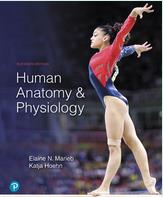
Required Textbook: Human Anatomy & Physiology, 11th Edition by Marieb & Hoehn, Pearson Benjamin Cummings
Online Resources: Modified Mastering A&P, Labster, A.D.A.M. (Muscle Anatomy lab)
Course Web Site: Blackboard (for announcements, lecture slides, quizzes, assignments, and discussion boards)
Course Outcomes
Demonstrate knowledge of anatomy and physiology of the sensory organs, endocrine, cardiovascular, lymphatic, immune, respiratory, digestive, urinary, and reproductive systems.
Identify important molecules, tissues, organs, and structures within each organ system.
Explain the function of each organ system using fundamentals of chemistry, cellular biology, and histology.
Relate structure and function at different levels of organization (chemical, cellular, tissue, organ, organ systems).
Predict outcomes of homeostatic imbalances.
Analyze graphic and numeric data from physiology experiments.
Major Topics Covered (with Corresponding Chapters)
Week | Lecture Topic | Chapter | Lab Topic | Test |
|---|---|---|---|---|
1 | Special Senses: Eyes | 15 | Special Senses | |
2 | Endocrine System | 16 | Eyes, Endocrinology | |
3 | Blood | 17 | Blood Typing, BT Antibodies | |
4 | Cardiovascular System: Heart | 18 | Heart Dissection | Test 1 (Ch. 15, 16, 17) |
5 | Cont. Cardiovascular System: Heart | 18 | Cardiovascular Dynamics (PhysioEx) | |
6 | Cardiovascular System: Blood Vessels | 19 | Lab Practical 1 (Eye and Heart) | |
7 | Lymphatic System | 20 | Lymphatic System (Pearson) | Test 2 (Ch. 18, 19) |
8 | Immune System (Innate and Adaptive) | 21 | Arteries and Veins, Serological Testing (PhysioEx) | |
9 | Respiratory System | 22 | Lab Practical 2 (Blood Vessels) | |
10 | Cont. Respiratory System | 22 | Respiratory System – Spirometer | |
11 | Digestive System | 23 | Chemical and Physical Processes of Digestion (PhysioEx) | Test 3 (Ch. 20, 21, 22) |
12 | Cont. Digestive System | 23 | Pig Dissection, Digestive | |
13 | Urinary System | 25 | Renal System Physiology (PhysioEx) | |
14 | Cont. Urinary System | 25 | Urine Analysis | |
15 | Reproductive System | 27 | Lab Practical 3 (Respiratory, Digestive, Urinary) | |
16 | Final Exam | Test 4 (Ch. 23, 25, 27) |
Key Study Strategies
Review lecture notes, textbook chapters, and reading questions after each class.
Complete chapter outcomes to ensure mastery of material.
Participate actively in discussion boards for deeper understanding.
Utilize online resources (Pearson Mastering, Labster, A.D.A.M.) for virtual labs and practice.
Attend lab sessions and practicals for hands-on experience.
Grading Breakdown
Assessment | Weight |
|---|---|
Lecture Exams (4) | 40% (each 10%) |
Lab Exercises and Practicals | 25% |
Weekly Homework and Quizzes | 35% |
Extra Credit: Discussion Board Participation | 1% |
Grade Scale: A = 93–100; A- = 90–92; B+ = 87–89; B = 83–86; B- = 80–82, etc.
Academic Integrity
All assignments must be completed individually.
Plagiarism and academic dishonesty are strictly prohibited.
Refer to the MCC Code of Conduct for detailed policies.
Support and Resources
Free science tutoring and supplemental instruction available.
Disability Support Services for students with varying abilities.
BYOD (Bring Your Own Device) policy for labs and classes.
Attendance and Participation
Regular attendance in lab and daily engagement with Blackboard are required.
Active participation in discussion boards enhances learning and may contribute to final grade.
Summary of Relevant Chapters (as per course schedule)
Ch. 15: The Special Senses
Ch. 16: The Endocrine System
Ch. 17: Blood
Ch. 18: The Cardiovascular System: The Heart
Ch. 19: The Cardiovascular System: Blood Vessels
Ch. 20: The Lymphatic System and Lymphoid Organs and Tissues
Ch. 21: The Immune System: Innate and Adaptive Body Defenses
Ch. 22: The Respiratory System
Ch. 23: The Digestive System
Ch. 25: The Urinary System
Ch. 27: The Reproductive System
Additional info: This course builds on foundational knowledge from Anatomy & Physiology I and is essential for students pursuing health professions. Mastery of these systems is critical for understanding human health, disease, and clinical practice.
