 Back
BackBIO163 Exam 1 Study Guide: Human Anatomy & Physiology Chapters 1-7
Study Guide - Smart Notes
 Tailored notes based on your materials, expanded with key definitions, examples, and context.
The Human Body: An Orientation
Medical Terminology
Understanding medical terms is essential for clear communication in anatomy and physiology. These terms often use Latin or Greek roots, prefixes, and suffixes to describe locations, conditions, and processes.
Prefix: Added to the beginning of a word to modify its meaning (e.g., hypo- means 'below').
Suffix: Added to the end of a word (e.g., -itis means 'inflammation').
Root: The main part of the word (e.g., cardi means 'heart').
Example: Gastritis = inflammation of the stomach.
Body Systems Overview
The human body is organized into several systems, each with specific functions.
Major systems: Skeletal, muscular, nervous, endocrine, cardiovascular, lymphatic, respiratory, digestive, urinary, reproductive.
Example: The nervous system controls and coordinates body activities.
Planes, Sections, and Cavities
Body planes and cavities help describe locations and divisions within the body.
Planes: Sagittal (left/right), frontal (anterior/posterior), transverse (superior/inferior).
Cavities: Dorsal (cranial, spinal), ventral (thoracic, abdominal, pelvic).
Example: The heart is located in the thoracic cavity.
Basic Chemistry
Organic and Inorganic Compounds; Properties of Water
Chemical compounds in the body are classified as organic (contain carbon) or inorganic (do not contain carbon).
Organic compounds: Carbohydrates, lipids, proteins, nucleic acids.
Inorganic compounds: Water, salts, acids, bases.
Properties of water: High heat capacity, solvent properties, reactivity, cushioning.
Example: Water is essential for dissolving substances and facilitating chemical reactions.
Cations and Anions
Cations are positively charged ions, while anions are negatively charged ions. They are crucial for cellular function and maintaining electrical balance.
Cation: Na+, K+, Ca2+
Anion: Cl-, HCO3-
Example: Sodium and potassium ions are vital for nerve impulse transmission.
Cells and Tissues
Cell Structure and Plasma Membrane
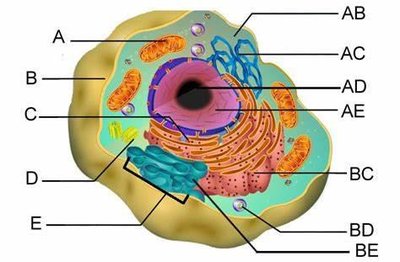
The cell is the basic unit of life. The plasma membrane controls the movement of substances in and out of the cell.
Key organelles: Nucleus, mitochondria, endoplasmic reticulum, Golgi apparatus, lysosomes.
Plasma membrane: Composed of a phospholipid bilayer with embedded proteins.
Function: Selective permeability, protection, communication.
Cell Shapes and Types of Tissues
Cells vary in shape and function. Tissues are groups of similar cells performing a specific function.
Cell shapes: Squamous, cuboidal, columnar.
Types of tissues: Epithelial, connective, muscle, nervous.
Example: Epithelial tissue lines body surfaces; muscle tissue enables movement.
Cell Division (Mitosis)
Mitosis is the process by which cells divide to produce identical daughter cells.
Phases: Prophase, metaphase, anaphase, telophase.
Purpose: Growth, repair, maintenance.
Example: Skin cells undergo mitosis to replace damaged tissue.
DNA Properties and Genetic Code
DNA contains the genetic instructions for life. The genetic code is the sequence of nucleotides that determines protein synthesis.
Structure: Double helix composed of nucleotides (adenine, thymine, cytosine, guanine).
Complementary code: A pairs with T, C pairs with G.
Example: The sequence ATCG in DNA codes for specific amino acids.
Protein Synthesis and Codons
Protein synthesis involves transcription and translation. Codons are three-nucleotide sequences in mRNA that specify amino acids.
Transcription: DNA is copied into mRNA.
Translation: mRNA is decoded by ribosomes to assemble proteins.
Codon example: AUG codes for methionine (start codon).
Concentration Gradient and Diffusion
Diffusion is the movement of particles from an area of higher concentration to lower concentration across a semipermeable membrane.
Concentration gradient: Difference in concentration across a space.
Diffusion: Passive process; no energy required.
Example: Oxygen diffuses from blood into tissues.
Skin and Body Membranes
Skin Structure and Accessory Organs
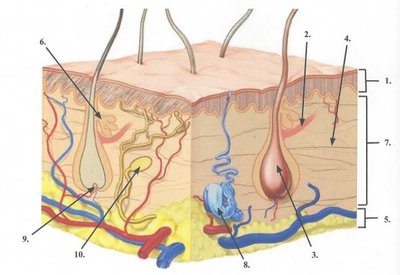
The skin is the largest organ of the body, providing protection, sensation, and regulation. It consists of three main layers and various accessory structures.
Layers: Epidermis, dermis, hypodermis (subcutaneous tissue).
Accessory organs: Hair follicles, sweat glands, sebaceous glands, blood vessels.
Functions: Protection, temperature regulation, sensation.
The Skeletal System
Bones of the Human Body and Associated Hormones
The skeletal system provides structure, protection, and support. Bones are influenced by hormones such as parathyroid hormone and calcitonin.
Major bones: Skull, vertebrae, ribs, limbs.
Hormones: Parathyroid hormone increases blood calcium; calcitonin decreases it.
Example: Osteoblasts build bone; osteoclasts break down bone.
Osteon Structure and Physiology
The osteon is the functional unit of compact bone, consisting of concentric lamellae surrounding a central canal.
Components: Lamellae, central canal, osteocytes in lacunae.
Function: Provides strength and facilitates nutrient/waste exchange.
Joints Movements and Types of Joints
Joints allow movement and flexibility. They are classified by structure and function.
Types: Fibrous (immovable), cartilaginous (slightly movable), synovial (freely movable).
Movements: Flexion, extension, abduction, adduction, rotation.
Example: The knee is a synovial joint allowing flexion and extension.
The Muscular System
Muscles of the Human Body
Muscles are responsible for movement, posture, and heat production. There are three types: skeletal, cardiac, and smooth.
Skeletal muscle: Voluntary, striated.
Cardiac muscle: Involuntary, striated, found in the heart.
Smooth muscle: Involuntary, non-striated, found in organs.
Sarcomere and Physiology of Contraction
The sarcomere is the functional unit of muscle contraction. Contraction is regulated by ions and neurotransmitters.
Key ions: Calcium (Ca2+), sodium (Na+), potassium (K+).
Neurotransmitter: Acetylcholine triggers muscle contraction.
Example: Calcium release initiates actin-myosin interaction.
The Nervous System
Nervous System Anatomy: Neuron Structure and Action Potential
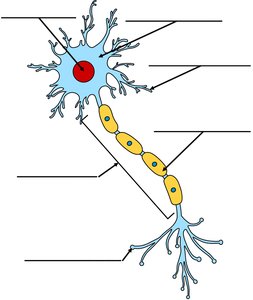
Neurons are the basic units of the nervous system, transmitting electrical signals called action potentials.
Parts of a neuron: Dendrites, cell body, axon, myelin sheath, axon terminals.
Action potential: Rapid change in membrane potential that propagates along the axon.
Example: Action potentials allow communication between neurons and muscles.
CNS Structures
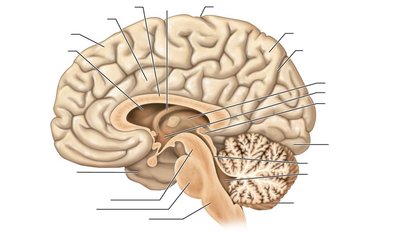
The central nervous system (CNS) consists of the brain and spinal cord, responsible for processing and integrating information.
Brain regions: Cerebrum, cerebellum, brainstem, diencephalon.
Spinal cord: Conducts signals between brain and body.
Example: The cerebrum controls voluntary actions; the cerebellum coordinates movement.
PNS: Cranial Nerves, Spinal Nerves, and Plexuses
The peripheral nervous system (PNS) includes cranial and spinal nerves, which connect the CNS to the rest of the body. Plexuses are networks of nerves.
Cranial nerves: 12 pairs, each with specific sensory, motor, or mixed functions.
Spinal nerves: 31 pairs, grouped into cervical, thoracic, lumbar, sacral regions.
Plexuses: Cervical, brachial, lumbar, sacral.
Sympathetic and parasympathetic systems: Control involuntary functions; sympathetic prepares for 'fight or flight,' parasympathetic for 'rest and digest.'
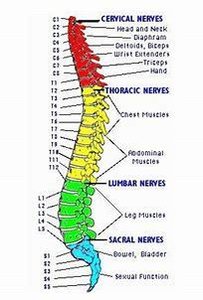
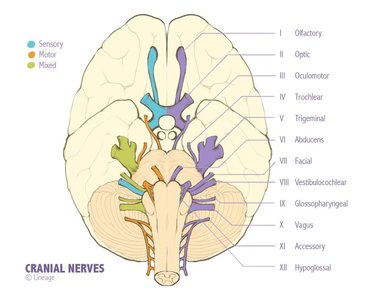
Table: Cranial Nerves and Functions
Nerve | Type | Function |
|---|---|---|
I Olfactory | Sensory | Smell |
II Optic | Sensory | Vision |
III Oculomotor | Motor | Eye movement |
IV Trochlear | Motor | Eye movement |
V Trigeminal | Mixed | Facial sensation, chewing |
VI Abducens | Motor | Eye movement |
VII Facial | Mixed | Facial expression, taste |
VIII Vestibulocochlear | Sensory | Hearing, balance |
IX Glossopharyngeal | Mixed | Taste, swallowing |
X Vagus | Mixed | Visceral sensation, autonomic control |
XI Accessory | Motor | Neck muscles |
XII Hypoglossal | Motor | Tongue movement |
Table: Spinal Nerves and Functions
Region | Nerves | Main Functions |
|---|---|---|
Cervical | C1-C8 | Head, neck, diaphragm, upper limbs |
Thoracic | T1-T12 | Chest, abdominal muscles |
Lumbar | L1-L5 | Leg muscles |
Sacral | S1-S5 | Bowel, bladder, sexual function |
Additional info: Academic context was added to expand brief points into full explanations and to logically group fragmented topics. Tables were inferred from the content and images for clarity.
