Back
BackBIO168 Unit 2 Study Guide: Integumentary and Skeletal Systems
Study Guide - Smart Notes
 Tailored notes based on your materials, expanded with key definitions, examples, and context.
Q1. List the skin layers in order.
Background
Topic: Integumentary System
This question tests your knowledge of the structural organization of the skin, which is essential for understanding its functions and clinical relevance.
Key Terms:
Epidermis
Dermis
Hypodermis (subcutaneous layer)
Step-by-Step Guidance
Recall the three main layers of the skin: epidermis, dermis, and hypodermis.
Think about the order from superficial (outermost) to deep (innermost).
Consider the functions and characteristics of each layer (e.g., the epidermis is the protective outer layer).
Try solving on your own before revealing the answer!
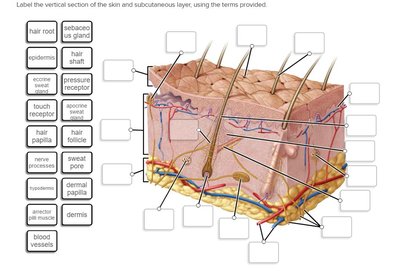
Q2. Describe all associated structures (sweat and sebum glands) and their functions.
Background
Topic: Skin Appendages
This question focuses on the accessory structures of the skin, such as glands, and their physiological roles.
Key Terms:
Sweat glands (eccrine and apocrine)
Sebaceous glands
Functions: thermoregulation, lubrication, protection
Step-by-Step Guidance
Identify the two main types of sweat glands and their locations/functions.
Describe the role of sebaceous glands and the substance they produce (sebum).
Explain how these glands contribute to skin health and homeostasis.
Try solving on your own before revealing the answer!
Q3. List the epidermis layers in order.
Background
Topic: Epidermal Structure
This question tests your ability to recall the specific layers of the epidermis, which are important for understanding skin function and pathology.
Key Terms:
Stratum corneum
Stratum lucidum (only in thick skin)
Stratum granulosum
Stratum spinosum
Stratum basale
Step-by-Step Guidance
Recall the five layers of the epidermis, starting from the surface.
Note that the stratum lucidum is only present in thick skin (palms, soles).
Arrange the layers in order from superficial to deep.
Try solving on your own before revealing the answer!
Q4. Explain the degrees of burns and the rule of nines.
Background
Topic: Skin Pathology
This question assesses your understanding of burn classification and the clinical method for estimating burn area.
Key Terms:
First-degree, second-degree, third-degree burns
Rule of nines: a method for estimating total body surface area affected by burns
Step-by-Step Guidance
Define each degree of burn based on depth and tissue involvement.
Describe the rule of nines and how it is used in clinical practice.
Apply the rule to estimate burn coverage for different body regions.
Try solving on your own before revealing the answer!
Q5. Discuss skin color, pigments, and related pathologies.
Background
Topic: Skin Pigmentation
This question tests your knowledge of the factors that determine skin color and common disorders related to pigmentation.
Key Terms:
Melanin, carotene, hemoglobin
Pathologies: albinism, jaundice, cyanosis
Step-by-Step Guidance
Identify the main pigments responsible for skin color.
Explain how each pigment contributes to overall skin tone.
Describe common pathologies and their effects on skin color.
Try solving on your own before revealing the answer!
Q6. Describe the structure of spongy bone.
Background
Topic: Skeletal System
This question focuses on the microscopic and macroscopic features of spongy bone, which is important for understanding bone function and strength.
Key Terms:
Trabeculae
Bone marrow
Osteocytes
Step-by-Step Guidance
Describe the arrangement of trabeculae in spongy bone.
Explain the role of bone marrow within the spaces of spongy bone.
Discuss how spongy bone contributes to overall bone strength and function.
Try solving on your own before revealing the answer!
Q7. Identify all structures in the long bone diagram.
Background
Topic: Long Bone Anatomy
This question tests your ability to recognize and label the anatomical features of a long bone.
Key Terms:
Diaphysis, epiphysis, metaphysis
Periosteum, endosteum
Medullary cavity, articular cartilage
Step-by-Step Guidance
Review the diagram and identify the main regions of the long bone.
Label each structure based on its location and function.
Consider the relationship between these structures and bone growth or repair.
Try solving on your own before revealing the answer!
Q8. Explain bone growth and development: Types of ossification.
Background
Topic: Bone Development
This question tests your understanding of the processes by which bones form and grow.
Key Terms:
Intramembranous ossification
Endochondral ossification
Step-by-Step Guidance
Define the two main types of ossification.
Describe the steps involved in each process.
Identify which bones develop by each method.
Try solving on your own before revealing the answer!
Q9. Discuss bone homeostasis: organic/inorganic matrix.
Background
Topic: Bone Composition and Homeostasis
This question focuses on the balance between organic and inorganic components in bone tissue.
Key Terms:
Collagen fibers (organic)
Hydroxyapatite (inorganic)
Bone remodeling
Step-by-Step Guidance
Describe the composition of the bone matrix.
Explain the role of organic and inorganic components.
Discuss how bone homeostasis is maintained.
Try solving on your own before revealing the answer!
Q10. List hormones associated with bone homeostasis.
Background
Topic: Endocrine Regulation of Bone
This question tests your knowledge of the hormones that regulate bone growth and remodeling.
Key Terms:
Parathyroid hormone (PTH)
Calcitonin
Vitamin D
Step-by-Step Guidance
Identify the main hormones involved in bone homeostasis.
Describe the effects of each hormone on bone tissue.
Explain how these hormones interact to maintain calcium balance.
Try solving on your own before revealing the answer!
Q11. Describe the shapes of bones.
Background
Topic: Bone Classification
This question tests your ability to classify bones based on their shapes.
Key Terms:
Long, short, flat, irregular, sesamoid bones
Step-by-Step Guidance
List the five main bone shapes.
Provide examples of each type.
Explain the functional significance of each shape.
Try solving on your own before revealing the answer!
Q12. Identify cranial bones and their markings.
Background
Topic: Skull Anatomy
This question tests your knowledge of the bones that make up the cranium and their anatomical features.
Key Terms:
Frontal, parietal, temporal, occipital, sphenoid, ethmoid bones
Bone markings: foramina, processes, sutures
Step-by-Step Guidance
List the cranial bones.
Identify key markings on each bone.
Explain the significance of these markings.
Try solving on your own before revealing the answer!
Q13. Define sutures.
Background
Topic: Skull Joints
This question tests your understanding of the fibrous joints that connect cranial bones.
Key Terms:
Sutures: coronal, sagittal, lambdoid, squamous
Step-by-Step Guidance
Define what a suture is.
List the main sutures of the skull.
Describe their locations and functions.
Try solving on your own before revealing the answer!
Q14. Name all axial and appendicular skeletal bones.
Background
Topic: Skeletal System Organization
This question tests your ability to distinguish between the axial and appendicular skeleton and list their components.
Key Terms:
Axial skeleton: skull, vertebral column, rib cage
Appendicular skeleton: limbs, girdles
Step-by-Step Guidance
Define the axial and appendicular skeleton.
List the bones included in each division.
Explain the functional differences between the two.
Try solving on your own before revealing the answer!
Q15. Compare shoulder and pelvic girdles: male vs. female.
Background
Topic: Girdle Anatomy
This question tests your understanding of the anatomical differences between male and female girdles.
Key Terms:
Shoulder girdle: clavicle, scapula
Pelvic girdle: ilium, ischium, pubis
Sexual dimorphism
Step-by-Step Guidance
Identify the bones that make up each girdle.
Describe the structural differences between male and female pelvic girdles.
Explain the functional significance of these differences.
Try solving on your own before revealing the answer!
Q16. Differentiate types of vertebrae and spine curvatures.
Background
Topic: Vertebral Column Anatomy
This question tests your ability to distinguish between cervical, thoracic, lumbar, sacral, and coccygeal vertebrae and understand normal spine curvatures.
Key Terms:
Cervical, thoracic, lumbar, sacral, coccygeal vertebrae
Curvatures: lordosis, kyphosis, scoliosis
Step-by-Step Guidance
List the types of vertebrae and their distinguishing features.
Describe the normal curvatures of the spine.
Explain the clinical significance of abnormal curvatures.
Try solving on your own before revealing the answer!
Q17. Describe bone fractures and the healing process.
Background
Topic: Bone Injury and Repair
This question tests your understanding of fracture types and the steps involved in bone healing.
Key Terms:
Fracture types: simple, compound, comminuted, greenstick
Healing stages: hematoma, callus formation, remodeling
Step-by-Step Guidance
Identify the main types of bone fractures.
Describe the sequence of events in bone healing.
Explain the role of cells and tissues in each stage.
Try solving on your own before revealing the answer!
Q18. Classify joints: functional and structural classification.
Background
Topic: Joint Classification
This question tests your ability to categorize joints based on their function and structure.
Key Terms:
Functional: synarthrosis, amphiarthrosis, diarthrosis
Structural: fibrous, cartilaginous, synovial
Step-by-Step Guidance
Define the functional classifications of joints.
Define the structural classifications of joints.
Provide examples of each type.
Try solving on your own before revealing the answer!
Q19. Describe types of joint movements.
Background
Topic: Joint Movement
This question tests your knowledge of the different movements possible at joints.
Key Terms:
Flexion, extension, abduction, adduction, rotation, circumduction
Step-by-Step Guidance
List the main types of joint movements.
Describe each movement and provide examples.
Explain the anatomical basis for each movement.
Try solving on your own before revealing the answer!
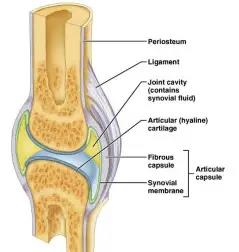
Q20. Describe the anatomical structure of a synovial joint.
Background
Topic: Synovial Joint Anatomy
This question tests your ability to identify and describe the components of a synovial joint.
Key Terms:
Articular cartilage
Joint cavity
Synovial membrane
Fibrous capsule
Ligaments
Step-by-Step Guidance
Identify the main structures in a synovial joint.
Describe the function of each structure.
Explain how these structures work together to allow movement and stability.
Try solving on your own before revealing the answer!