 Back
BackBIOL 2402 Anatomy & Physiology II Syllabus and Course Overview
Study Guide - Smart Notes
 Tailored notes based on your materials, expanded with key definitions, examples, and context.
Course Overview
BIOL 2402 - Anatomy and Physiology II is the second part of a two-course sequence designed for college students studying the structure and function of the human body. This course focuses on the major organ systems, their interrelationships, and the physiological mechanisms that maintain homeostasis. The course includes both lecture and laboratory components, emphasizing hands-on learning and scientific investigation.
Course Topics
The Endocrine System
The Blood
The Cardiovascular System: The Heart
The Cardiovascular System: Blood Vessels
The Immune System: Innate and Adaptive Body Defenses
The Respiratory System
The Digestive System (including Nutrition)
Nutrition, Metabolism, and Energy Balance
The Urinary System (including Fluid, Electrolyte, and Acid-Base Balance)
The Reproductive System (including Human Development and Genetics)
Course Outcomes
Use anatomical terminology to identify and describe locations of major organs of each system covered.
Explain interrelationships among molecular, cellular, tissue, and organ functions in each system.
Describe the interdependency and interactions of the systems.
Explain contributions of organs and systems to the maintenance of homeostasis.
Identify causes and effects of homeostatic imbalances.
Describe modern technology and tools used to study anatomy and physiology.
Apply appropriate safety and ethical standards.
Locate and identify anatomical structures.
Appropriately utilize laboratory equipment, such as microscopes, dissection tools, general lab ware, physiology data acquisition systems, and virtual simulations.
Work collaboratively to perform experiments.
Demonstrate the steps involved in the scientific method.
Communicate results of scientific investigations, analyze data, and formulate conclusions.
Use critical thinking and scientific problem-solving skills, including inferring, integrating, synthesizing, and summarizing, to make decisions, recommendations, and predictions.
Required Textbooks and Materials
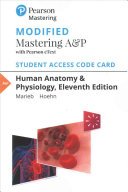
Human Anatomy & Physiology, 11th Edition, Marieb & Hoehn (Pearson)
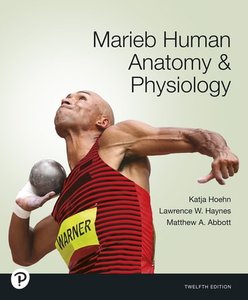
Marieb Human Anatomy & Physiology, 12th Edition, Hoehn, Haynes, Abbott (Pearson)
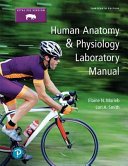
Human Anatomy and Physiology Laboratory Manual, Fetal Pig Version, Marieb & Smith (Pearson) – Only for Face to Face Lab Sections
Grading and Evaluation
Component | Weight |
|---|---|
Exams (3 or more) | 50-60% |
Homework | 10-20% |
Lab | 20-30% |
Core Projects | 10-20% |
Additional breakdown (as specified):
Lecture exams: 45%
Final exam: 10%
My Mastering A&P: 10%
Quizzes and Assignments: 5%
Lab Exercises: 20%
Final Project: 10%
Grading Scale:
A = 100-89.5
B = 89.4-79.5
C = 79.4-69.5
D = 69.4-59.5
F = 59.4 and below
General Education Core Outcomes
Critical Thinking Skills (CT)
Communication Skills (Comm)
Empirical and Quantitative Skills (E&Q)
Teamwork (Team)
Course Policies and Expectations
Regular attendance and timely completion of assignments are essential for success.
No make-up assignments without an acceptable excuse.
Strict academic integrity and honesty are required; violations result in a zero grade and disciplinary action.
Use of AI is only permitted when explicitly allowed by the instructor.
Students with disabilities should contact Disability Support Services for accommodations.
Distance education students must maintain internet access and follow all college policies.
Student Support Services
Academic Advising
Disability Support Services
Mental Health Services
Assessment and Testing Center
Financial Aid
Tutoring Services
Veteran Services
For more information, students should consult the SWTX Student Handbook or contact the appropriate office.
Weekly Lecture Topics Overview
Week | Topics |
|---|---|
1 | Introduction, The Endocrine System, The Blood, The Cardiovascular System: The Heart |
2 | The Cardiovascular System: Blood Vessels, Exam Review 1, Exam 1 (Ch.16-Ch.19) |
3 | The Immune System: Innate and Adaptive Body Defenses, The Respiratory System, The Digestive System |
4 | Nutrition, Metabolism, and Energy Balance, Exam Review 2, Exam 2 (Ch.21-Ch.24) |
5 | The Urinary System, Fluid, Electrolyte, and Acid-Base Balance, The Reproductive System |
6 | Exam 3 Review, Exam 3 (Ch.25-Ch.28) |
Additional info:
This syllabus provides a comprehensive overview of the course structure, expectations, and resources for BIOL 2402 Anatomy & Physiology II. Students are encouraged to use the required textbooks and laboratory manual for in-depth study and to utilize available support services for academic success.
