 Back
BIOLOGY 116: Introduction to Anatomy and Physiology – Syllabus and Course Overview
Study Guide - Smart Notes
 Tailored notes based on your materials, expanded with key definitions, examples, and context.
Course Overview
This document provides the official syllabus and course structure for BIOLOGY 116: Introduction to Anatomy and Physiology, as offered in Summer 2026 at City Colleges of Chicago. The course is designed to introduce students to the structure and function of the human body, covering topics from the cellular level to organ systems, with an emphasis on scientific processes and laboratory techniques.
Course Information
Course Title: Introduction to Anatomy and Physiology
Course Number: 001639
Credit Hours: 4
Lecture Contact Hours: 2
Laboratory Contact Hours: 4
Instructor: Linh Pham (lpham21@ccc.edu)
Instruction Mode: Online Live (Synchronous via Zoom)
Course Dates: 06/03/2026 to 07/22/2026
Course Description
This course offers an introduction to human anatomy and physiology, focusing on the hierarchical organization of the human body, from cells to organ systems. Students will learn about scientific methodologies, basic biological principles, laboratory techniques, and the relevance of homeostasis. The course is suitable for students interested in health-related fields or those seeking a foundational understanding of biology.
Course Objectives
Understand scientific methodologies and basic biological principles.
Develop proficiency in laboratory techniques and procedures.
Describe the features of human biological systems from the cellular to the organ system level.
Explain the hierarchical organization of biology and its connection to homeostasis.
Discuss biological issues with personal and social implications.
Student Learning Outcomes
Discuss the nature of science and scientific inquiry.
Conduct laboratory activities and interpret data.
Classify biological molecules by structure and function.
Describe cellular structures and their functions.
Differentiate structures and functions of human cells and tissues.
List organ systems in corresponding body cavities.
Identify anatomical features related to positions, orientations, and planes.
Describe homeostasis principles for each organ system.
Topical Outline
The course follows a structured weekly outline, covering the following chapters (aligned with standard Anatomy & Physiology textbooks):
Ch. 1: The Human Body: An Orientation
Ch. 2: Basic Chemistry (Inorganic & Organic)
Ch. 3: Cells and Tissues
Ch. 4: Skin and Body Membranes
Ch. 5: The Skeletal System
Ch. 6: The Muscular System
Ch. 7: The Nervous System
Ch. 8: Special Senses
Ch. 9: The Endocrine System
Ch. 10: Blood
Ch. 11: Cardiovascular System
Ch. 12: The Lymphatic System and Body Defenses
Ch. 13: The Respiratory System
Ch. 14: The Digestive System and Body Metabolism
Ch. 15: The Urinary System
Ch. 16: The Reproductive System
Assessment and Grading
Assessment Item | Percentage of Grade |
|---|---|
In-Class Activities | 15% |
Homework | 10% |
Labs | 15% |
Quizzes | 10% |
Exams (6) | 35% |
Final Exam | 15% |
Grading Scale:
Letter Grade | Percentage |
|---|---|
A | 90% - 100% |
B | 80% - 89% |
C | 70% - 79% |
D | 60% - 69% |
F | Below 60% |
Required Textbook
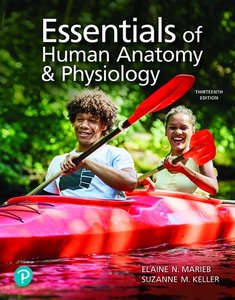
Essentials of Human Anatomy and Physiology (13th Edition) by Elaine N. Marieb and Suzanne M. Keller, Pearson Education, 2021.
Course Policies and Resources
Attendance and Active Pursuit: Students must actively participate in class, complete assignments, and attend sessions to avoid administrative withdrawal (ADW).
No-Show Withdrawal (NSW): Students who do not attend initial sessions will be withdrawn.
Academic Integrity: Plagiarism and cheating are strictly prohibited and will result in disciplinary action.
Use of AI: AI tools may be used for study and idea generation, but not during quizzes or exams. All AI use must be acknowledged.
Disability Accommodations: Students requiring accommodations should contact the ACCESS Center.
Wellness Center: Provides counseling, referrals, and support services for students.
Additional Information
Course communication will be via Brightspace announcements and email.
Students are encouraged to review the Student Policy Manual for detailed college policies.
Inclement weather and emergency policies are in effect; students should keep contact information updated.
This syllabus provides a comprehensive overview of the course structure, expectations, and resources for success in Anatomy and Physiology. Students are encouraged to use this guide for planning and to refer to the official textbook for detailed content coverage.
