 Back
Blood: Structure, Composition, and Function in the Cardiovascular System
Study Guide - Smart Notes
 Tailored notes based on your materials, expanded with key definitions, examples, and context.
Blood and the Cardiovascular System
Overview of the Cardiovascular System
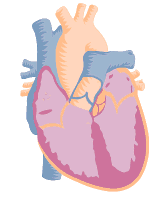
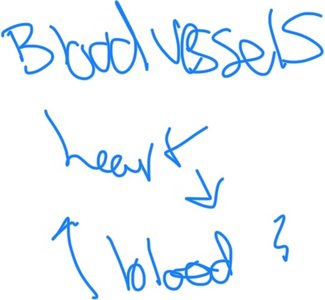
The cardiovascular (CV) system, also known as the circulatory system, is responsible for transporting blood throughout the body. It consists of three main components: blood vessels (pipes), the heart (pump), and blood (fluid). This system ensures the delivery of oxygen, nutrients, and hormones to tissues and the removal of waste products.
Blood vessels: Tubular structures (arteries, veins, capillaries) that carry blood.
Heart: Muscular organ that pumps blood.
Blood: Fluid connective tissue that transports substances.
Circulation of Blood
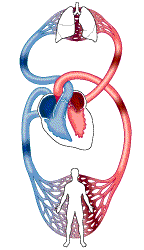
Blood circulates through two main circuits: the systemic circuit (left side of the heart to the body) and the pulmonary circuit (right side of the heart to the lungs). This dual circulation ensures efficient gas exchange and nutrient delivery.
Systemic circuit: Delivers oxygenated blood from the left heart to the body and returns deoxygenated blood to the right heart.
Pulmonary circuit: Delivers deoxygenated blood from the right heart to the lungs for oxygenation and returns it to the left heart.
Blood Composition
Components of Blood
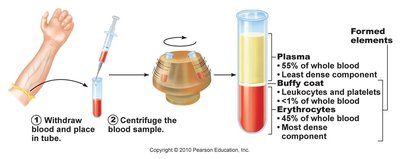
Blood is a specialized connective tissue composed of plasma (liquid matrix) and formed elements (cells and cell fragments). The main formed elements are erythrocytes (red blood cells), leukocytes (white blood cells), and platelets (thrombocytes).
Plasma: Makes up about 55% of blood volume; mostly water with dissolved proteins, nutrients, and wastes.
Formed elements: Make up about 45% of blood volume; includes erythrocytes, leukocytes, and platelets.
Physical Characteristics of Blood
Blood is a viscous, slightly alkaline fluid with a metallic taste. It is hotter than body temperature (38°C/100.4°F), sticky, and varies in color from scarlet (oxygen-rich) to dark red (oxygen-poor). Average volume is 5–6 L in males and 4–5 L in females.
pH: 7.35–7.45 (slightly basic)
Color: Scarlet to dark red depending on oxygenation
Volume: 5–6 L (male), 4–5 L (female)
Functions of Blood
Transport
Transports gases (O2, CO2), nutrients, wastes, and hormones throughout the body.
Regulation
Maintains body temperature by distributing heat.
Regulates pH and fluid volume in tissues.
Protection
Prevents blood loss through clotting mechanisms.
Prevents infection via immune cells and antibodies.
Plasma: The Liquid Matrix
Composition of Plasma
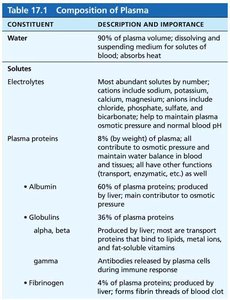
Plasma is about 90% water and contains over 100 dissolved solutes, including proteins, electrolytes, nutrients, gases, hormones, and waste products. Plasma proteins are the most abundant solutes and are primarily produced by the liver.
Water: 90% of plasma; solvent for carrying substances.
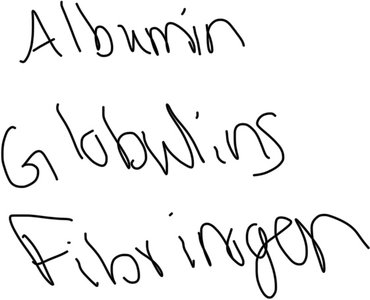
Proteins: 8% of plasma; include albumin, globulins, and fibrinogen.
Other solutes: Electrolytes, nutrients, gases, hormones, and waste products.
Major Plasma Proteins
Albumin (60%): Maintains osmotic pressure, acts as a buffer, and transports substances.
Globulins (36%): Alpha and beta globulins transport lipids and fat-soluble vitamins; gamma globulins function as antibodies.
Fibrinogen (4%): Forms fibrin threads essential for blood clotting.
Formed Elements of Blood
Types of Formed Elements
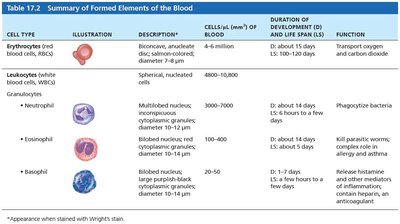
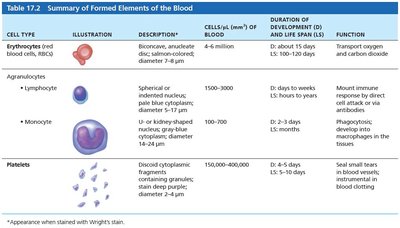
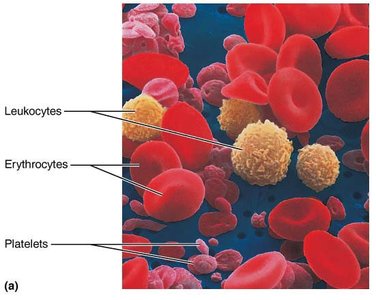
The formed elements of blood include erythrocytes (RBCs), leukocytes (WBCs), and platelets (thrombocytes). All are produced in the bone marrow.
Erythrocytes: Red blood cells; transport oxygen and carbon dioxide.
Leukocytes: White blood cells; involved in immune defense.
Platelets: Cell fragments; essential for blood clotting.
Erythrocytes (Red Blood Cells)
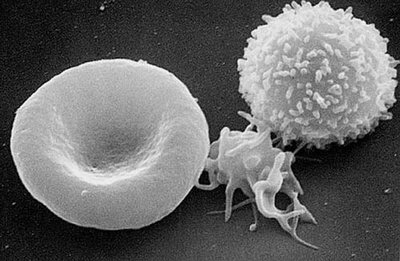
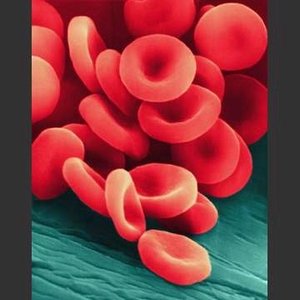
Erythrocytes are biconcave, anucleate cells specialized for gas transport. They are filled with hemoglobin, which binds oxygen and carbon dioxide. Their shape increases surface area for gas exchange and allows flexibility in capillaries.
No nucleus or organelles; cannot divide or repair themselves.
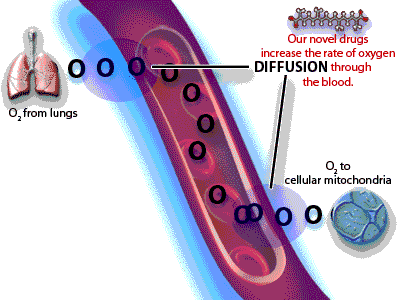
Main function: Transport oxygen from lungs to tissues and carbon dioxide from tissues to lungs.
Hemoglobin: Each RBC contains about 250 million hemoglobin molecules, each carrying up to 4 oxygen molecules.
Hemoglobin and Gas Transport
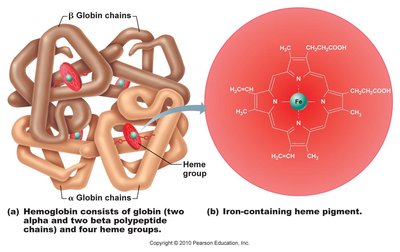
Hemoglobin (Hb) is a protein composed of four globin chains, each with a heme group containing iron. Oxygen binds to iron in the heme group, forming oxyhemoglobin in the lungs and deoxyhemoglobin in tissues. Hemoglobin also transports some carbon dioxide as carbaminohemoglobin.
Oxyhemoglobin: Hb bound to O2; bright red color.
Deoxyhemoglobin: Hb after O2 is released; dark red color.
Carbaminohemoglobin: Hb bound to CO2; forms in tissues.
Hematopoiesis: Blood Cell Formation
Production of Blood Cells
Hematopoiesis is the process of blood cell formation, occurring primarily in red bone marrow. All formed elements arise from hematopoietic stem cells (hemocytoblasts). Erythropoiesis is the specific process of red blood cell production.
Hematopoietic stem cells: Give rise to all blood cells.
Erythropoiesis: Production of erythrocytes; regulated by the hormone erythropoietin (EPO) from the kidneys in response to hypoxia (low oxygen).
Stages of Erythropoiesis
Erythropoiesis involves several stages, from stem cell to mature erythrocyte. Key steps include ribosome synthesis, hemoglobin accumulation, and ejection of the nucleus.
Stem cell (hemocytoblast) → Proerythroblast → Erythroblast stages → Reticulocyte → Erythrocyte
Reticulocytes are released into the bloodstream and mature into erythrocytes.
Hormonal Regulation
Erythropoietin (EPO) is released by the kidneys in response to hypoxia. It stimulates the bone marrow to increase RBC production. Negative feedback regulates EPO levels to maintain homeostasis.
Hypoxia: Low oxygen levels in tissues; triggers EPO release.
EPO: Hormone that increases erythropoiesis.
Removal and Fate of Old RBCs
Old erythrocytes are trapped and destroyed in the spleen. Macrophages engulf and break down RBCs. Iron is recycled, heme is converted to bilirubin (excreted in bile), and globin is broken down to amino acids for reuse.
Erythrocyte Disorders
Anemia
Anemia is a condition in which blood has an abnormally low oxygen-carrying capacity. It is a sign of an underlying problem and can result from blood loss, decreased RBC production, or increased RBC destruction.
Symptoms: Fatigue, pallor, dyspnea, chills, craving ice (if iron-deficient).
Types:
Hemorrhagic anemia: Due to blood loss.
Hemolytic anemia: Due to RBC destruction.
Aplastic anemia: Due to bone marrow failure.
Iron-deficiency anemia: Due to low iron.
Pernicious anemia: Due to vitamin B12 deficiency.
Thalassemia and sickle-cell anemia: Due to abnormal hemoglobin.
Polycythemia
Polycythemia is an abnormal excess of erythrocytes, increasing blood viscosity and potentially leading to complications such as clotting or stroke.
Summary Table: Formed Elements of Blood
Cell Type | Description | Function | Life Span |
|---|---|---|---|
Erythrocytes (RBCs) | Biconcave, anucleate, filled with hemoglobin | Transport O2 and CO2 | 100–120 days |
Leukocytes (WBCs) | Spherical, nucleated; several types | Immune defense | Varies (days to years) |
Platelets (Thrombocytes) | Cell fragments | Blood clotting | 5–10 days |
Additional info: For more details on the molecular structure of hemoglobin, see advanced biochemistry texts. For clinical correlations, refer to hematology resources.
